
Caveat Meaning: Definition, Examples & Legal Usage
When reading legal documents, academic writing, or even everyday English articles, you may come across the word “caveat” and wonder what it actually means. The caveat meaning is commonly searched because the word is used in slightly formal contexts and can change meaning depending on situation. Sometimes it signals a warning, sometimes a condition, and sometimes a limitation to a statement. Understanding this word helps you read information more accurately and avoid misunderstandings in contracts, advice, or explanations. In this guide, we will break down caveat in simple English so you can use it confidently in real life.
Meaning & Definition
The caveat meaning definition is a warning, condition, or limitation attached to a statement or situation. In simple words, a caveat tells you that something is true, but with certain restrictions. It is often used when someone wants to clarify that their statement is not absolute. For example, “This medicine works well, but with a caveat that it may cause side effects.” The word is widely used in legal, academic, and professional communication to make sure people understand boundaries or exceptions clearly. It helps avoid misunderstanding by adding important conditions to information.
Background
The word caveat comes from Latin, where it originally meant “let him beware.” Over time, it entered English legal language and was commonly used in courts and contracts. Historically, it served as a formal warning or notice to prevent mistakes or disputes. Today, its usage has expanded beyond law and is now common in education, journalism, business, and everyday speech. Many competitor explanations miss this historical depth, but understanding the background helps you see why caveat is still associated with caution and careful consideration in modern English communication.
Usage in Different Contexts
The caveat meaning changes slightly depending on context, but it always relates to caution or limitation. In legal documents, it may refer to a formal objection or notice. In academic writing, it is used to highlight exceptions in research findings. In daily conversation, people use it to soften statements, such as giving advice with conditions. For example, “You can try this method, but with a caveat that results may vary.” In business communication, caveats are used to explain risks or restrictions in agreements, making it an important word in professional environments.
Caveat Meaning Definition
The caveat meaning definition can be summarized as a condition or warning attached to a statement to limit its scope or meaning. It is not a standalone idea but always connected to something else. When someone uses caveat, they are basically saying “this is true, but not completely without exceptions.” This makes communication more precise and realistic. In modern usage, caveat is especially important in legal writing, financial discussions, and professional advice where accuracy and clarity are essential to avoid confusion or misinterpretation.
What Does Caveat Mean in Simple English
In simple English, the caveat meaning is very easy to understand: it means “a warning or something you should be careful about.” It tells you that there is a condition or limitation you should know before accepting something as fully true. For example, “You can join this course, but with a caveat that it requires daily practice.” This makes the meaning easier for learners because it replaces complex legal or academic language with everyday understanding. It helps readers clearly see that not everything is completely guaranteed or absolute.
Legal Caveat Meaning Explained

The legal caveat meaning explained refers to a formal notice or warning filed in legal systems to prevent certain actions from being taken without informing the person who filed it. In law, a caveat acts as a protective measure. For example, someone may file a caveat in court to ensure they are notified before any legal decision is made regarding their interest. This prevents unfair outcomes and ensures transparency. Legal caveats are serious documents and are widely used in property, inheritance, and court-related matters.
See Also: ENM Meaning: Ethical Non Monogamy Explained Simply
Caveat Emptor Meaning and Usage
The phrase “caveat emptor” is a famous Latin term meaning “let the buyer beware.” It is commonly used in trade and business contexts. The caveat emptor meaning and usage suggests that the buyer is responsible for checking the quality or condition of a product before purchasing it. For example, when buying second-hand goods, the seller may not guarantee quality, so the buyer must be careful. This principle is still used in modern commerce, especially in real estate and online marketplaces, where buyers must do their own research before making decisions.
Caveat vs Warning Difference Explained
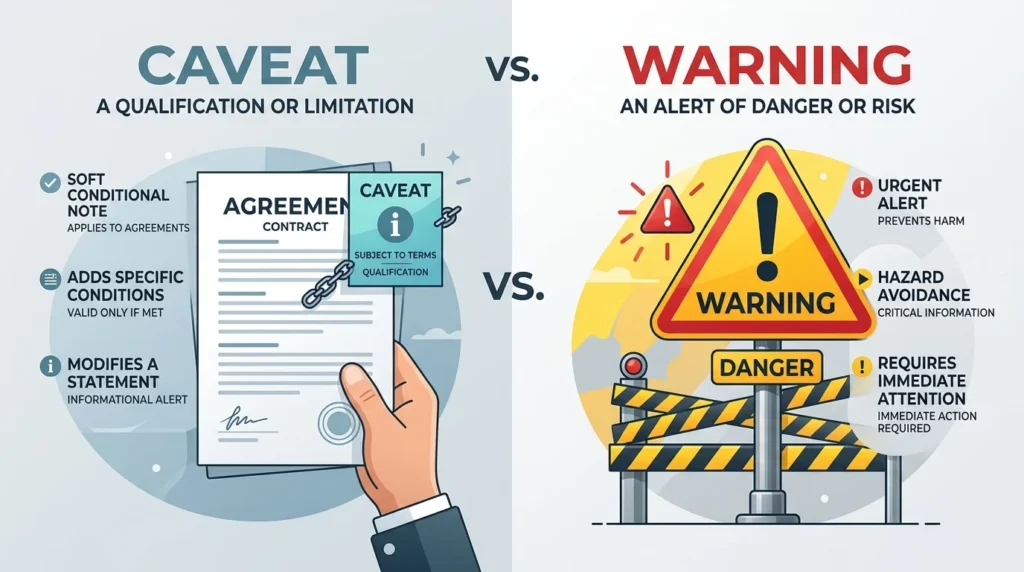
The caveat vs warning difference explained shows that while both words relate to caution, they are not identical. A warning is usually direct and alerts someone about danger or risk. A caveat, however, is more subtle and often attached as a condition or limitation within a statement. For example, a warning might say “Do not touch this,” while a caveat would say “This works well, with a caveat that results may vary.” In simple terms, warnings are stronger alerts, while caveats are softer conditions.
How to Use Caveat in a Sentence Correctly
Understanding how to use caveat in a sentence correctly helps you communicate more clearly. The word is usually followed by a condition or explanation. For example: “The plan is effective, with the caveat that it requires funding.” Another example is: “She agreed to help, but with a caveat that she had limited time.” The key rule is that caveat should always introduce a limitation or exception. It cannot stand alone. Using it correctly makes your writing sound more professional and precise.
Synonyms of Caveat with Meanings
There are several synonyms of caveat with meanings that help you understand the word better. Words like warning, condition, limitation, restriction, and proviso are commonly used alternatives. However, each synonym has a slightly different tone. For example, “warning” is stronger and more direct, while “proviso” is more formal and legal. “Condition” is often used in contracts or agreements. Understanding these synonyms helps you choose the right word depending on the context, whether you are writing formally or speaking casually.
Caveat Meaning in Contracts and Agreements
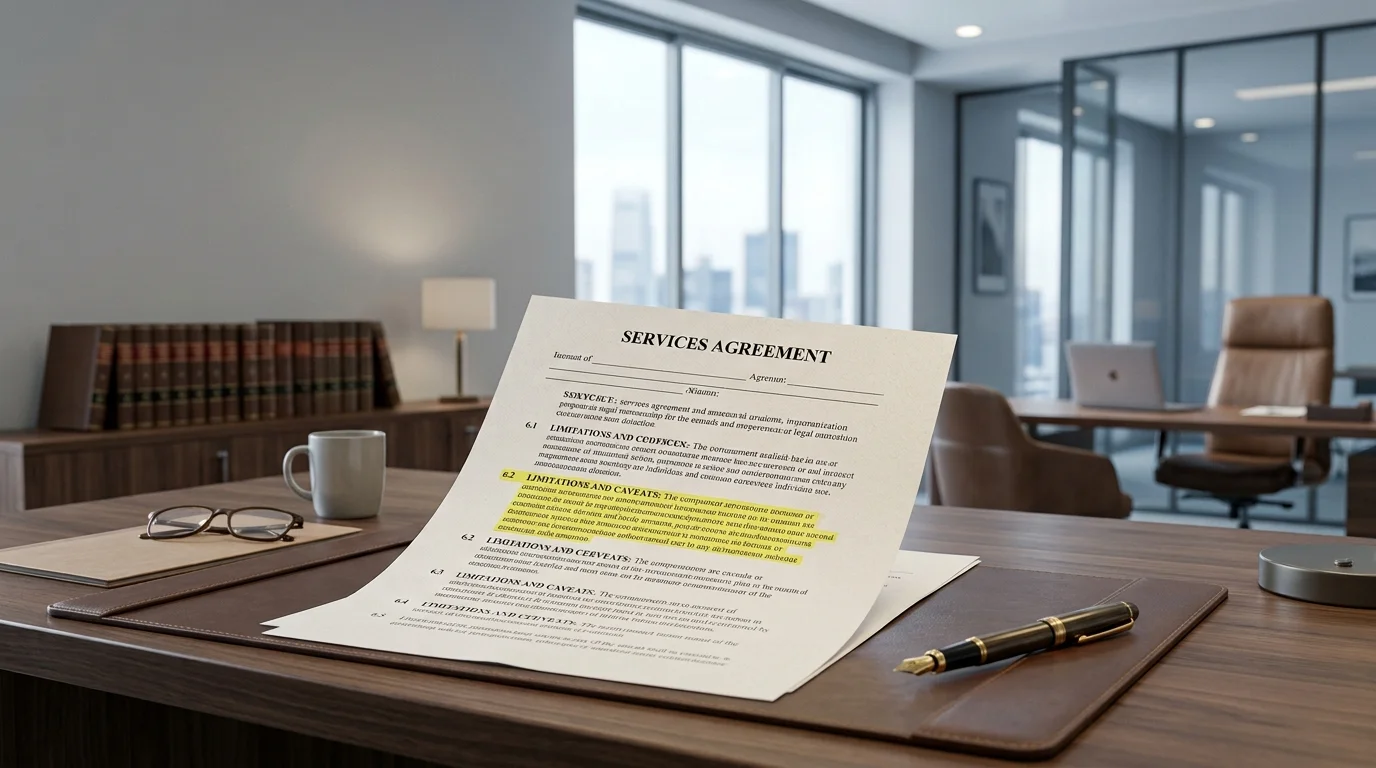
The caveat meaning in contracts and agreements refers to specific conditions or clauses that limit or define responsibilities. In legal or business contracts, caveats are used to clarify what is included and what is excluded. For example, a service agreement may include a caveat that limits liability under certain conditions. This ensures both parties clearly understand their rights and obligations. Without caveats, contracts could become unclear or open to misinterpretation, which is why they are a standard part of formal agreements.
See Also: IMO Meaning: Definition, Texting Uses & Examples
Common Phrases Using Caveat in English
There are many common phrases using caveat in English that appear in professional and academic writing. Phrases like “with a caveat,” “there is a caveat,” and “subject to a caveat” are widely used. For example, “This solution works, with a caveat that it requires regular updates.” These phrases help speakers or writers present balanced statements. Instead of making absolute claims, they introduce conditions or exceptions. This makes communication more realistic and reduces the chance of misunderstanding in both formal and informal contexts.
Frequently Asked Questions
What does caveat mean in simple English?
It means a warning or condition that limits a statement or makes it less absolute.
Is caveat a positive or negative word?
It is neutral. It simply adds caution or limitation depending on context.
What is caveat emptor?
It means “let the buyer beware,” meaning buyers should check products before buying.
How do you use caveat in a sentence?
You use it to introduce a limitation, for example: “Good results, with a caveat that effort is needed.”
Is caveat used in legal language?
Yes, it is commonly used in legal documents, contracts, and court-related notices.
Conclusion
Understanding the caveat meaning helps you read and communicate more accurately in both formal and informal situations. Whether it is used as a warning, condition, or legal limitation, caveat always adds important clarity to a statement. By learning the caveat meaning definition, legal caveat meaning explained, caveat emptor meaning, and how to use it in real sentences, you can better understand contracts, advice, and written communication. If you want simple explanations of English words, meanings, and trending terms, Punz Trend is a helpful platform where complex vocabulary is broken down into easy, practical language for everyday learning.
See Also: Celibate Meaning Explained | Definition & Lifestyle Guide