
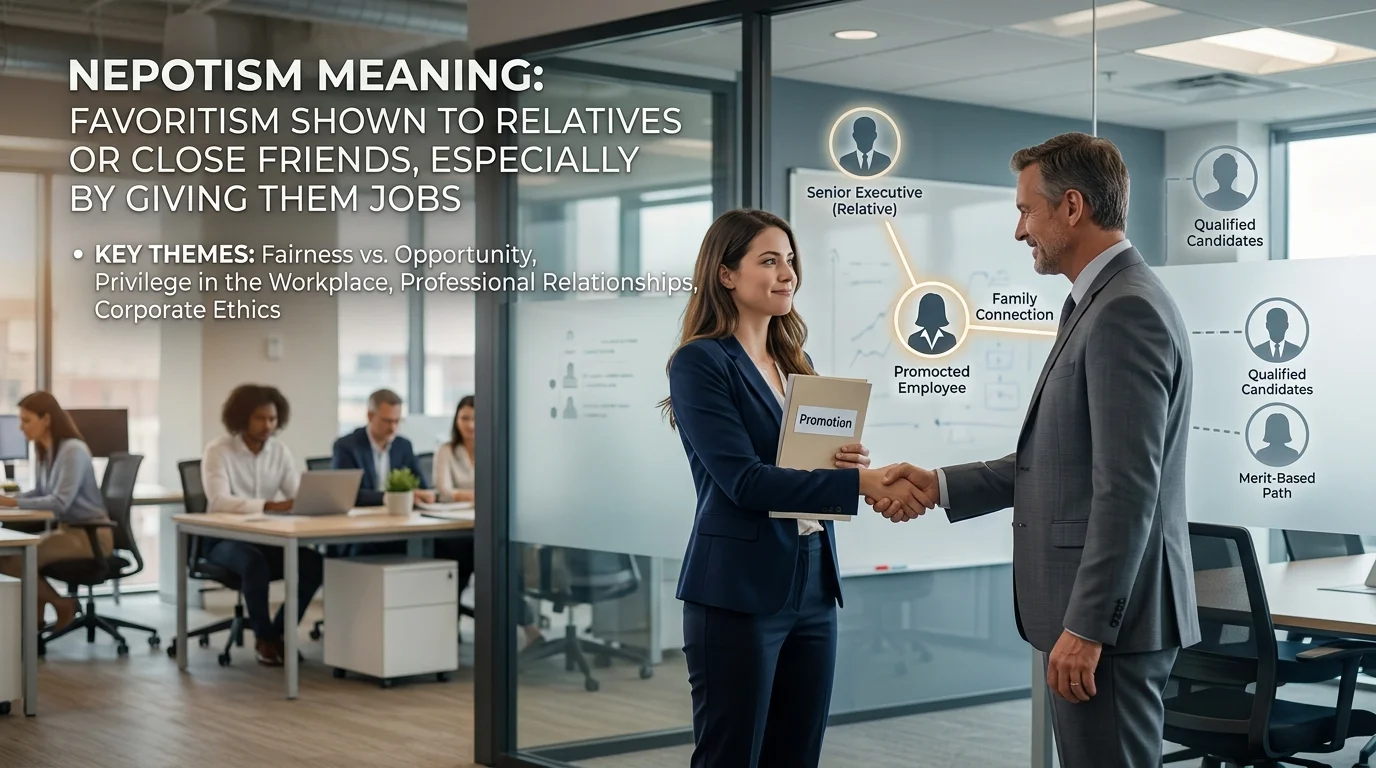
Nepotism Meaning: Examples, Impact & Why It Matters
Have you ever seen someone receive an opportunity, job, or position mainly because of their family connections rather than their skills or experience? This situation is often described with the word nepotism. The term has become widely discussed in workplaces, politics, entertainment, and family-owned businesses because it raises questions about fairness, equal opportunities, and merit.
Understanding nepotism meaning helps explain why people debate whether family relationships should influence professional decisions. While some people view nepotism as unfair because it can give advantages to certain individuals, others argue that trusting family members in business or leadership roles can sometimes be practical.
In today’s world, nepotism is commonly discussed in hiring practices, Hollywood careers, corporate leadership, and public positions. This complete guide explains what does nepotism mean in simple words, its history, examples, workplace impact, advantages and disadvantages, and how it differs from related concepts like favoritism and cronyism.
If you are searching for clear explanations of unfamiliar words and modern terms, Punz Trend provides easy-to-understand meaning guides that explain words from different perspectives and real-life contexts.
Meaning & Definition
The basic nepotism meaning refers to showing unfair preference or giving special opportunities to family members, relatives, or close connections, especially in professional situations. The word is commonly used when someone receives a job, promotion, position, or advantage because of their relationship with someone powerful rather than because of their qualifications.
In simple terms, nepotism happens when family connections influence decisions that should ideally be based on skills, experience, performance, or merit.
For example, if a company owner hires their unqualified relative for an important position while ignoring more experienced candidates, people may describe that action as nepotism.
However, nepotism does not always mean something illegal or automatically wrong. In many family businesses, relatives may work together because they share trust, knowledge, and long-term goals. The controversy usually appears when personal relationships create unfair advantages or prevent qualified people from receiving equal opportunities.
The meaning of nepotism depends heavily on the situation, industry, and whether the decision was based on genuine ability or simply family connections.
Background
The history of nepotism goes back hundreds of years and is connected with family influence, power, and social structures. The word itself developed from situations where powerful individuals gave positions and benefits to their relatives.
Historically, nepotism was especially common in political and religious institutions where leaders had significant authority to appoint people to important roles. Powerful families often maintained influence by placing relatives in positions of control.
Over time, the meaning of nepotism expanded beyond politics and became associated with workplaces, businesses, entertainment industries, and professional opportunities.
In modern society, discussions about nepotism often focus on the idea of meritocracy, which means people should receive opportunities based on their abilities, achievements, and qualifications rather than their personal connections.
Today, nepotism remains a global topic because family relationships continue to play an important role in many areas, from small family businesses to large corporations and public organizations.
Usage in Different Contexts
The meaning of nepotism changes slightly depending on where it is used. While the core idea remains related to family-based favoritism, different industries experience nepotism in different ways.
Workplace Context
In professional environments, nepotism usually refers to hiring, promoting, or rewarding family members because of their relationship with company leaders. For example, a manager giving a senior position to a relative despite another employee being more qualified may be considered workplace nepotism.
Family Business Context
In family-owned businesses, nepotism can be more complicated. Many companies are built and managed by family members across generations. In these cases, relatives may receive roles because they understand the business and share its values. The issue arises when positions are given without considering skills or performance.
Entertainment Context
Nepotism in Hollywood and entertainment refers to situations where actors, musicians, or public figures receive career opportunities because they have famous family members or industry connections.
Political Context
Nepotism in politics occurs when leaders provide positions, influence, or advantages to relatives. Political families with multiple generations of leaders are often discussed in relation to this concept.
Understanding these different contexts helps explain why nepotism can be viewed differently depending on the situation.
What Does Nepotism Mean in Simple Words?
The simplest answer to what does nepotism mean in simple words is: nepotism means giving opportunities or advantages to family members because they are related to someone, not necessarily because they are the best choice.
For example:
- A business owner hires their sibling without considering other candidates.
- A celebrity helps a family member enter the entertainment industry.
- A political leader gives an important position to a relative.
These situations may be described as nepotism if the relationship plays a major role in the decision.
The important point is that nepotism is about preference based on family connections. It does not always mean the person receiving the opportunity is unqualified. Sometimes family members may genuinely have the skills needed for a position.
The debate usually begins when family connections become more important than qualifications, experience, or fairness. This is why nepotism is often connected with discussions about workplace equality, privilege, and professional ethics.
Nepotism Meaning With Examples Explained
Understanding nepotism meaning with examples makes the concept easier to recognize in real situations. Nepotism can appear in many areas of life, including business, entertainment, education, and politics.
Example 1: Workplace Hiring
A company owner gives a management position to their cousin even though another employee has more experience and better qualifications. This may be considered workplace nepotism because the family connection influenced the decision.
Example 2: Family Business
A restaurant owner passes leadership of the business to their child. This could be viewed as nepotism, but it may also be a normal succession plan if the child is trained and capable.
Example 3: Entertainment Industry
A famous actor helps their child get auditions, meetings, or opportunities because of their family name. People may discuss this as entertainment nepotism.
Example 4: Politics
A political leader supports a family member’s rise to power because of their relationship. This is often described as political nepotism.
These examples show that nepotism is not limited to one industry. It can occur anywhere personal relationships influence opportunities and decisions.
Where Does the Word Nepotism Come From?
The word nepotism comes from the Latin word “nepos,” which means “nephew” or “grandchild.” The term developed from historical practices where powerful leaders gave important positions and benefits to their relatives.
The word became especially associated with certain religious and political leaders who appointed family members to influential roles. Over time, the meaning expanded to include any situation where someone favors relatives in professional or social opportunities.
The original connection to nephews explains why the word is related to family preference. Today, nepotism is not limited to nephews or specific relatives. It can refer to favoritism toward any family member, including children, siblings, cousins, or other close relatives.
Understanding the origin of the word helps explain why nepotism is connected with ideas of privilege, family influence, and unequal access to opportunities.
What Is Nepotism in the Workplace?

Nepotism in the workplace refers to giving jobs, promotions, salary increases, or professional advantages to family members because of their relationship with someone in power. This is one of the most common situations where people discuss nepotism meaning because workplaces are expected to make decisions based on skills, experience, and performance.
For example, if a company owner promotes their relative to a leadership position without considering other qualified employees, workers may view it as workplace nepotism. This can create frustration because employees may feel that hard work and achievements are less important than personal connections.
However, not every situation involving family members is automatically unfair. Many successful family-owned companies employ relatives because they have the required skills, knowledge, and commitment. The concern appears when family relationships become the main reason someone receives an opportunity.
Nepotism in professional environments can affect:
- Employee motivation
- Workplace trust
- Team relationships
- Company culture
- Perception of fairness
Organizations often create hiring policies and conflict-of-interest rules to reduce unfair advantages while still allowing family members to participate when appropriate.
Nepotism Meaning in Family Business
Nepotism meaning in family business is more complex because many family companies naturally involve relatives in ownership and management. Unlike regular workplaces, family businesses are often built around trust, shared values, and long-term family involvement.
For example, a restaurant owner may train their child to eventually manage the business. Some people may consider this nepotism, while others may view it as normal business succession if the child has the necessary skills and experience.
The difference usually depends on how the decision is made.
A fair family business approach may include:
- Providing proper training
- Evaluating skills objectively
- Giving responsibilities based on ability
- Allowing non-family employees to grow
An unfair approach may involve:
- Promoting relatives without qualifications
- Ignoring better candidates
- Protecting family members from accountability
Many successful companies around the world have family leadership, showing that family involvement itself is not always negative. The main concern is whether opportunities are earned through ability or simply given because of a relationship.
See Also: Disposition Meaning: Psychology, Personality & Uses Explained
Nepotism Meaning in Hollywood and Entertainment

Nepotism meaning in Hollywood and entertainment refers to situations where actors, musicians, filmmakers, or other public figures receive career opportunities because they have famous relatives or industry connections.
This topic receives significant attention because entertainment careers are highly competitive. When someone with a famous parent or family member enters the industry, people often debate whether their success came from talent, connections, or both.
Examples of entertainment nepotism may include:
- A celebrity helping their child get auditions
- Family members receiving introductions to producers
- Relatives gaining early access to opportunities
The term “nepo baby” is commonly used online to describe people who benefit from family connections in entertainment.
However, having family connections does not automatically mean someone lacks talent. Many individuals with famous relatives still need to develop skills and prove themselves. The debate usually focuses on whether connections provide advantages that are unavailable to others.
This discussion has expanded beyond Hollywood into music, fashion, sports, and other creative industries where personal networks can influence career opportunities.
Why Is Nepotism Considered Unfair?
Many people consider nepotism unfair because it can create unequal opportunities and prevent qualified individuals from receiving recognition based on their abilities. The main criticism is that decisions may be influenced by relationships rather than merit.
Some common concerns about nepotism include:
Reduced Merit-Based Opportunities
When family connections determine who receives positions, talented individuals without those connections may lose opportunities despite having better qualifications.
Lower Workplace Morale
Employees may become discouraged if they believe promotions depend more on personal relationships than performance.
Limited Diversity
Nepotism can reduce diversity because opportunities may remain within the same family or social circle instead of reaching a wider group of candidates.
Loss of Trust
People may question whether decisions are fair when leaders repeatedly favor relatives.
However, the criticism of nepotism depends on the situation. If a family member is genuinely qualified and selected through a fair process, some people may not view it as problematic.
The main issue is not simply family relationships but whether those relationships unfairly influence important decisions.
Is Nepotism Always Bad?
A common question is is nepotism always bad? The answer depends on the circumstances. While nepotism is often criticized because it can create unfair advantages, some situations involving family members may have practical benefits.
Possible Advantages of Nepotism
In some family businesses, hiring relatives can provide:
- Strong trust between team members
- Shared long-term goals
- Commitment to protecting the business
- Knowledge passed between generations
For example, a family-owned company may train the next generation to continue its legacy. If that person is qualified and works hard, family involvement may be beneficial.
Possible Disadvantages of Nepotism
Problems occur when family relationships replace qualifications. Negative effects may include:
- Hiring less qualified individuals
- Reducing employee motivation
- Creating unfair competition
- Damaging workplace culture
Therefore, nepotism is not always automatically harmful. The key difference is whether opportunities are based on genuine ability or simply family connections.
A balanced approach allows organizations to value family involvement while maintaining fairness and professional standards.
Psychology Behind Nepotism
One important topic many competitors fail to explain is the psychology behind nepotism. Human beings naturally tend to trust and support people they know, especially family members. This behavior is connected to ideas of loyalty, familiarity, and social bonding.
From a psychological perspective, people may favor relatives because:
- They share emotional connections
- They believe family members are more trustworthy
- They want to protect family interests
- They feel responsible for helping relatives succeed
This tendency can be seen across different cultures and societies. Supporting family members is often considered a positive value. However, problems arise when personal loyalty conflicts with fairness and equal opportunity.
Organizations try to balance these human tendencies with professional systems that encourage objective decision-making.
Understanding the psychology behind nepotism helps explain why it continues to exist despite criticism. It is not only about unfair behavior but also about natural human relationships and social connections.
Nepotism vs Favoritism Difference Explained
Many people use nepotism and favoritism interchangeably, but they have different meanings. Both involve giving special treatment to someone, but the reason behind that preference is different.
Nepotism specifically refers to favoring family members or relatives. The advantage is given because of a family relationship.
For example:
- A company owner hires their brother for a senior position without considering other candidates.
- A politician gives a government role to a family member.
Favoritism, on the other hand, is a broader concept. It means giving special treatment to someone because of personal preference, friendship, loyalty, or other reasons, even if they are not related.
For example:
- A manager promotes a close friend instead of a more qualified employee.
- A teacher gives extra attention to a particular student because they like them.
The main difference is:
| Nepotism | Favoritism |
|---|---|
| Based on family relationships | Based on personal preference |
| Usually involves relatives | Can involve anyone |
| Common in family businesses, politics, and workplaces | Common in many social and professional situations |
| A specific type of favoritism | A broader category |
In simple words, all nepotism can be considered favoritism, but not all favoritism is nepotism.
Nepotism vs Cronyism vs Meritocracy
Understanding the difference between nepotism, cronyism, and meritocracy helps explain how people receive opportunities in society and organizations.
Nepotism
Nepotism happens when someone gives opportunities to family members because of their relationship. The main factor is family connection.
Example:
A business owner gives a leadership role to their child mainly because they are related.
Cronyism
Cronyism is similar to nepotism, but instead of family members, it involves friends, close associates, or personal connections.
Example:
A company executive hires a close friend for an important position despite other qualified candidates.
Meritocracy
Meritocracy is the idea that people should receive opportunities based on their skills, achievements, experience, and performance.
Example:
A company promotes an employee because they have excellent results, leadership skills, and qualifications.
| Concept | Based On | Example |
|---|---|---|
| Nepotism | Family connections | Hiring a relative |
| Cronyism | Friendships and networks | Hiring a close friend |
| Meritocracy | Ability and achievements | Promoting the best performer |
Many organizations aim to follow merit-based systems because they believe opportunities should depend on capability rather than personal relationships.
See Also: Cornichon Meaning: French Pickle Guide & Differences
Examples of Nepotism in Different Industries
Nepotism can appear in many industries around the world. Understanding real-life examples helps explain how family connections influence opportunities.
Business Industry
In family-owned companies, leadership positions are sometimes passed from parents to children. This can be beneficial when the next generation has proper training, but it may become controversial if positions are given without qualifications.
Entertainment Industry
The entertainment world frequently discusses nepotism because famous families may provide early access to auditions, producers, agents, and industry networks.
Politics
Political nepotism occurs when influential leaders help relatives gain political positions or power. Political families with multiple generations of leaders are often discussed in this context.
Sports
Sometimes athletes receive opportunities through family connections, such as access to better training, coaches, or professional networks.
Education and Academia
Nepotism may also appear when family relationships influence admissions, research opportunities, or professional positions.
These examples show that nepotism is not limited to one area. It can happen anywhere relationships influence decisions about opportunities and advancement.
How to Use Nepotism in a Sentence
Learning how to use nepotism in a sentence makes the meaning easier to understand. The word is usually used when discussing unfair advantages, family connections, or professional opportunities.
Here are some examples:
Workplace Examples:
- Many employees criticized the company’s hiring decision as an example of nepotism.
- The organization created new policies to prevent nepotism in recruitment.
Entertainment Examples:
- The actor faced accusations of benefiting from nepotism because of their famous family.
- Discussions about nepotism in Hollywood continue to attract public attention.
Business Examples:
- The family business passed leadership to the next generation, but critics questioned whether it involved nepotism.
- The company tries to balance family involvement with fair hiring practices.
General Example:
- Nepotism can create unfair advantages when qualifications are ignored.
Using the word correctly requires understanding that it usually carries a negative meaning, especially when opportunities are given without considering merit.
Impact of Nepotism on Society and Organizations
Nepotism can have both positive and negative effects depending on how it is practiced. Its impact often depends on whether family connections support qualified individuals or replace fair decision-making.
Negative Impact
When nepotism becomes excessive, it can create several problems:
- Qualified people may lose opportunities.
- Employees may feel their efforts are not valued.
- Organizations may lose talented workers.
- Trust in leadership may decrease.
- Workplace inequality may increase.
For society, nepotism can contribute to unequal access to opportunities, especially when powerful families maintain influence across generations.
Potential Positive Impact
In some cases, family involvement can provide benefits:
- Strong trust between family members
- Long-term commitment
- Preservation of business knowledge
- Continuity between generations
The difference depends on whether the person receiving the opportunity is capable and qualified.
A fair system does not necessarily remove family involvement but ensures that skills, responsibility, and performance remain important factors.
Why Read Meanings on Punz Trend?
Understanding modern words and concepts requires more than a short dictionary definition. Many words have different meanings depending on culture, industry, and context.
Punz Trend helps readers explore meanings through simple explanations, examples, and detailed guides. Whether you want to understand social terms, internet expressions, professional vocabulary, or everyday words, Punz Trend provides easy-to-follow content designed to make learning faster.
Words like nepotism can have historical, social, and professional meanings, which is why understanding the complete context is important.
If you are looking for clear explanations of unfamiliar terms and concepts, Punz Trend is a useful resource where you can discover meanings explained in a simple and engaging way.
Frequently Asked Questions
What does nepotism mean in simple words?
Nepotism means giving opportunities, jobs, or advantages to family members because of their relationship rather than only considering qualifications or ability.
Is nepotism always illegal?
No, nepotism is not always illegal. Some organizations allow family members to work together, but problems may occur when unfair advantages or conflicts of interest are involved.
Why is nepotism considered unfair?
Nepotism is often considered unfair because it can prevent qualified people from receiving opportunities and may replace merit-based decisions with personal connections.
What is the difference between nepotism and favoritism?
Nepotism specifically involves favoring family members, while favoritism is a broader term that includes giving special treatment to anyone based on personal preference.
Can nepotism be positive?
Yes, nepotism can have positive aspects in some family businesses when relatives are qualified, trained, and selected based on their abilities rather than only their family connection.
Conclusion
The nepotism meaning explains the practice of giving opportunities or advantages to family members because of personal relationships. While nepotism is often criticized for creating unfair opportunities, its impact depends on how decisions are made. In workplaces, businesses, entertainment, and politics, nepotism continues to be a widely discussed topic because it connects with ideas of fairness, privilege, and merit. Understanding the difference between nepotism and concepts like favoritism or meritocracy helps people recognize how opportunities are distributed. Whether viewed positively or negatively, nepotism remains an important social concept that influences many areas of modern life.
See Also: Ditto Meaning in English: Definition, Uses & Examples