Nefarious Meaning: Definition, Examples & Easy Explanation
Words have the power to shape how we describe people, actions, and situations. One such word that often appears in books, news reports, crime stories, and everyday conversations is nefarious. While many people recognize it as a negative term, they often wonder about its exact meaning and when it should be used. Understanding the nefarious meaning helps you communicate more accurately and avoid confusing it with similar words like evil, malicious, or criminal. Whether you are improving your English vocabulary, preparing for exams, or simply curious about the word, learning its meaning can make your writing and speaking much stronger.
In this detailed guide, you will discover the nefarious meaning definition, its origin, pronunciation, examples, usage in different contexts, and the difference between related words. You will also learn how native English speakers naturally use the word in conversations, literature, law, and media. If you enjoy learning the meanings of English words, Punz Trend is a great place to explore detailed explanations, examples, and easy-to-understand language guides for thousands of commonly searched terms.
Meaning & Definition
The nefarious meaning definition refers to something that is extremely wicked, dishonest, immoral, or criminal. The word is commonly used to describe actions, plans, behaviors, or people involved in serious wrongdoing rather than ordinary mistakes. Unlike words that simply mean “bad,” nefarious suggests deliberate and harmful intentions. It often describes activities that are unethical, illegal, or morally unacceptable. Because of its strong negative tone, the word is frequently used in journalism, literature, law, politics, and discussions involving organized crime or corruption.
In simple terms, if someone’s actions are intentionally harmful or part of a dishonest plan, they may be described as nefarious. For example, a criminal organization carrying out illegal activities can be called a nefarious group. Likewise, a dishonest business scheme designed to cheat customers may be described as a nefarious plan. The word carries a formal tone, making it more common in written English than in casual conversations, but understanding it helps improve both vocabulary and reading comprehension.
Background
The word nefarious has been part of the English language for centuries and has consistently been associated with serious wrongdoing. It originates from the Latin word nefarius, which referred to actions considered so wicked that they violated moral or religious principles. Over time, English adopted the word to describe acts that are not only illegal but also deeply unethical or shameful. Unlike many modern words that change meaning over time, nefarious has remained remarkably consistent, always referring to particularly evil or immoral conduct.
Today, the word appears frequently in newspapers, legal discussions, novels, crime documentaries, political commentary, and historical writing. Authors often choose nefarious instead of simply saying bad because it conveys greater seriousness and emphasizes intentional wrongdoing. Competitor articles often define the word but fail to explain why it is preferred in formal writing. Understanding this background helps learners recognize the emotional strength of the word and use it appropriately in both academic and professional communication.
Usage in Different Contexts
The nefarious meaning can vary slightly depending on the context, although its central idea remains the same: deliberate wrongdoing. In literature, writers use the word to describe villains, corrupt rulers, or criminal organizations with harmful intentions. In news reporting, journalists may refer to nefarious activities, nefarious schemes, or nefarious networks when discussing fraud, terrorism, cybercrime, corruption, or organized crime. In business, unethical practices such as financial fraud or deceptive marketing campaigns may also be described as nefarious if they intentionally harm others.
In everyday English, the word is less common because it has a formal tone. Native speakers are more likely to reserve it for situations involving serious misconduct rather than small mistakes or ordinary disagreements. For example, forgetting to return a book is not nefarious, but intentionally stealing valuable information from a company could certainly be described that way. Understanding these different contexts allows you to choose the word naturally and accurately, making your English sound more fluent and precise.
Nefarious Meaning Definition
The nefarious meaning definition goes beyond simply calling someone bad. It describes actions that are intentionally wicked, morally corrupt, dishonest, or criminal. A key feature of the word is intent. Someone acting accidentally is not nefarious, but someone who carefully plans to deceive, exploit, or harm others may be. This distinction makes the word especially useful in discussions about fraud, corruption, organized crime, and unethical behavior.
Many English learners confuse nefarious with words like evil or malicious, but it carries its own unique meaning. While evil describes profound moral wickedness and malicious emphasizes the desire to hurt others, nefarious often combines criminal intent with serious moral corruption. That is why the word frequently appears in legal writing, historical accounts, crime reporting, and fictional stories involving villains or corrupt organizations.
What Does Nefarious Mean in Simple English?
If you are wondering what does nefarious mean in simple English, the easiest explanation is that it means very bad, dishonest, or criminal in a deliberate way. It describes people, actions, or plans that are intentionally harmful rather than accidentally wrong. Instead of saying someone has a bad plan, English speakers may describe it as a nefarious plan when it is designed to deceive, steal, or hurt others. This simple explanation makes the word much easier to remember and use correctly.
Think of a criminal mastermind creating an illegal scheme to scam thousands of people. That plan is not just bad—it is nefarious because it is carefully designed to cause harm. Similarly, a corrupt official accepting bribes or a hacker stealing sensitive information could be described as engaging in nefarious activities. In simple English, whenever actions involve intentional wrongdoing with harmful consequences, nefarious is often an appropriate word.
Nefarious Meaning with Examples in Sentences
Learning through examples is one of the easiest ways to understand the nefarious meaning with examples in sentences. The word usually appears before nouns like plan, scheme, activity, organization, character, or purpose. These combinations are common in newspapers, novels, and academic writing because they clearly communicate that something involves serious dishonesty or criminal intent.
Here are several natural examples:
- The police uncovered a nefarious scheme to steal customers’ financial information.
- Investigators arrested members of a nefarious criminal organization operating across several countries.
- The novel’s main villain had nefarious intentions from the very beginning.
- Authorities worked together to stop the group’s nefarious activities before more people were harmed.
- The journalist exposed the company’s nefarious business practices in a detailed report.
- The hacker used nefarious methods to gain access to confidential files.
- Everyone believed his friendly attitude until his nefarious motives became clear.
- The government promised strict action against nefarious networks involved in corruption.
These examples show that nefarious is most commonly used when discussing serious wrongdoing rather than everyday mistakes. Using it correctly adds precision and sophistication to both spoken and written English.
Difference Between Nefarious and Evil Meaning
Although people often use these words interchangeably, there is an important distinction between them. Understanding the difference between nefarious and evil meaning helps you choose the right word in different situations. The word evil is a broad term that describes someone or something as morally wrong, cruel, or wicked. It can refer to a person’s character, harmful actions, or even abstract concepts such as evil in the world. Nefarious, however, is more specific. It usually describes actions, plans, organizations, or behavior that are deliberately dishonest, criminal, or morally corrupt.
For example, a fictional villain who enjoys hurting innocent people may be described as evil. On the other hand, a fraud ring that tricks people into losing their life savings is more accurately described as nefarious because the crime is carefully planned and intentionally deceptive. In formal English, journalists, lawyers, and authors often prefer nefarious when discussing corruption, organized crime, scams, or illegal activities because it highlights both criminal intent and serious moral wrongdoing.
See Also: WYF Meaning Explained | What Does WYF Mean in Chat?
Nefarious Meaning in Law and Crime Contexts
The nefarious meaning in law and crime contexts is closely connected with illegal, fraudulent, or unethical activities. Although nefarious is not a technical legal term used in statutes, it frequently appears in legal reporting, court discussions, crime documentaries, and investigative journalism. It is commonly used to describe criminal organizations, money laundering operations, cybercrime, corruption, human trafficking, terrorism, financial fraud, and other serious offenses involving deliberate planning.
For example, newspapers may report that law enforcement agencies dismantled a nefarious criminal network responsible for identity theft or online scams. Lawyers and journalists may also describe corruption, bribery, or organized fraud as nefarious conduct because these actions intentionally violate both legal and ethical standards. Competitor articles often stop after defining the word, but understanding how it appears in legal and crime-related contexts helps learners recognize authentic usage in real-world English.
Synonyms of Nefarious with Meanings and Usage
Learning the synonyms of nefarious with meanings and usage expands your vocabulary and helps you choose the most appropriate word for different situations. Although these words share similar meanings, each carries a slightly different tone and level of seriousness. Understanding these differences makes your writing more accurate and natural.
Some of the most common synonyms include:
- Wicked – morally bad or deeply immoral.
- Evil – profoundly immoral or harmful.
- Villainous – behaving like a criminal or villain.
- Corrupt – dishonest, especially in positions of power.
- Criminal – involving illegal acts.
- Sinister – appearing dangerous or suggesting harmful intentions.
- Malicious – motivated by a desire to cause harm.
- Immoral – violating accepted moral standards.
- Dishonest – not truthful or trustworthy.
- Depraved – showing extreme moral corruption.
For example, a dishonest employee may simply be described as corrupt, while an organized fraud operation involving thousands of victims may be called nefarious because of its deliberate and criminal nature. Choosing the correct synonym depends on the context, audience, and level of seriousness you want to express.
Nefarious vs Malicious Difference Explained
Many English learners confuse these two words because both describe harmful behavior. However, the nefarious vs malicious difference explained becomes clear when you focus on intention and context. Malicious refers to acting with the intention of hurting, damaging, or upsetting another person. The harm may be physical, emotional, or financial, and it does not always involve illegal activity. Someone spreading false rumors out of jealousy is acting maliciously, even if no law has been broken.
Nefarious, by contrast, usually suggests a greater level of wrongdoing. It often involves carefully planned, dishonest, or criminal behavior that violates moral or legal standards. A cybercriminal running a phishing scam, a corrupt official accepting bribes, or an organized crime syndicate carrying out illegal operations can all be described as nefarious. In short, malicious behavior is driven by harmful intent, while nefarious behavior combines harmful intent with serious immorality, deception, or criminal activity.
How to Use Nefarious in a Sentence Correctly
Knowing how to use nefarious in a sentence correctly is essential because the word has a formal tone and is usually reserved for serious situations. It most commonly appears before nouns such as plan, scheme, activities, organization, motives, network, purpose, operation, plot, or conduct. Native English speakers rarely use it to describe ordinary mistakes or minor disagreements. Instead, they use it when talking about intentional wrongdoing, corruption, fraud, or criminal behavior.
Here are several natural sentence examples:
- Authorities uncovered a nefarious plot to steal confidential government data.
- Investigators exposed the company’s nefarious business practices after a lengthy investigation.
- The detective spent months tracking a nefarious criminal organization operating internationally.
- The villain’s nefarious motives became obvious near the end of the story.
- Police arrested several suspects involved in nefarious financial crimes.
- The journalist revealed a nefarious corruption scandal involving public officials.
- Cybersecurity experts warned businesses about nefarious online attacks targeting customer information.
- The charity appeared trustworthy, but investigators later discovered its nefarious activities.
To sound natural, avoid using nefarious for small problems or harmless behavior. Saying that someone forgot your birthday or arrived late is not appropriate because those actions are not deliberately criminal or deeply immoral. Reserve the word for situations involving intentional deception, corruption, fraud, or serious unethical conduct. Doing so will make your English sound more precise, professional, and fluent.
Origin and Etymology of the Word Nefarious

Understanding the origin and etymology of the word nefarious provides a deeper appreciation of its meaning and explains why it carries such a strong negative tone. The word comes from the Latin nefarius, which means “wicked,” “impious,” or “criminal.” It is derived from nefas, meaning something that is against divine law, moral principles, or what is considered right. In ancient Roman culture, actions described as nefas were viewed as so wrong that they violated both ethical and religious standards. As the word entered Middle English through Latin influence, its meaning remained closely connected to deliberate wrongdoing and serious immorality.
Unlike many English words that have evolved significantly over time, nefarious has kept its original sense of describing extremely dishonest or criminal behavior. Today, it is widely used in literature, journalism, politics, legal reporting, and crime investigations to describe people, plans, organizations, or activities involving intentional evil or corruption. Knowing its historical background not only improves your vocabulary but also helps you understand why the word sounds more formal and powerful than simpler alternatives like bad or wrong.
See Also: Seitan Meaning Explained | Vegan Meat & Definition Guide
Nefarious Personality Traits and Behavior Examples

The phrase nefarious personality traits and behavior examples refers to the characteristics commonly associated with individuals who intentionally engage in immoral or criminal actions. A nefarious person is typically dishonest, manipulative, deceptive, selfish, and willing to harm others for personal gain. Such individuals often hide their true intentions, misuse the trust of others, and carefully plan their actions to avoid being caught. While not every dishonest person is nefarious, someone who repeatedly commits serious fraud, corruption, or organized crime demonstrates behavior that fits the meaning of the word.
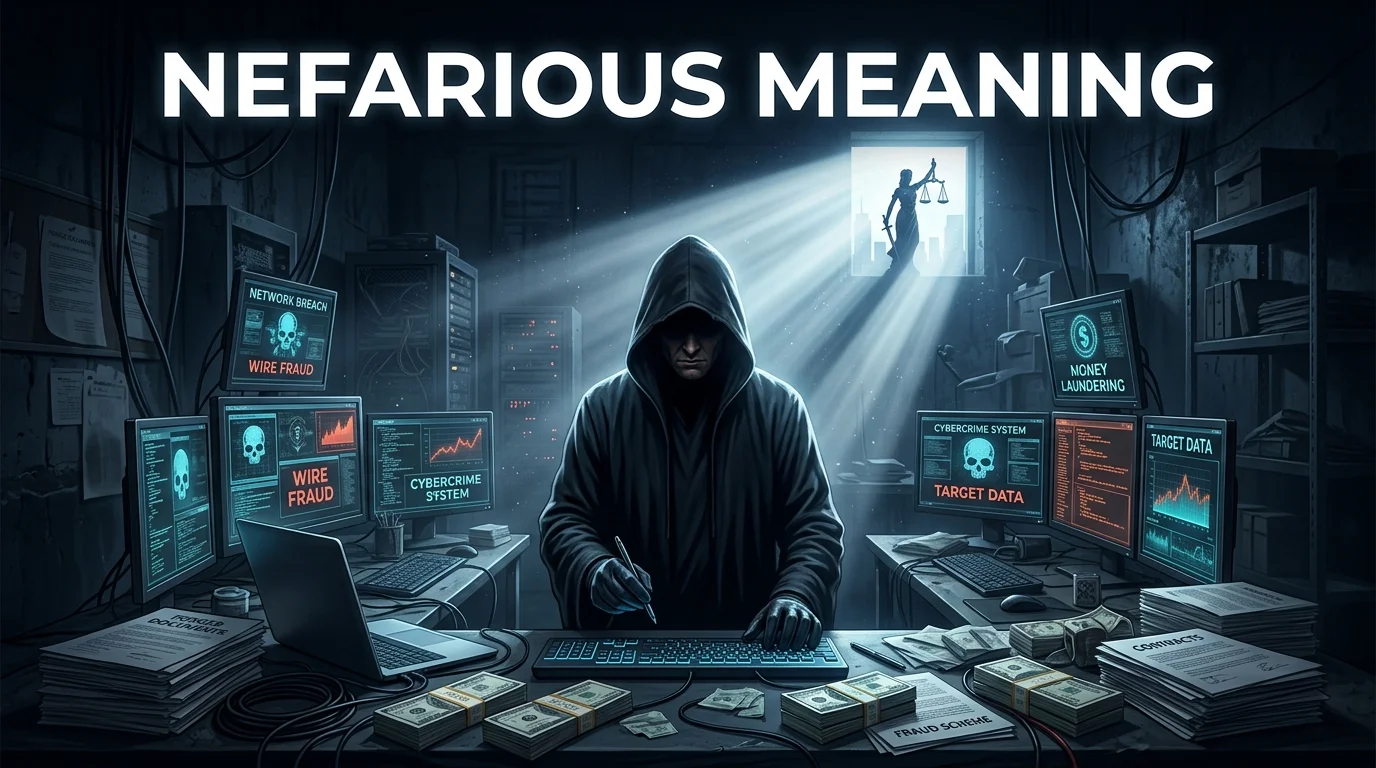
Examples of nefarious behavior include running financial scams, creating cybercrime operations, laundering money, organizing illegal trafficking, forging important documents, blackmailing innocent people, or misleading others through elaborate fraud schemes. In fiction, many famous villains are described as nefarious because they deliberately create dangerous plans to achieve power or wealth. In real life, journalists often use the word when reporting on organized criminal networks, corrupt officials, or large-scale financial crimes. Understanding these traits helps learners recognize when the word is appropriate and prevents them from using it to describe ordinary mistakes or minor acts of dishonesty.
Frequently Asked Questions
What does nefarious mean in simple English?
In simple English, nefarious means extremely wicked, dishonest, or criminal. It describes people, actions, or plans that intentionally cause harm or involve serious wrongdoing.
Is nefarious always related to crime?
No. Although the word is commonly used in crime-related contexts, it can also describe highly immoral or unethical behavior that is not necessarily illegal. However, it usually refers to serious wrongdoing rather than everyday mistakes.
What is the difference between nefarious and malicious?
Malicious means having the intention to harm someone, while nefarious usually describes actions or plans that are both intentionally harmful and seriously dishonest, immoral, or criminal.
Can nefarious describe a person?
Yes. While the word is more commonly used for actions, plans, motives, or organizations, it can also describe a person who consistently engages in wicked or criminal behavior.
What are some common synonyms for nefarious?
Common synonyms include wicked, evil, villainous, corrupt, criminal, immoral, dishonest, sinister, depraved, and malicious. The best synonym depends on the context and the level of wrongdoing being described.
Conclusion
The nefarious meaning goes far beyond simply describing something as bad. It refers to actions, motives, plans, or individuals that are intentionally wicked, dishonest, immoral, or criminal. Whether you encounter the word in books, news articles, legal discussions, political commentary, or everyday English, understanding its true meaning helps you use it with confidence and precision. Learning the difference between nefarious and evil, understanding nefarious vs malicious, exploring its origin and etymology, and seeing nefarious meaning with examples in sentences gives you a complete understanding of this powerful English word.
Expanding your vocabulary is one of the best ways to improve communication, reading comprehension, and writing skills. If you’re looking for detailed explanations of English words, phrases, slang, idioms, and commonly searched meanings, Punz Trend is a valuable resource. The site offers easy-to-understand definitions, real-life examples, language guides, and in-depth articles designed to help learners of all levels understand English naturally and confidently.
See Also: 8647 Meaning Explained | Slang & Hidden Code Guide