Myrrh Meaning: Biblical Definition, Uses & Origin
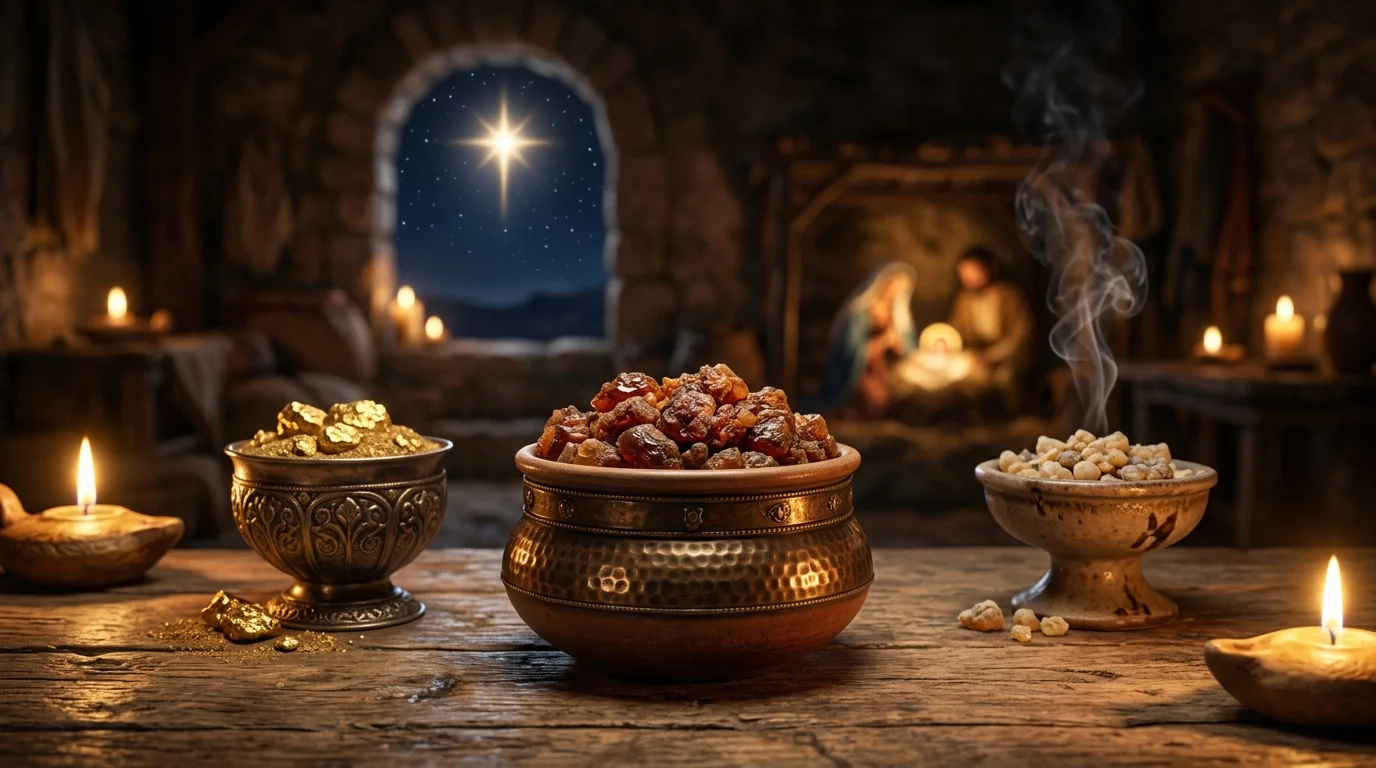
The word myrrh is most commonly associated with the Christmas story and the gifts presented to Jesus by the Three Wise Men, but its meaning extends far beyond that famous biblical event. Many people search for myrrh meaning because they encounter the word while reading the Bible, studying Christianity, exploring ancient history, or learning about natural remedies. Others simply want to understand what myrrh is, where it comes from, and why it has remained valuable for thousands of years.
Understanding the myrrh meaning involves more than learning a simple dictionary definition. It requires exploring its religious symbolism, historical importance, medicinal uses, and cultural significance across different civilizations. In this detailed guide, you’ll discover what myrrh means in the Bible, its role in Christianity, its pronunciation, traditional and modern uses, where it comes from, and how it differs from frankincense. If you enjoy learning the meanings of unique English words, biblical terms, and trending vocabulary, Punz Trend is your trusted source for clear, detailed, and easy-to-understand explanations.
Meaning & Definition
The myrrh meaning refers to a fragrant natural resin obtained from small thorny trees belonging to the Commiphora species, which grow mainly in parts of northeastern Africa and the Arabian Peninsula. The resin is collected by making cuts in the tree’s bark, allowing a thick, golden sap to harden into reddish-brown resin pieces.
In simple words, myrrh is an aromatic resin that has been prized for thousands of years because of its pleasant fragrance, medicinal properties, and religious significance. It has traditionally been used in perfumes, incense, religious ceremonies, embalming practices, herbal medicine, and essential oils.
Beyond its physical form, myrrh also carries deep symbolic meaning. In Christianity, it represents sacrifice, suffering, healing, and preparation. Because of these symbolic associations, myrrh appears frequently in biblical teachings, Christmas traditions, and discussions about the life of Jesus Christ. Today, the word continues to be recognized both as a valuable natural product and as a powerful religious symbol.
Background
The history of myrrh stretches back more than five thousand years, making it one of the oldest known aromatic substances used by humans. Ancient civilizations, including the Egyptians, Greeks, Romans, Hebrews, and people throughout the Middle East, valued myrrh for its fragrance, healing properties, and spiritual importance.
In ancient Egypt, myrrh played an important role in religious rituals and was widely used during the embalming process because of its preservative qualities and pleasant aroma. It was also burned as incense in temples and mixed into perfumes used by royalty and priests.
As international trade expanded, myrrh became one of the most valuable commodities transported along ancient trade routes connecting Africa, Arabia, and the Mediterranean world. Merchants considered it a luxury product because harvesting the resin required skilled labor and access to specific regions where Commiphora trees naturally grew.
Its historical importance eventually led to its inclusion in religious texts, especially the Bible, where myrrh became closely connected with worship, sacrifice, and the birth of Jesus. This rich historical background explains why myrrh continues to hold cultural, spiritual, and historical significance today.
Usage in Different Contexts
The myrrh meaning changes slightly depending on the context in which it is used, although the core idea remains connected to the aromatic resin itself. Understanding these different contexts helps readers appreciate why myrrh remains relevant in religion, history, medicine, and modern wellness.
In Christianity, myrrh symbolizes sacrifice, suffering, healing, and devotion. It is one of the three famous gifts presented to Jesus by the Wise Men and carries deep spiritual meaning within biblical teachings.
In history, myrrh represents an important trade commodity that was highly prized throughout ancient civilizations. Kings, merchants, and religious leaders considered it a luxury item because of its rarity and wide range of uses.
In traditional medicine, myrrh has been used for centuries in herbal remedies, mouthwashes, skin treatments, and natural healing practices. Although scientific research continues to study its effectiveness, many cultures still value it as a traditional remedy.
In modern wellness, myrrh appears in essential oils, perfumes, aromatherapy products, natural cosmetics, and skincare items because of its distinctive fragrance and long-standing reputation for supporting overall well-being.
What Does Myrrh Mean in the Bible?
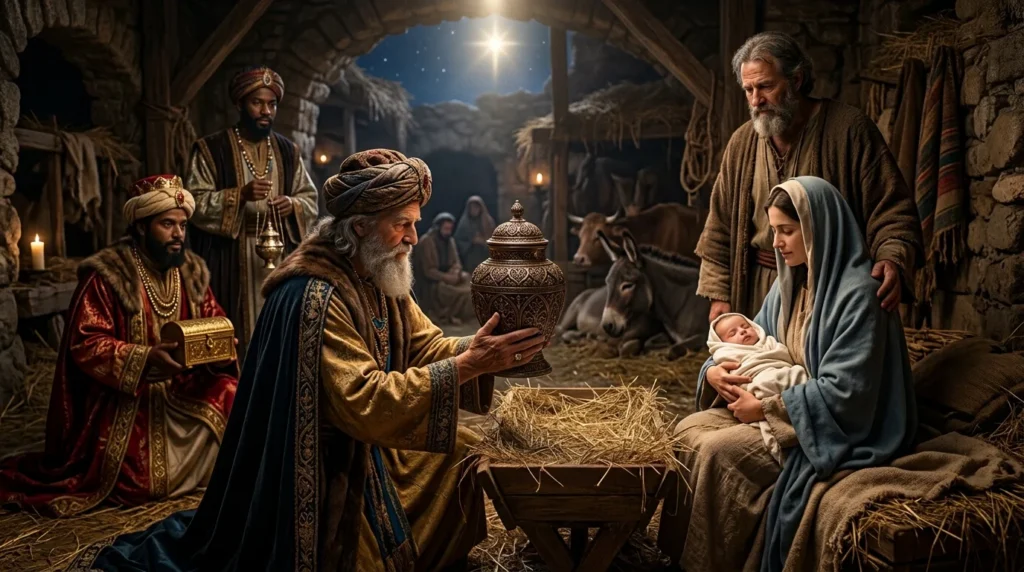
One of the most common questions people ask is what does myrrh mean in the Bible? In biblical scripture, myrrh is much more than an expensive gift. It carries profound symbolic meaning that points to sacrifice, worship, suffering, healing, and the future mission of Jesus Christ.
The most famous biblical reference appears in the Gospel accounts describing the visit of the Three Wise Men, also known as the Magi, who presented gold, frankincense, and myrrh to the infant Jesus. While gold represented kingship and frankincense symbolized divinity and worship, many Christian scholars interpret myrrh as representing Jesus’ future suffering, sacrificial death, and humanity.
Myrrh also appears in other parts of the Bible, where it is associated with perfume, anointing oil, incense, purification rituals, and expressions of love. In ancient Hebrew culture, it was considered precious because of both its practical uses and its spiritual symbolism.
Understanding the myrrh meaning in the Bible helps readers appreciate why this natural resin has remained one of the most recognizable religious symbols in Christianity. Rather than being an ordinary gift, myrrh reflected honor, prophecy, and deep spiritual significance that continues to be remembered in Christian teachings and Christmas traditions around the world.
Myrrh Meaning in Christianity Explained
The myrrh meaning in Christianity goes far beyond its identity as a fragrant resin. It is a powerful symbol of sacrifice, suffering, healing, and redemption. Christians believe that every gift presented by the Three Wise Men carried a special message about the life and mission of Jesus Christ. While gold honored Him as a King and frankincense represented His divine nature, myrrh symbolized His humanity and the suffering He would later endure for mankind.
Many biblical scholars explain that myrrh foreshadowed Jesus’ crucifixion because it was commonly used in burial preparations and embalming during ancient times. This symbolism connects the celebration of Christ’s birth with His future sacrifice, making myrrh one of the most meaningful gifts mentioned in the Christmas story.
Even today, churches, Bible studies, and Christian teachings often refer to myrrh when discussing themes of faith, humility, healing, and salvation. Its symbolic meaning continues to remind believers of Christ’s complete journey from birth to resurrection.
What Is Myrrh Used for Today?
Although myrrh is best known for its biblical significance, many people also ask what is myrrh used for today? Modern uses combine ancient traditions with contemporary wellness practices.
Today, myrrh is commonly found in essential oils, perfumes, incense, herbal products, soaps, skincare items, and natural cosmetics. Its warm, earthy fragrance makes it a popular ingredient in aromatherapy, where it is often used to create a calming atmosphere during meditation or relaxation.
Traditional herbal medicine has also used myrrh for centuries in mouthwashes, toothpaste, skin ointments, and wound care because of its natural properties. While many people continue to value these traditional uses, scientific studies are still exploring the full extent of myrrh’s potential health benefits.
In addition to wellness products, myrrh remains important in religious ceremonies, especially within Christian and Eastern traditions where incense continues to play a meaningful role in worship. This combination of historical, spiritual, and practical uses explains why myrrh remains valuable even in the modern world.
See Also: Grifter Meaning: Definition, Origin & Examples Explained
Myrrh Meaning and Pronunciation
Many English learners search for myrrh meaning and pronunciation because the spelling looks unusual compared to its pronunciation.
The word myrrh is pronounced:
/mɜːr/ (mur)
Although it contains several silent letters, the pronunciation is simple and sounds almost exactly like the word “mur.”
The meaning of myrrh remains the same regardless of pronunciation. It refers to the aromatic resin obtained from Commiphora trees that has been used for thousands of years in religion, medicine, perfumes, and cultural traditions.
Example sentence:
The Wise Men presented gold, frankincense, and myrrh to the infant Jesus.
Learning both the pronunciation and meaning helps readers confidently recognize the word in conversations, church services, documentaries, educational materials, and English literature.
What Is Myrrh Made From?
Many people wonder what is myrrh made from because it is often described as a gift, an oil, or an incense rather than a natural substance.
Myrrh is made from the hardened sap, or resin, of small thorny trees belonging to the Commiphora genus. These trees grow naturally in dry regions of northeastern Africa and parts of the Arabian Peninsula, particularly countries such as Somalia, Ethiopia, and Yemen.
To harvest myrrh, small cuts are made in the bark of the tree. The tree releases a sticky yellow sap as a natural defense mechanism. Over time, this sap hardens into reddish-brown resin pieces, which are collected by hand after drying naturally.
The harvested resin may then be sold in its raw form or processed into essential oils, incense, perfumes, herbal remedies, cosmetics, and traditional medicines. This natural harvesting process has remained largely unchanged for thousands of years, making myrrh one of history’s oldest and most valuable aromatic products.
Why Was Myrrh Given to Jesus?
One of the most searched questions is why was myrrh given to Jesus? According to the Gospel of Matthew, the Three Wise Men brought gold, frankincense, and myrrh as gifts to honor the newborn Jesus. Each gift carried a symbolic meaning rather than simply representing material value.
Christian tradition teaches that myrrh symbolized Jesus’ future suffering, sacrifice, and death. Because myrrh was commonly used in ancient burial customs and embalming practices, many biblical scholars believe the gift pointed toward Christ’s eventual crucifixion and resurrection.
At the same time, myrrh also represented honor and great value. It was an expensive commodity that only wealthy individuals or kings could easily afford. Presenting myrrh to Jesus acknowledged His importance while also expressing deep spiritual meaning.
This dual symbolism makes myrrh one of the most significant gifts mentioned in the Bible. It reflects both reverence for Christ’s birth and recognition of His future mission according to Christian belief.
Myrrh Meaning in Christmas Story
The myrrh meaning in Christmas story is closely connected with the visit of the Magi, or Three Wise Men, who traveled to Bethlehem after following the star that announced the birth of Jesus.
According to Christian tradition, the Wise Men offered three gifts: gold, frankincense, and myrrh. Each gift represented a different aspect of Jesus’ identity and purpose. Gold honored Him as a King, frankincense recognized His divine nature, and myrrh symbolized His humanity, future suffering, and ultimate sacrifice.
Because of this symbolism, myrrh has become an important part of Christmas teachings around the world. Churches frequently explain the deeper meaning behind the gifts during Christmas services, helping believers understand that the story is about more than generous presents. The gifts also communicate powerful spiritual messages about hope, salvation, and God’s plan.
Today, nativity scenes, Christmas plays, and holiday sermons often include references to myrrh, ensuring that its rich historical and religious significance continues to be remembered by new generations.
Myrrh Benefits and Traditional Uses
For thousands of years, people have valued myrrh not only for its fragrance but also for its practical applications. When discussing myrrh benefits and traditional uses, it is important to distinguish between historical practices and modern scientific research. Ancient civilizations widely used myrrh in herbal medicine, religious ceremonies, perfumes, and preservation techniques, while modern researchers continue to study its potential properties.
Traditionally, myrrh was used in mouthwashes, toothpaste, skin ointments, perfumes, incense, and wound care preparations. It was also burned during religious ceremonies because of its rich, earthy aroma. In aromatherapy, myrrh essential oil is popular for creating a relaxing environment during meditation and prayer.
Although many people continue to use myrrh in natural wellness products, its effectiveness for specific medical conditions should not be considered a substitute for professional healthcare. Modern studies continue to explore its properties, but anyone seeking treatment for a health condition should consult a qualified medical professional.
See Also: Rizz Meaning: Slang, TikTok, Dating & Origin Explained
Frankincense vs Myrrh Difference Explained
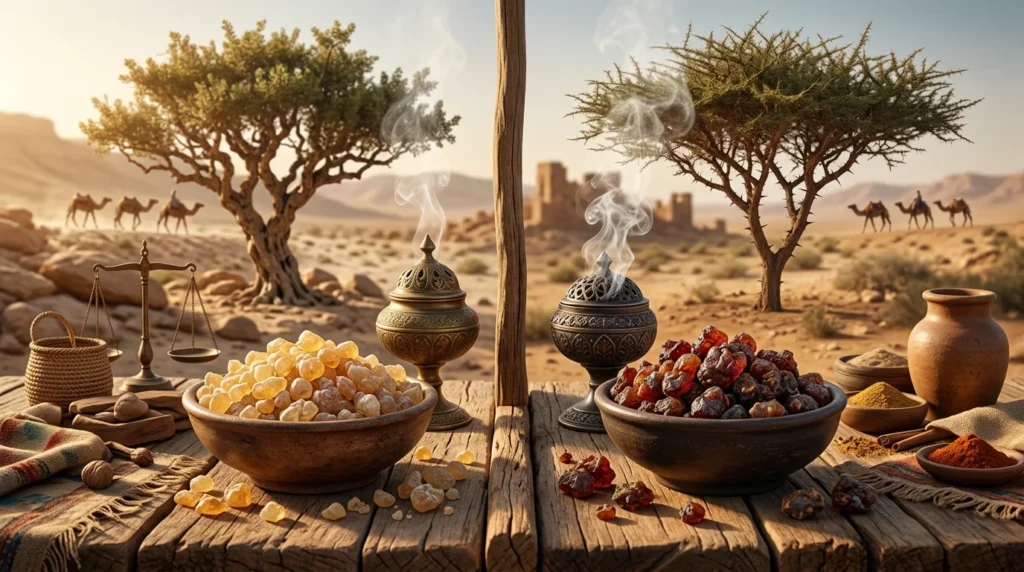
Many readers confuse these two famous biblical gifts, making frankincense vs myrrh difference explained one of the most searched questions online. Although both are aromatic resins used for religious and traditional purposes, they differ in their source, fragrance, appearance, and symbolism.
Frankincense comes from trees of the Boswellia genus, while myrrh is obtained from Commiphora trees. Frankincense usually has a lighter, citrus-like fragrance, whereas myrrh has a deeper, warm, earthy, and slightly bitter scent.
Their symbolic meanings in Christianity are also different. Frankincense represents worship, holiness, and the divine nature of Jesus Christ. Myrrh symbolizes sacrifice, suffering, healing, and His future death and burial.
Both substances have been used in incense, perfumes, traditional medicine, and religious ceremonies for centuries. Their appearance together in the Christmas story highlights their unique spiritual significance while also reflecting their historical value as rare and expensive gifts.
Where Does Myrrh Come From?
If you have ever wondered where does myrrh come from, the answer lies in some of the world’s driest regions. Myrrh is harvested from small thorny trees belonging to the Commiphora genus, which naturally grow in northeastern Africa and parts of the Arabian Peninsula.
Countries such as Somalia, Ethiopia, Kenya, Oman, and Yemen have long been known for producing high-quality myrrh. Farmers carefully cut the bark of the tree, allowing a sticky resin to flow out. As the resin dries naturally in the air, it hardens into reddish-brown tears that are collected by hand.
For thousands of years, myrrh traveled along ancient trade routes connecting Africa, the Middle East, and Europe. Because harvesting required both skill and favorable growing conditions, myrrh became one of the most valuable luxury goods of the ancient world. Its rarity and importance explain why it was considered a gift worthy of kings and religious ceremonies.
How Do You Use Myrrh in a Sentence?
Learning how to use myrrh in a sentence helps you understand its correct usage in both everyday English and religious discussions. Since myrrh is a noun referring to the natural aromatic resin, it usually appears in historical, biblical, cultural, or wellness-related contexts.
Here are a few natural examples:
- The Three Wise Men presented myrrh as one of their gifts to Jesus.
- Ancient Egyptians valued myrrh for religious ceremonies and embalming.
- The perfume contained natural myrrh and frankincense.
- Many churches explain the symbolic meaning of myrrh during Christmas services.
- She enjoyed the warm, earthy fragrance of myrrh essential oil.
These examples show that myrrh can be used when discussing history, Christianity, traditional medicine, perfumes, or natural products. Understanding the context makes it easier to recognize the word in books, documentaries, and everyday conversations.
Why Read Meanings on Punz Trend?
Language is constantly evolving, and many words have meanings that extend far beyond simple dictionary definitions. Words like myrrh carry historical, cultural, religious, and linguistic significance that cannot be fully understood through a short explanation alone.
At Punz Trend, we provide detailed guides that cover every important aspect of a word, including its definition, pronunciation, background, symbolism, usage, comparisons, examples, and frequently asked questions. Our goal is to make complex topics easy to understand while ensuring every article is accurate, engaging, and optimized for modern search engines.
Whether you’re researching biblical terms, internet slang, English vocabulary, or trending expressions, Punz Trend offers clear, trustworthy, and reader-friendly content that helps you learn with confidence. If you’re ever curious about the meaning of a word or phrase, you’ll find comprehensive explanations waiting for you on Punz Trend.
Frequently Asked Questions
What does myrrh mean in the Bible?
In the Bible, myrrh symbolizes sacrifice, suffering, healing, and honor. It was one of the gifts presented to Jesus by the Three Wise Men and is often associated with His future mission and sacrifice.
Why was myrrh given to Jesus?
According to Christian tradition, myrrh represented Jesus’ humanity and foreshadowed His future suffering and burial. It was also a precious gift that showed honor and respect.
What is the difference between frankincense and myrrh?
Frankincense comes from Boswellia trees and symbolizes worship and divinity, while myrrh comes from Commiphora trees and symbolizes sacrifice, healing, and suffering.
Is myrrh still used today?
Yes. Myrrh is used in perfumes, incense, essential oils, aromatherapy, skincare products, and some traditional herbal remedies. It also remains important in religious ceremonies.
How do you pronounce myrrh?
Myrrh is pronounced “mur” (/mɜːr/), even though its spelling contains several silent letters.
Conclusion
The myrrh meaning goes far beyond a simple dictionary definition. It refers to a fragrant natural resin that has played an important role in history, religion, medicine, and culture for thousands of years. From its symbolic place in the Bible and the Christmas story to its traditional use in perfumes, incense, and herbal remedies, myrrh remains one of the world’s most meaningful natural substances. Understanding its origin, pronunciation, symbolism, and practical uses provides a deeper appreciation of its lasting importance. For more detailed explanations of English words, biblical terms, and trending vocabulary, Punz Trend is your trusted destination for accurate, engaging, and easy-to-understand meaning guides.
See Also: Sapiosexual Meaning: Attraction to Intelligence Explained