Abut Meaning: Definition, Examples & Uses Explained
Have you ever seen a word in a property document, legal paper, or real estate listing that looks unfamiliar? Abut is one such word that many people come across but do not fully understand. The word may sound complicated, but its meaning is actually simple. Abut means to touch, border, or be directly next to something.
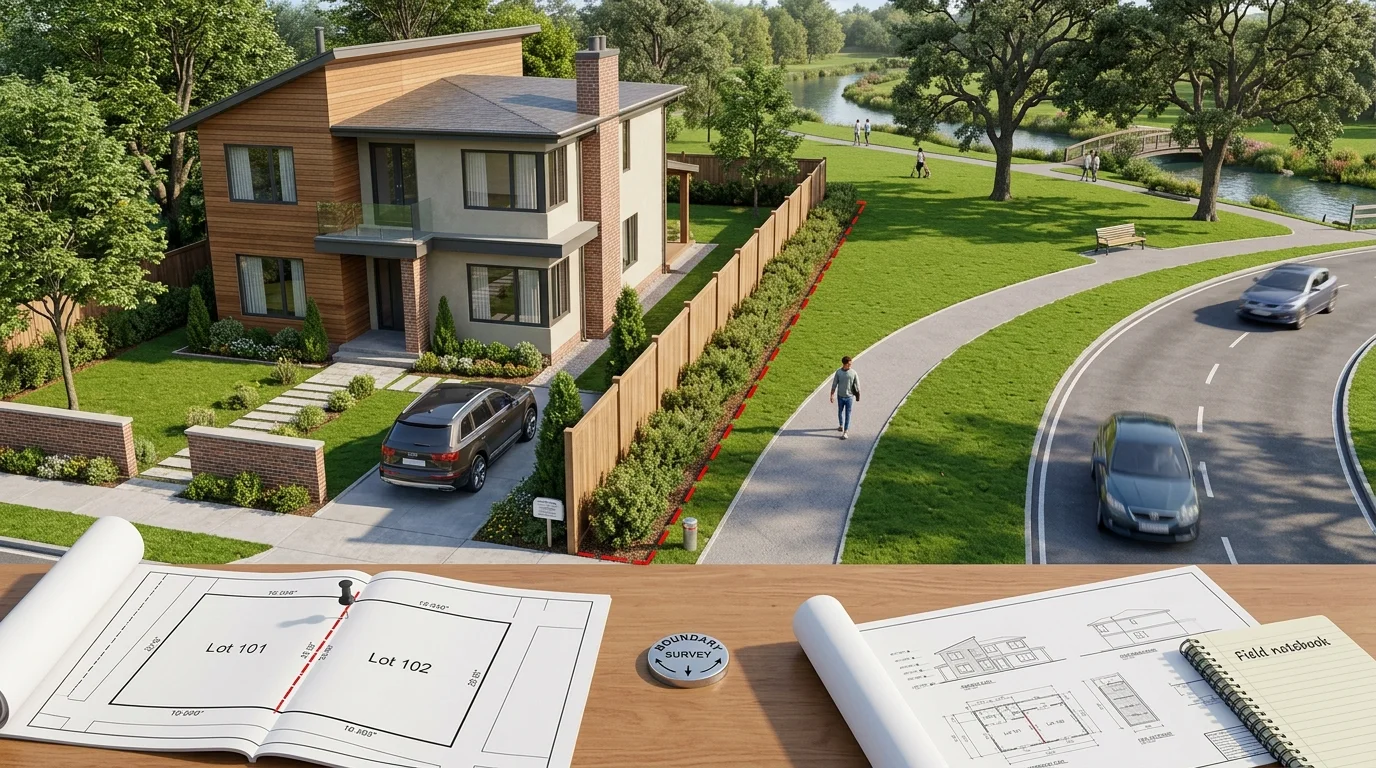
This word is mostly used when talking about land, buildings, roads, rivers, and other places that share a boundary. For example, if a house is directly beside a park and the property line touches the park, we can say the house abuts the park.
Understanding the abut meaning is useful because this word appears often in real estate descriptions, legal documents, maps, and official records. In this guide, we will explain what abut means, where it comes from, and how it is used in different situations. For more simple and detailed word explanations, you can explore Punz Trend, where meanings are explained in an easy-to-understand way.
Meaning & Definition
The meaning of abut is to be next to something while sharing a common boundary or edge. When two things abut each other, they are touching or meeting directly.
In simple words:
Abut means to touch or be connected with something at a border.
For example:
- A house that touches a lake abuts the lake.
- A road that reaches the edge of a property abuts the property.
- Two pieces of land that share a boundary are abutting properties.
The word abut is different from words like “near” or “close.” If a school is near a park, it does not mean they touch. But if the school’s land directly reaches the park’s boundary, the school property abuts the park.
Because it describes a direct connection, abut is commonly used in situations where exact location and boundaries are important.
Background
The word abut comes from the Old French word abouter, which means “to touch at the end” or “to meet.” Over time, the word entered the English language and became commonly used in legal and geographical descriptions.
In the past, people needed accurate ways to describe land ownership and property boundaries. Before modern maps and technology, written descriptions were used to explain where one piece of land ended and another began. Words like abut helped people clearly describe these connections.
For example, an old land record might describe a field that “abuts a river” or a property that “abuts a neighboring estate.” This made it easier to understand exact locations and ownership details.
Today, the word is still widely used in real estate, law, construction, and city planning because it provides a clear description of boundaries.
Usage in Different Contexts
The word abut is mainly used when describing physical connections between places or objects. Although the basic meaning remains the same, its use changes depending on the field.
Abut Meaning in Real Estate
Read Also:
Myrrh Meaning: Biblical Definition, Uses & Origin
In real estate, abut is often used to describe how one property connects with another area. A property may abut a road, park, river, building, or another piece of land.
For example:
“The property abuts a beautiful lake.”
This means the property directly touches the lake’s boundary.
Real estate professionals use this word because it gives a more accurate description than simply saying something is nearby. Whether a property abuts a highway, green space, or water source can affect its value, privacy, and accessibility.
Understanding this term helps buyers and sellers better understand property descriptions and location details.
Abut Meaning in Legal Terms
In legal documents, abut is used to describe exact property boundaries. Lawyers, courts, and government offices often use this word when discussing land ownership, zoning rules, and property agreements.
For example:
“The land abuts the eastern side of the neighboring property.”
This means the two properties share a boundary on the eastern side.
The word is important in legal writing because small differences in property descriptions can create major issues. Using the term abut helps clearly explain how land areas connect and reduces confusion about ownership or boundaries.
Abut Meaning in Geography
In geography, the word abut is used to describe how natural or human-made areas connect with each other. It explains that one location directly touches or shares a boundary with another location.
For example, a country may abut another country if they share a border. A forest may abut a farming area if the two regions meet directly. Similarly, a river may form a boundary where one piece of land abuts another.
Geographers and planners use this term because it provides a clear understanding of physical relationships between different areas. Instead of simply saying that two places are close, the word abut confirms that they actually meet at a specific point or boundary.
This usage is especially common in maps, environmental studies, urban planning, and reports that describe land features.
Abut Meaning in Construction and Architecture
In construction and architecture, abut describes when one structure touches or connects with another structure or surface. Builders, architects, and engineers use this term when explaining how different parts of a building or project are connected.
For example:
“The new building will abut the existing structure.”
This means the new building will be directly next to or connected to the existing building.
The term is useful in construction plans because it gives a precise description of placement. It can refer to walls, buildings, bridges, roads, and other structures that meet or share boundaries.
Using accurate words like abut helps professionals avoid misunderstandings during planning and development projects.
Abut vs Adjacent Difference Explained
Read Also:
Kismet Meaning: Origin, Love, Fate & Spiritual Explained
Many people confuse abut with adjacent because both words describe things that are close together. However, there is an important difference between them.
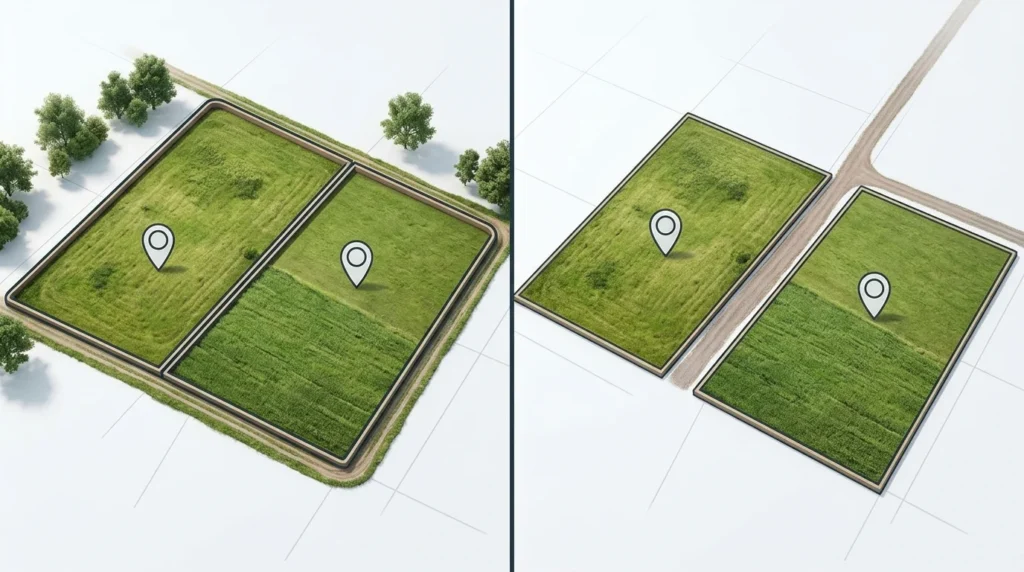
Adjacent means something is next to or near another thing. It does not always mean the two things are touching.
Abut means two things directly touch or share a boundary.
For example:
“The house is adjacent to the park.”
This means the house is near the park, but it does not confirm that they share a border.
“The house abuts the park.”
This means the property directly touches the park’s boundary.
So, every property that abuts something is adjacent to it, but not everything adjacent is necessarily abutting.
Abut Meaning with Examples
Understanding examples makes the meaning of abut easier to remember. Here are some common examples:
Example 1:
“The garden abuts the backyard fence.”
Meaning: The garden touches the fence boundary.
Example 2:
“The apartment building abuts the main street.”
Meaning: The building directly borders the street.
Example 3:
“The farm abuts a large forest.”
Meaning: The farm shares a boundary with the forest.
Example 4:
“The two properties abut each other.”
Meaning: The two properties meet at their borders.
These examples show that abut is mainly used when describing direct physical connections between two places or objects.
How to Use Abut in a Sentence
The word abut is usually used as a verb. It describes one thing touching or bordering another thing.
Common sentence structures include:
Subject + abut + object
Examples:
- The property abuts the river.
- The building abuts the parking area.
- The garden abuts the neighbor’s land.
- The road abuts the residential area.
The word is mostly used in formal writing rather than casual conversations. In everyday speech, people often use simpler phrases like “next to,” “beside,” or “touching.”
However, when writing about property, law, or geography, abut is a more accurate and professional word.
Is Abut a Common Word?
Although abut is a correct English word, it is not commonly used in everyday conversations. Most people are more familiar with words like “beside,” “next to,” or “border.”
However, the word remains important in specific industries. Real estate agents, lawyers, architects, city planners, and government officials use it regularly because it provides a precise meaning.
Someone reading a property listing might see phrases like:
- “The land abuts a public road.”
- “The property abuts a protected area.”
Understanding the term helps people read official documents and professional descriptions more confidently.
Why Read Meanings on Punz Trend?
Learning uncommon English words can sometimes be confusing because short dictionary definitions do not always explain how a word is actually used. A word like abut has different applications in real estate, law, geography, and construction.
At Punz Trend, meanings are explained with simple definitions, examples, background information, and real-life usage so readers can understand words completely. Whether you are learning new vocabulary, improving your English skills, or researching a specific term, detailed explanations make learning easier.
Punz Trend helps readers discover the meaning, origin, and practical use of words in a clear and engaging way.
How to Use Abut in Everyday Writing
Although abut is more common in formal writing, understanding how to use it correctly can improve your vocabulary and writing skills. The word works best when describing physical locations, boundaries, or areas that directly connect with each other.
In everyday writing, you may not use abut frequently because simpler words like “touch,” “border,” or “next to” are more common. However, in professional writing, using abut can make your description more precise.
Examples:
- The property abuts a quiet residential neighborhood.
- The park abuts the eastern side of the town.
- The two buildings abut one another.
Using this word correctly shows a clear understanding of location and physical relationships.
Abutting Meaning Explained
The word abutting is the adjective form of abut and describes something that shares a boundary with another thing.
For example:
“Abutting properties often have shared boundary lines.”
This means the properties are directly connected or touch each other.
The term abutting property is commonly used in real estate and legal discussions. It may describe houses, lands, commercial areas, or buildings that meet along a border.
Similarly, an abutting owner refers to a person who owns property that shares a boundary with another property or public area.
Understanding the word abutting helps when reading property documents, neighborhood rules, or official land descriptions.
Abut Meaning in Simple Words
The simplest explanation of abut meaning is:
Abut means to touch or share a border with something.
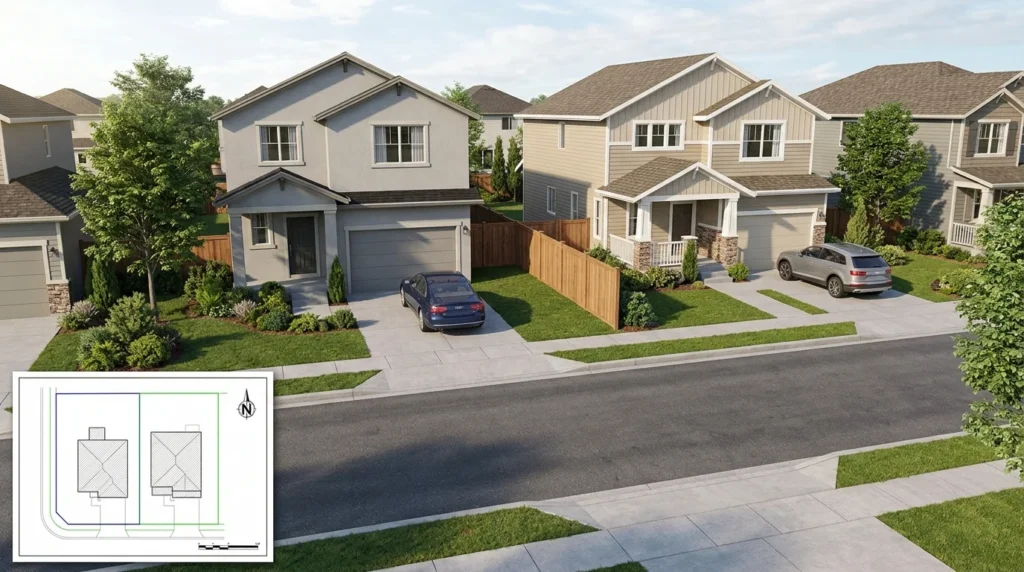
Imagine two pieces of land placed next to each other. If their edges meet, they abut each other. If there is a small space between them, they are only nearby or adjacent.
A simple memory trick is:
Abut = A boundary touches.
The word is mainly about connection, not distance. It focuses on the point where two things meet.
Whether it is a house beside a road, a country sharing a border, or two properties meeting at a line, the idea remains the same: they are directly connected.
Frequently Asked Questions
What does abut mean in simple words?
Abut means to touch, border, or share a direct boundary with something. It is often used to describe properties, lands, buildings, and places that meet each other.
What is an example of abut?
An example of abut is: “The house abuts the lake.” This means the house property directly touches or shares a boundary with the lake.
What is the difference between abut and adjacent?
Abut means two things directly touch or share a boundary, while adjacent means two things are next to each other but may not actually touch.
Is abut only used in real estate?
No, abut is not limited to real estate. It is also used in geography, construction, architecture, law, and urban planning to describe things that share a boundary.
What does abutting property mean?
An abutting property is a property that directly touches or shares a boundary with another property, road, park, river, or other area.
Conclusion
The abut meaning is simple but highly useful: it means to touch, border, or share a boundary with something. While this word is not commonly used in casual conversations, it plays an important role in real estate, law, geography, construction, and official documents. Understanding the difference between abut and similar words like adjacent can help you interpret property descriptions and professional writing more accurately.
From its Old French origin to its modern usage, abut has remained an important word for describing physical connections between places and objects. Learning words like this improves vocabulary and makes communication clearer. For more detailed word meanings, examples, and easy explanations, Punz Trend helps readers understand language from every angle.
Read Also: