
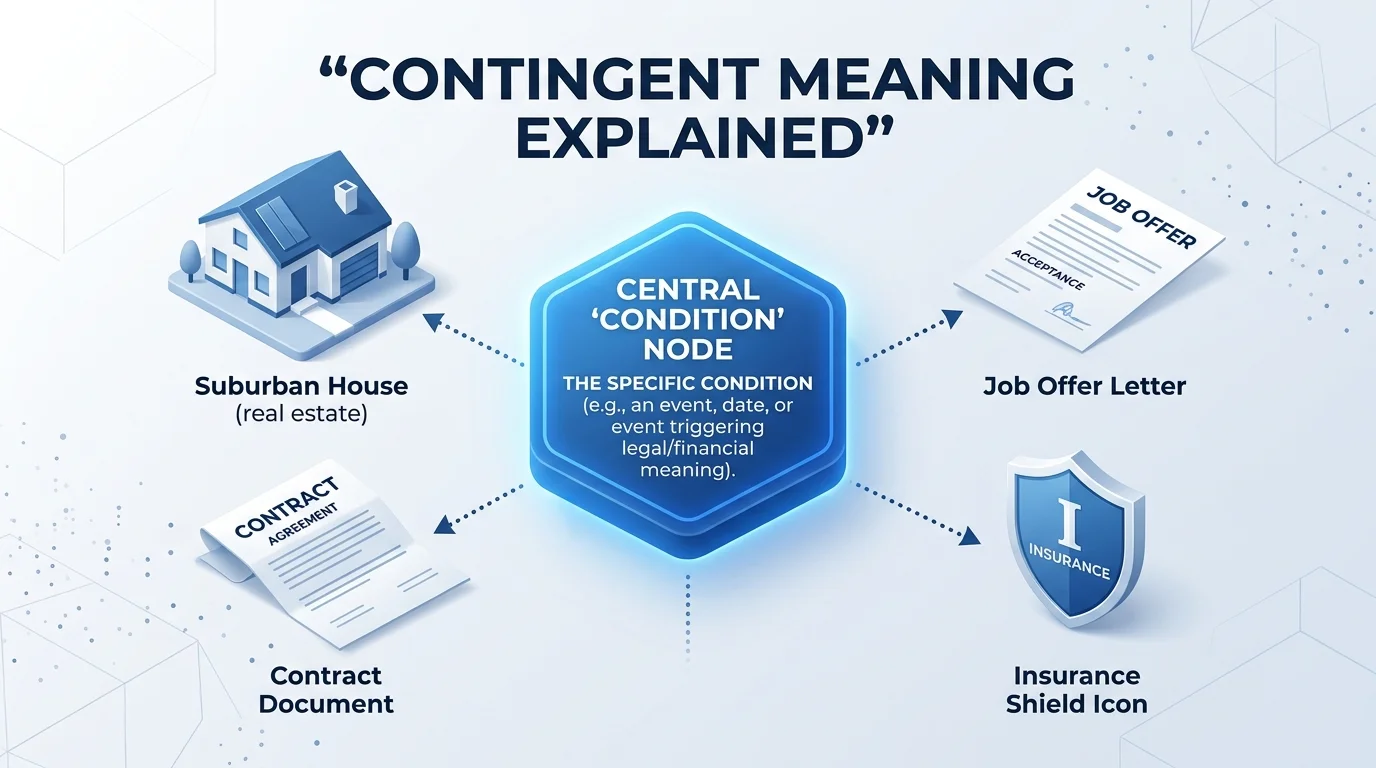
Contingent Meaning Explained: Simple Guide & Examples
The word “contingent” is one of those terms that appears simple at first, but its meaning changes depending on context like law, real estate, business, and everyday English. If you’ve ever seen terms like “contingent offer,” “contingent job,” or “contingent liability,” you may have wondered what it actually means. In simple terms, the contingent meaning refers to something that depends on certain conditions or circumstances before it becomes true, valid, or complete. It is not fixed or guaranteed—it is conditional.
In modern usage, this word is widely searched in Google, especially in real estate and job markets. This guide will break down everything in a simple, SEO-friendly, and AI-optimized way so you can understand it easily. Whether you are learning English, studying law, or exploring property deals, this article will cover all angles of the term “contingent” in a clear and practical way.
Meaning & Definition of Contingent

The contingent meaning refers to something that is dependent on a specific condition or event. If that condition happens, the result becomes valid; if it does not happen, the result may change or fail.
In simple English, contingent means “depending on something else.” It is often used in situations where outcomes are not guaranteed.
For example, a contingent offer in real estate means the property deal will only be completed if certain conditions are met, such as loan approval or inspection results. Similarly, a contingent job means employment that depends on project needs or contract terms.
Core Idea:
Contingent = Dependent on conditions or events
Background of Contingent Meaning
The word contingent comes from Latin roots “contingere,” which means “to touch or happen by chance.” Over time, it evolved into a term used in philosophy, law, business, and economics to describe situations that depend on external conditions.
In philosophy, especially in discussions about contingency and reality, it refers to events that may or may not happen. In modern usage, it is widely used in professional fields like real estate contracts, insurance policies, and employment structures.
Today, semantic SEO systems and AI models like ChatGPT and Gemini often connect this term with dependency-based conditions, legal agreements, and financial risk.
Usage in Different Contexts of Contingent Meaning
The word contingent is used in multiple industries, and its meaning slightly changes depending on context. In general communication, it always means “dependent on something.”
In business, it refers to agreements or decisions that depend on future conditions. In law, it is used for contracts that are not final until certain requirements are fulfilled. In real estate, it describes property deals that are under condition. In jobs, it refers to temporary or contract-based employment. In insurance, it describes uncertain liabilities or risks that may or may not occur.
Understanding context is important because the meaning of “contingent” changes based on the field it is used in.
What Does Contingent Mean in Simple English?
In simple English, contingent means something that depends on another thing happening first. It is not permanent or guaranteed.
For example, if someone says, “Your trip is contingent on approval,” it means the trip will only happen if approval is granted. This makes the word very common in everyday conversations where conditions matter.
Contingent Meaning in Law Explained
In legal terms, contingent meaning in law refers to rights, contracts, or obligations that depend on specific conditions. A legal agreement may not be valid until certain requirements are met.
For example, inheritance may be contingent on a person reaching a certain age. Similarly, contracts may include clauses that make obligations dependent on external events.
Lawyers often use this term to define conditional agreements and legal dependencies clearly.
Contingent Meaning in Real Estate Terms

In real estate, contingent meaning is one of the most searched topics. A property marked as “contingent” means an offer has been accepted, but the sale is not final yet.
The deal depends on conditions like financing approval, home inspection, or legal paperwork. If these conditions are not satisfied, the deal can be canceled.
This is why buyers often see terms like “contingent offer” or “pending status” in property listings.
What is a Contingent Offer in Property?
A contingent offer in real estate means a buyer has made an offer, but the purchase depends on certain conditions.
For example, a buyer may agree to purchase a house only if they get a loan approved or if the home passes inspection. Until those conditions are met, the sale is not final.
This protects both buyers and sellers from risks during the transaction process.
See Also: Platonic Meaning Explained: Simple Guide & Examples
Contingent vs Pending Meaning in Real Estate
Many people confuse contingent and pending, but they are different.
A contingent property still has conditions that must be fulfilled before closing. A pending property means all conditions have been satisfied and the deal is almost complete.
In simple terms:
- Contingent = Still conditional
- Pending = Almost finalized
Contingent Meaning in Business Contracts
In business contracts, contingent meaning refers to agreements that depend on future performance or conditions.
For example, a company may hire a consultant on a contingent basis, meaning payment or continuation depends on project success or deliverables.
This is common in startups, freelance work, and performance-based contracts.
What Does Contingent Job Mean?
A contingent job refers to employment that is temporary, contract-based, or dependent on business needs.
These jobs are not permanent and may end once the project is completed. Freelancers, consultants, and temporary workers often fall into this category.
This type of employment is flexible but less stable compared to permanent jobs.
Contingent Liability Meaning with Examples
A contingent liability is a financial obligation that may or may not happen depending on future events.
For example, if a company is facing a lawsuit, it may have to pay compensation only if it loses the case. This is considered a contingent liability.
Businesses use this term in accounting to manage financial risk.
Contingent Meaning in Insurance Terms
In insurance, contingent meaning refers to risks or payments that depend on uncertain future events.
For example, an insurance company may pay a claim only if specific conditions are met, such as proof of damage or accident verification.
This helps insurance companies control risk and ensure fairness in claims processing.
Is Contingent the Same as Conditional?
Yes, in most cases, contingent and conditional are very similar, but not exactly the same.
Both refer to dependency on conditions, but “contingent” is more formal and widely used in law, business, and real estate, while “conditional” is more general in everyday English.
Examples of Contingent Situations in Real Life
Contingent situations happen everywhere in daily life. For example, a student’s scholarship may be contingent on maintaining good grades. A job offer may be contingent on passing a background check. Even travel plans may be contingent on weather conditions.
These examples show how common this concept is in real-world decisions.
See Also: Demisexual Meaning Explained: Simple & Clear Guide
What is Contingent Reality in Philosophy?
In philosophy, contingent reality refers to things that exist but could have been different or might not have existed at all.
For example, human life, natural events, and historical outcomes are considered contingent because they depend on circumstances rather than necessity.
This idea is widely discussed in metaphysics and philosophical logic.
Frequently Asked Questions
What does contingent mean in simple English?
It means something that depends on a condition or event to happen.
What is a contingent offer in real estate?
It is an offer that depends on conditions like loan approval or inspection.
Is contingent the same as pending?
No, contingent means conditional, while pending means almost finalized.
What does contingent job mean?
It means temporary or contract-based employment.
What is contingent liability?
It is a possible financial obligation depending on future events.
Is contingent the same as conditional?
They are similar, but contingent is more formal and specific.
Conclusion
In simple terms, the contingent meaning refers to something that depends on specific conditions before it becomes final, valid, or certain. Whether it is used in real estate, law, business contracts, jobs, or insurance, the core idea always stays the same: nothing is guaranteed until the required conditions are fulfilled.
Understanding this term helps you read contracts, property listings, and professional agreements with more clarity and confidence. For example, a contingent job is not permanent, a contingent offer in real estate depends on approval steps, and a contingent liability depends on future events. This shows how widely and practically the concept is used in real life.
By learning such meanings in a simple way, you can easily understand complex English terms without confusion. If you want more easy, SEO-friendly explanations like this, you can always explore Punz Trend, where difficult words are broken down into simple, clear, and useful meanings for everyday learning.
See Also: Enigma Meaning: Definition, Examples & Complete Guide