

Discernment Meaning: Simple Definition and Uses
Have you ever wondered why some people consistently make wise decisions even in difficult situations? The answer often lies in a quality known as discernment. Many people search for discernment meaning because they encounter the word in personal development books, religious teachings, leadership discussions, and everyday conversations. While the term may sound formal, its meaning is highly practical and relevant to daily life.
In a world filled with endless information, opinions, and distractions, discernment has become more valuable than ever. It helps people recognize truth, avoid deception, and make thoughtful decisions. Whether you are evaluating a relationship, making a career choice, seeking spiritual guidance, or simply trying to understand a situation better, discernment can help you see beyond appearances. This guide explains what discernment means, how it works, why it matters, and how you can develop it in your own life.
Meaning & Definition
The discernment meaning refers to the ability to understand, perceive, and judge things accurately. In simple terms, discernment is the skill of recognizing what is true, right, valuable, or important by using wisdom and careful observation. It allows a person to look beyond surface-level information and understand the deeper reality of a situation.
Discernment is often associated with good judgment, insight, awareness, critical thinking, and wisdom. However, it goes a step further than ordinary knowledge. A knowledgeable person may know many facts, but a discerning person understands how to apply those facts wisely. This ability helps individuals make better decisions, identify opportunities, avoid mistakes, and navigate complex situations with confidence.
Background
The concept of discernment has existed for centuries and appears in philosophy, psychology, leadership studies, and religious traditions. Throughout history, wise leaders, scholars, and teachers have emphasized discernment as a key characteristic of mature and thoughtful individuals. Ancient cultures often viewed discernment as a sign of wisdom rather than intelligence alone.
Over time, the idea evolved and became connected with modern concepts such as emotional intelligence, decision-making, critical thinking, and self-awareness. Today, discernment is considered an essential life skill because people face an overwhelming amount of information every day. The ability to evaluate information carefully and distinguish truth from falsehood has become more important than ever before.
Usage in Different Contexts
Discernment can be used in many different contexts, and its meaning may vary slightly depending on the situation. In personal life, discernment helps people make wise decisions regarding friendships, relationships, finances, and career opportunities. It enables individuals to evaluate choices carefully before taking action.
In professional settings, discernment is a valuable leadership skill. Managers and business leaders use discernment to assess risks, understand team dynamics, and make strategic decisions. In education, discernment supports critical thinking and analytical reasoning. In spiritual settings, it often refers to recognizing deeper truths and understanding moral or religious guidance. Regardless of the context, the core idea remains the same: seeing clearly and making informed decisions.
What Does Discernment Mean in Simple Words?
If you want the simplest explanation possible, discernment means knowing the difference between what is right and wrong, true and false, or helpful and harmful. It is the ability to think carefully before making decisions and to understand situations beyond what is immediately visible.
Imagine receiving advice from several people about an important decision. Discernment helps you determine which advice is trustworthy and which should be ignored. It acts like a filter that separates valuable information from distractions. This is why discernment is often viewed as a combination of wisdom, awareness, and sound judgment.
Discernment Definition and Pronunciation
The standard definition of discernment is the ability to judge well and perceive things accurately. It involves understanding subtle differences and recognizing important details that others may overlook.
Pronunciation: dis-SURN-ment
Phonetic Spelling: /dɪˈsɜːrn.mənt/
The word is commonly used in discussions about leadership, spirituality, personal development, decision-making, and relationships. Despite its formal appearance, the concept itself is simple and practical.
Discernment Meaning With Examples

Understanding discernment becomes easier when viewed through real-life examples. Imagine being offered a job with an attractive salary. A discerning person would not focus solely on the paycheck. Instead, they would consider factors such as career growth, company culture, work-life balance, and long-term opportunities before making a decision.
Another example involves social media and online content. Every day, people encounter information that may be inaccurate or misleading. Discernment helps individuals verify facts, evaluate sources, and distinguish credible information from misinformation. In both cases, discernment encourages thoughtful analysis rather than impulsive reactions.
How to Use Discernment in Everyday Life
Discernment is a skill that can be applied every day. When choosing friends, making purchases, evaluating opportunities, or responding to challenges, discernment helps individuals make wiser decisions. Instead of acting on emotions alone, discerning people pause to consider facts, consequences, and alternative perspectives.
One practical way to use discernment is to ask questions before reaching conclusions. Taking time to gather information, evaluate evidence, and reflect on possible outcomes often leads to better decisions. Over time, this habit strengthens discernment and improves overall judgment.
Difference Between Discernment and Judgment
Although discernment and judgment are related, they are not the same thing. Judgment involves reaching a conclusion or forming an opinion about a person, situation, or idea. Discernment, however, is the process of understanding and evaluating information before making that judgment.
A person may judge quickly based on assumptions or emotions, while discernment encourages careful analysis and thoughtful consideration. In other words, discernment helps ensure that judgments are accurate and fair rather than impulsive or biased.
Discernment Meaning in Relationships
Discernment plays a crucial role in healthy relationships. It helps individuals recognize trustworthiness, identify red flags, and understand the intentions of others. Rather than relying solely on emotions, discerning people evaluate actions, consistency, communication patterns, and shared values.
Strong discernment can prevent unhealthy relationships and encourage meaningful connections. It also helps people establish boundaries, avoid manipulation, and make relationship decisions based on long-term compatibility rather than temporary feelings.
Discernment in Leadership and Decision-Making
One area often overlooked by competitors is the role of discernment in leadership. Effective leaders rely on discernment to evaluate complex situations, manage risks, and make strategic decisions. Leadership frequently involves balancing competing priorities and making choices that affect many people.
Discernment allows leaders to identify opportunities, understand challenges, and anticipate consequences before taking action. As a result, it contributes to better problem-solving, stronger communication, and more effective leadership overall.
Discernment Meaning in the Bible
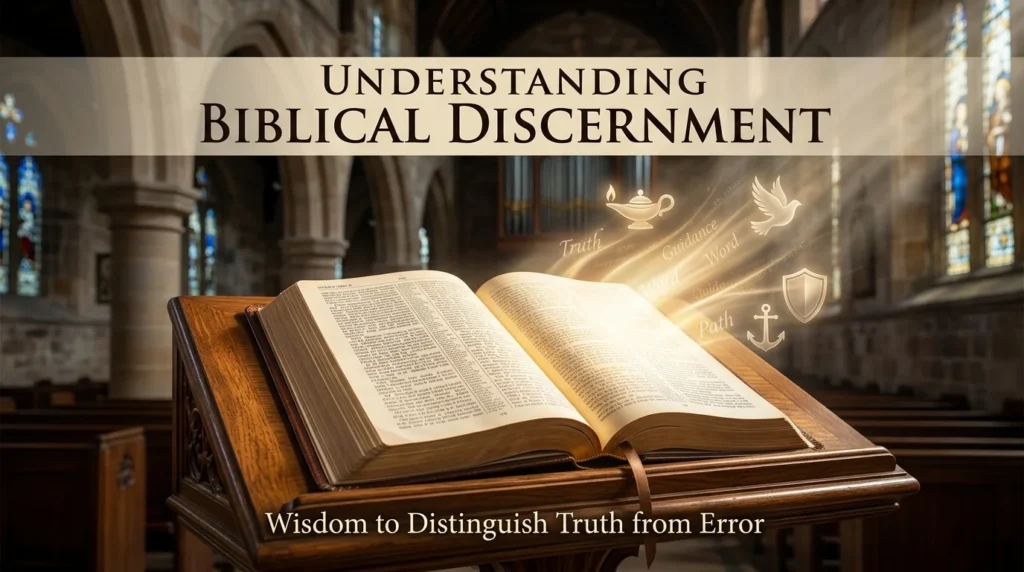
The discernment meaning in the Bible is closely connected to wisdom, understanding, and spiritual insight. Biblical teachings emphasize discernment as the ability to distinguish truth from error and recognize God’s guidance in daily life.
Scripture often presents discernment as an essential quality for making righteous decisions and avoiding deception. It encourages believers to seek wisdom, understand moral principles, and carefully evaluate influences that may affect their faith and actions.
Discernment Meaning in Christianity
Within Christianity, discernment refers to the ability to understand and evaluate situations according to Christian values and teachings. It helps believers identify truth, recognize spiritual guidance, and make decisions that align with their faith.
Christian discernment involves more than simply distinguishing right from wrong. It also includes understanding purpose, recognizing opportunities for growth, and responding wisely to life’s challenges. Many Christian leaders consider discernment a sign of spiritual maturity.
See Also: RSVP Meaning in Invitations: Complete Guide
Spiritual Discernment Meaning and Examples
Spiritual discernment refers to recognizing spiritual truths and understanding influences that may affect personal beliefs, values, and growth. It involves looking beyond external appearances and seeking deeper understanding.
For example, someone facing an important life decision may spend time reflecting, praying, and evaluating their motivations before acting. Another example involves recognizing whether advice aligns with personal values and beliefs. Spiritual discernment encourages thoughtful reflection and a commitment to truth.
What Is the Gift of Discernment?
The gift of discernment is often described as a special ability that enables individuals to recognize truth, identify deception, and understand hidden motives or influences. In many religious traditions, this gift is considered valuable because it helps people navigate complex situations with wisdom.
People believed to possess strong discernment often demonstrate exceptional insight into human behavior, decision-making, and spiritual matters. They can identify issues that others may overlook and provide guidance that promotes clarity and understanding.
Discernment vs Wisdom
Discernment and wisdom are closely connected, but they are not identical. Discernment focuses on identifying and evaluating information accurately, while wisdom involves applying that understanding effectively in real-life situations.
Think of discernment as recognizing the best path and wisdom as walking that path successfully. Together, they help individuals make better decisions, solve problems, and navigate challenges with confidence.
Discernment vs Intuition
Many people confuse discernment with intuition. Intuition is often described as a gut feeling or instinct that arises without conscious reasoning. Discernment, on the other hand, combines observation, analysis, understanding, and wisdom.
While intuition can sometimes provide useful insights, discernment involves a more deliberate process of evaluating information and considering evidence. This makes discernment a more reliable foundation for important decisions.
Common Signs of Strong Discernment
People with strong discernment often display several noticeable characteristics. They think before acting, ask thoughtful questions, and carefully evaluate information before reaching conclusions. They are less likely to be misled by appearances or emotional reactions.
Other signs include strong critical thinking skills, emotional maturity, self-awareness, and the ability to recognize patterns that others might miss. These qualities allow discerning individuals to navigate complex situations effectively and make informed decisions.
Common Mistakes People Make About Discernment
One common misconception is that discernment and judgment are the same thing. While they are related, discernment focuses on understanding before judging. Another mistake is assuming that discernment is purely instinctive and cannot be developed.
Some people also believe that discernment requires extraordinary intelligence. In reality, discernment depends more on wisdom, awareness, experience, and thoughtful reflection than intellectual ability alone.
Discernment in Modern Life
Modern life presents unique challenges that make discernment increasingly important. People encounter vast amounts of information through news websites, social media platforms, advertisements, and digital communication channels. Without discernment, it becomes difficult to separate truth from misinformation.
Discernment helps individuals evaluate sources, recognize biases, and make informed choices. Whether choosing a career path, managing finances, or consuming online content, discernment provides clarity in an increasingly complex world.
Discernment and Critical Thinking
Discernment and critical thinking work together to improve decision-making. Critical thinking involves analyzing information logically and objectively, while discernment adds wisdom, insight, and practical understanding to the process.
When combined, these skills help individuals evaluate evidence, identify flaws in reasoning, and reach well-informed conclusions. This combination is especially valuable in education, leadership, and problem-solving situations.
See Also: Parens Meaning: What It Means and How to Use It
Discernment vs Intelligence
Intelligence refers to the ability to learn, understand, and process information. Discernment, however, involves using that information wisely. A highly intelligent person may possess extensive knowledge, but without discernment, they may still make poor decisions.
Discernment focuses on understanding context, recognizing consequences, and applying wisdom effectively. This distinction explains why some individuals with average intelligence consistently make excellent decisions while others struggle despite having exceptional intellectual abilities.
How to Develop Discernment Skills
Developing discernment requires intentional practice and self-awareness. One effective strategy is reflecting on past decisions and learning from successes and mistakes. This process helps individuals recognize patterns and improve future choices.
Reading widely, seeking diverse perspectives, asking thoughtful questions, and learning from experienced mentors can also strengthen discernment. Over time, consistent practice improves the ability to evaluate information accurately and make wiser decisions.
Why Discernment Matters More Than Ever
The modern world presents countless choices, opportunities, and challenges. Without discernment, people can easily become overwhelmed by misinformation, distractions, and poor advice. Discernment provides a framework for evaluating information and making thoughtful decisions.
Whether navigating relationships, career opportunities, financial decisions, or personal growth, discernment helps individuals remain focused on truth and long-term success. It is one of the most valuable skills a person can develop in today’s rapidly changing environment.
Frequently Asked Questions
What is the true meaning of discernment?
Discernment is the ability to understand, evaluate, and judge situations accurately using wisdom, insight, and careful observation.
What does discernment mean in simple words?
In simple words, discernment means knowing the difference between what is right and wrong, true and false, or helpful and harmful.
What is an example of discernment?
Researching a job opportunity thoroughly before accepting it is a practical example of discernment.
Why is discernment important?
Discernment helps people make better decisions, avoid mistakes, recognize truth, and navigate complex situations effectively.
What is the gift of discernment?
The gift of discernment is often described as a special ability to recognize truth, understand motives, and identify spiritual realities.
How can I improve my discernment skills?
You can improve discernment by practicing critical thinking, seeking wisdom, evaluating evidence carefully, and learning from experience.
What is the difference between discernment and judgment?
Discernment focuses on understanding and evaluating information, while judgment refers to reaching a conclusion or opinion.
What does discernment mean in relationships?
In relationships, discernment helps identify trustworthiness, compatibility, healthy boundaries, and genuine intentions.
What is spiritual discernment?
Spiritual discernment is the ability to recognize spiritual truths and evaluate influences according to personal beliefs and values.
Is discernment a skill or a gift?
Many people view discernment as both a skill that can be developed through practice and a spiritual gift that helps guide wise decisions.
Conclusion
Understanding the discernment meaning is about much more than learning a dictionary definition. Discernment is the ability to perceive clearly, think critically, evaluate situations wisely, and make informed decisions. It plays a vital role in relationships, leadership, spirituality, personal development, and everyday life.
As you continue to strengthen your discernment skills, you become better equipped to recognize truth, avoid costly mistakes, and make decisions aligned with your goals and values. If you enjoy exploring word meanings, definitions, and detailed language guides, be sure to visit Punz Trend, where you can discover easy-to-understand explanations and helpful resources for a wide range of topics.
See Also: 180+ Short Puns: Funny One-Liners That Spark Laughs