Naive Meaning: Definition, Examples & Easy Explanation
If you’ve ever heard someone described as naive and wondered whether it was a compliment or a criticism, you’re not alone. The naive meaning is one of the most searched English vocabulary topics because the word can describe personality, behavior, emotions, and life experience all at once. It appears in everyday conversations, books, movies, workplaces, psychology discussions, and even social media posts, yet many people misunderstand what it truly means. Some assume it simply means “innocent,” while others think it refers to someone who is unintelligent. In reality, the word has a much deeper and more nuanced meaning.
Understanding what does naive mean is important because it helps you interpret conversations correctly and use the word appropriately in both spoken and written English. Whether you’re improving your English vocabulary, preparing for exams, learning professional communication, or simply curious about the term, this guide covers every aspect of the naive meaning in English. You’ll learn its definition, origin, psychological context, real-life usage, examples, comparisons with similar words, and situations where being naive can actually be a positive trait. By the end of this article, you’ll know exactly how and when to use the word naturally.
Meaning & Definition
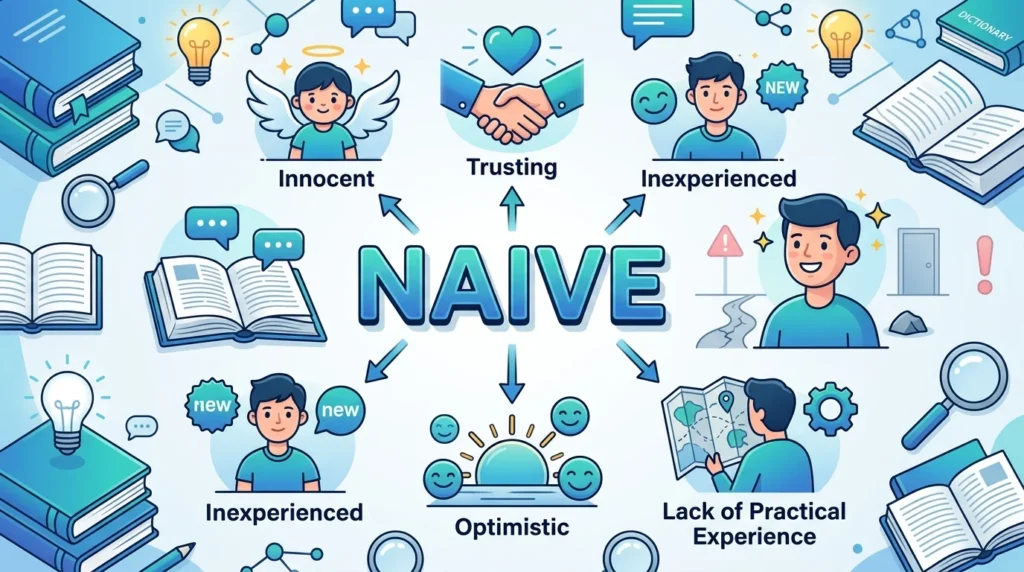
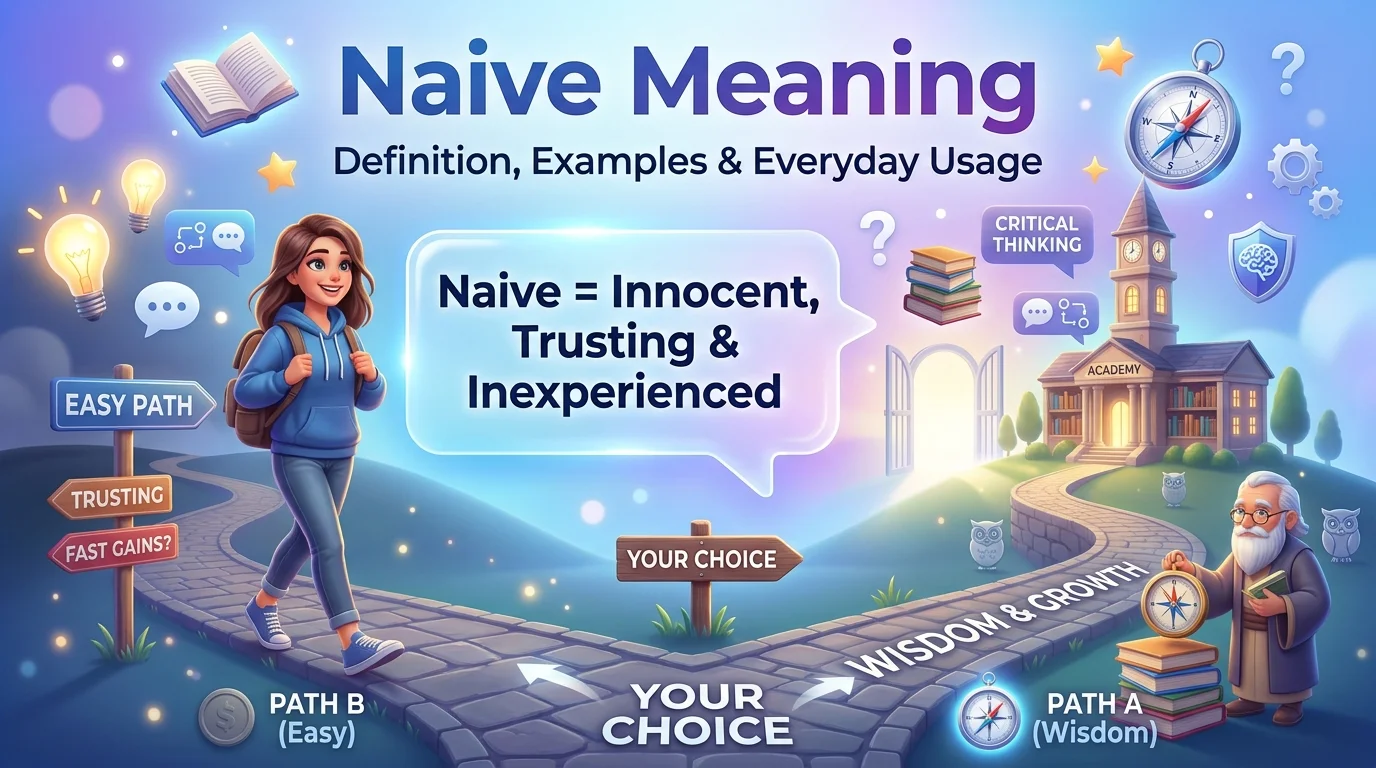
The naive meaning refers to someone who is innocent, inexperienced, or too trusting because they lack knowledge or real-world experience. A naive person usually believes what others say without questioning their intentions and often expects people to be honest, kind, and sincere. The word does not necessarily mean someone lacks intelligence. Instead, it suggests that the person has not yet developed enough life experience or practical judgment to recognize risks, deception, or hidden motives.
In everyday English, naive is an adjective used to describe a person’s behavior, attitude, beliefs, or decisions. For example, someone who trusts strangers too easily, believes unrealistic promises, or overlooks obvious warning signs may be described as naive. Depending on the context, the word can be neutral, sympathetic, or mildly critical. It may describe a child who hasn’t experienced the complexities of the world, a new employee learning workplace culture, or an adult who is overly trusting in relationships or business. Understanding the surrounding situation is essential because the emotional tone of the word changes depending on how it is used.
Another important aspect of the naive definition is that it focuses on lack of experience rather than lack of ability. A highly educated or intelligent individual can still be naive in areas where they have limited exposure. This distinction makes the word far more accurate than assuming it simply means “foolish.” That’s why dictionaries and language experts often connect naive meaning with innocence, trust, simplicity, and inexperience instead of intelligence.
Background
The history of the word naive explains why it carries meanings related to innocence and simplicity. The English word comes from the French word naïf, which originally meant natural, genuine, or uncomplicated. Over time, English adopted the spelling naive, and its meaning gradually evolved to describe people who approach situations with honesty and openness because they have limited experience of the world’s complexities.
Historically, being called naive wasn’t always viewed negatively. In literature and philosophy, naive characters were often portrayed as sincere, kind-hearted, optimistic, and morally pure. Their lack of worldly knowledge highlighted honesty rather than weakness. As society became more complex, however, the word began to include the idea of being too trusting or easily deceived. Today, both meanings still exist. Someone may be described as naive because they are refreshingly genuine, while another person may receive the same description because they overlook obvious dangers or manipulation.
Modern psychology, education, and communication studies continue to use the concept of naivety when discussing learning, decision-making, emotional development, and social awareness. This broader understanding explains why the naive meaning in psychology, relationships, workplaces, and daily life may differ slightly depending on the context. Instead of seeing naivety as a fixed personality trait, many experts consider it a temporary stage that decreases as people gain experience, develop critical thinking, and improve their judgment.
Usage in Different Contexts
One reason the naive meaning often confuses learners is that the word changes slightly depending on where it is used. Although its core idea remains the same—being inexperienced or overly trusting—the specific interpretation depends on the situation. In everyday conversations, naive may describe someone who believes everything they hear without questioning it. In professional settings, it may refer to a person who lacks practical workplace experience. In psychology, it often relates to cognitive development, emotional maturity, and decision-making rather than intelligence.
Relationships provide another common context for the word. Someone who believes every promise without recognizing warning signs may be described as naive, while in education, a student entering a new field with no prior knowledge may simply be called naive without any negative judgment. Even in technology and science, the word appears in phrases like naive algorithm or naive model, referring to a basic or simplified approach rather than something unintelligent. This wide range of applications makes understanding context essential when interpreting the word.
The meaning also shifts based on tone. Calling a young child naive often sounds caring because children naturally have limited life experience. Calling an adult naive may sound sympathetic, humorous, or critical depending on the conversation. This flexibility is why naive meaning in English cannot be understood through a single dictionary sentence alone. Real understanding comes from seeing how native speakers use the word in different situations, emotions, and environments.
In the following sections, we’ll explore what does naive mean, naive meaning in English, naive meaning in text, naive meaning with examples, naive person meaning, how to use naive in a sentence, and later examine its role in psychology, relationships, personality traits, and everyday communication so you can use the word confidently in any context.
What Does Naive Mean?
If you’ve searched what does naive mean, you’re looking for more than a dictionary definition. In everyday English, naive describes someone who lacks experience and tends to trust people or situations more easily than they should. A naive person often believes others are being honest and may not immediately recognize deception, manipulation, or hidden intentions. This doesn’t mean they’re unintelligent—it simply means they haven’t yet developed the practical judgment that usually comes with life experience.
The meaning of naive also depends on the situation. For example, a teenager entering their first job may be naive about workplace politics, while a successful business owner could still be naive when dealing with online scams or unfamiliar cultures. Being naive is often temporary because people become less naive as they gain knowledge, experience, and confidence. This is why the word is commonly associated with learning, growth, and maturity rather than permanent personality traits.
Many people mistakenly use naive and foolish interchangeably, but they are different. A foolish decision may result from poor judgment despite knowing the risks, whereas a naive decision usually happens because the person doesn’t recognize the risks in the first place. Understanding this distinction helps you use the word accurately in conversations and writing.
Naive Meaning in English
The naive meaning in English refers to a person who is innocent, inexperienced, or too trusting, especially because they have limited exposure to real-world situations. It is an adjective used to describe people, opinions, assumptions, behaviors, or decisions that reflect simplicity or lack of practical experience.
Native English speakers use the word in both positive and negative contexts. Positively, it can describe someone who has a pure heart, optimistic outlook, or genuine belief in the goodness of others. Negatively, it may suggest that someone is too trusting, unrealistic, or easily misled. The tone depends entirely on the speaker’s intention and the surrounding conversation.
For example:
- She was naive enough to believe every advertisement she saw.
- His naive enthusiasm inspired everyone on the team.
- It was naive to assume the project would finish without challenges.
- The child asked a naive question that made everyone smile.
These examples show that the word doesn’t always criticize someone. Sometimes it simply acknowledges that a person is new to an experience or views the world with honesty and simplicity. This flexibility is one reason naive meaning in English is frequently searched by language learners.
Naive Meaning in Text
The naive meaning in text is usually the same as its standard English definition, but the tone often depends on the conversation. In text messages, online chats, or social media discussions, people may call someone naive if they believe that person trusted something too quickly or failed to notice an obvious warning sign.
For instance, if someone falls for fake news or believes an unrealistic online promise, another person might reply, “You’re being a little naive.” In this context, the speaker isn’t necessarily insulting them—they’re pointing out that the person accepted information without questioning it.
However, texting lacks facial expressions and vocal tone, so the word can sometimes be misunderstood. Depending on the relationship between the people involved, naive may sound like friendly advice, gentle teasing, or criticism. That’s why it’s important to consider the entire conversation before interpreting the meaning.
Examples in text include:
- Don’t be so naive—always verify the information first.
- I used to be naive when I first started investing.
- It’s naive to think everyone online tells the truth.
- She isn’t stupid, just a little naive about how businesses work.
These examples reflect how the word is commonly used in modern digital communication.
Naive Meaning with Examples
Learning the naive meaning with examples is one of the easiest ways to understand how native English speakers actually use the word. Rather than memorizing definitions, seeing the word in real-life situations helps you recognize its meaning naturally.
Here are several examples across different contexts:
- He was naive enough to lend money to a stranger without asking any questions.
- The young entrepreneur admitted she was naive about running a business at first.
- Their naive belief that success happens overnight quickly changed after gaining experience.
- The tourist was naive about local scams but learned valuable lessons during the trip.
- She had a naive view of relationships before facing real-life challenges.
- It would be naive to think every online review is genuine.
- His naive optimism motivated the entire team despite the difficulties ahead.
- As a child, I was naive about how complicated the adult world could be.
Notice that some examples describe vulnerability, while others highlight innocence or optimism. This demonstrates that the word is broader than many people assume. It can describe a person’s mindset, expectations, beliefs, or reactions without suggesting they lack intelligence.
Naive Person Meaning
The naive person meaning refers to someone who approaches life with limited practical experience and tends to trust others easily. A naive person often believes that people are honest and well-intentioned, making them more likely to overlook warning signs or manipulation. Their actions are usually motivated by optimism or lack of exposure rather than poor intelligence.
A naive person may:
- Trust strangers too quickly.
- Believe promises without questioning them.
- Assume everyone has good intentions.
- Miss signs of dishonesty or manipulation.
- Be surprised by unfair behavior.
- Learn important life lessons through experience.
Despite these characteristics, being naive doesn’t define someone’s intelligence or overall personality. A highly educated professional may be naive when entering a new industry, while an experienced traveler may still be naive about financial investments. Everyone can be naive in unfamiliar situations because experience is often specific to different areas of life.
Many psychologists and communication experts emphasize that naivety usually decreases as people encounter new experiences, solve problems, and develop critical thinking skills. Rather than being a permanent weakness, it is often part of personal growth and learning.
How to Use Naive in a Sentence
Understanding how to use naive in a sentence helps you communicate more naturally in both spoken and written English. Since naive is an adjective, it usually describes a person, belief, decision, opinion, assumption, or behavior.
Here are examples that sound natural in everyday English:
- She was too naive to recognize the scam.
- His naive trust made him an easy target for fraud.
- It would be naive to ignore the warning signs.
- The company made the naive assumption that customers wouldn’t notice the price increase.
- I was naive when I started my first job, but experience taught me a lot.
- Their naive optimism helped them stay positive during difficult times.
- The child’s naive curiosity led to many interesting questions.
- He realized his expectations had been somewhat naive.
- It is naive to believe success comes without hard work.
- She admitted she had been naive about long-distance relationships.
When using the word, remember that it should match the situation. In formal writing, naive works well when discussing behavior, psychology, education, business, literature, or personal development. In casual conversations, it often describes someone who trusted too easily or underestimated a situation.
Used thoughtfully, naive is a precise and meaningful word that helps explain how experience—or the lack of it—shapes the way people think, act, and respond to the world around them.
See Also: ISTG Meaning: What Does ISTG Mean in Text & Chat?
Naive Meaning in Psychology
The naive meaning in psychology goes beyond simply being inexperienced. Psychologists often describe naivety as a mindset in which a person interprets the world with limited life experience, incomplete knowledge, or an overly trusting perspective. This doesn’t mean the individual has low intelligence. Instead, it suggests they haven’t yet developed the critical thinking, emotional awareness, or practical judgment needed to recognize complex social situations or hidden motives.
From a psychological perspective, naivety is often temporary. As people encounter different experiences, solve problems, face disappointments, and interact with a wider variety of individuals, they gradually become more aware of how the world works. This process strengthens decision-making skills and emotional intelligence. In many cases, being naive is simply part of personal growth. Children naturally begin life with a naive understanding of the world, and adults may still be naive in unfamiliar situations where they lack experience.
Psychology also recognizes that optimism and trust are not weaknesses by themselves. The challenge arises when excessive trust prevents someone from identifying manipulation, dishonesty, or risky situations. This balanced perspective explains why psychologists distinguish naivety from foolishness or lack of intelligence.
Is Being Naive a Bad Thing?
One of the most searched questions is “Is being naive a bad thing?” The answer is not always. Whether being naive is positive or negative depends entirely on the situation.
On the positive side, naive people often display qualities such as honesty, kindness, optimism, empathy, and a willingness to trust others. These characteristics can help build meaningful relationships and encourage open-minded thinking. Many successful innovators and entrepreneurs began with what others considered “naive ideas” because they weren’t limited by conventional thinking.
However, excessive naivety can create problems. A person who trusts everyone without questioning motives may become vulnerable to scams, manipulation, financial fraud, or unhealthy relationships. They may overlook warning signs simply because they expect everyone to act honestly.
The key is finding a balance between trust and critical thinking. You don’t need to become cynical to avoid being naive. Instead, gaining experience, asking thoughtful questions, and evaluating situations carefully allows you to remain kind while protecting yourself from unnecessary risks.
Naive vs Innocent Meaning
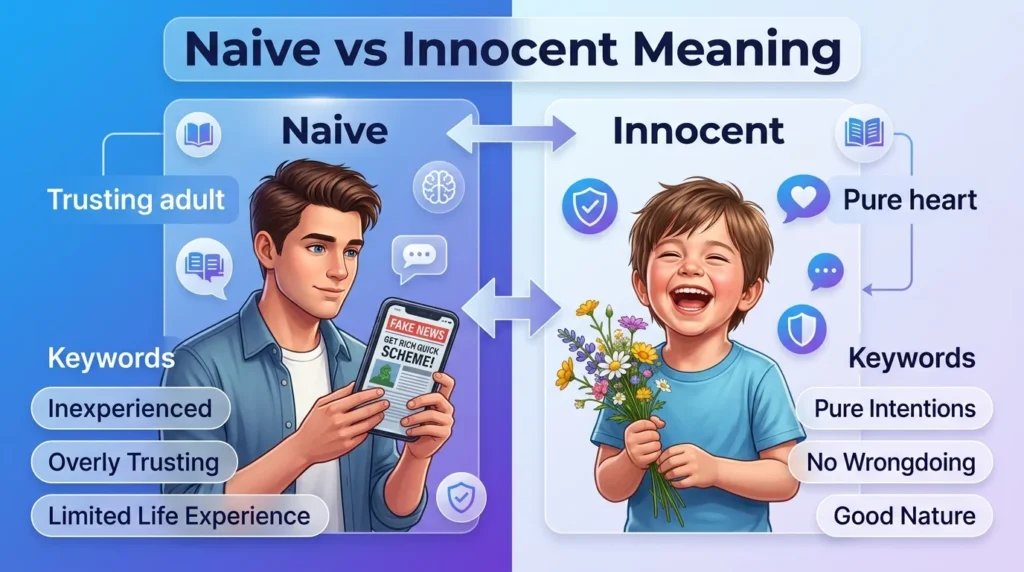
Many people confuse naive vs innocent meaning, but these words are not identical. Although both describe positive qualities in certain situations, they emphasize different aspects of a person’s character.
Innocent usually refers to someone who has not done anything wrong or who lacks harmful intentions. It can also describe a person who is morally pure or unaware of unpleasant realities.
Naive, on the other hand, focuses on a lack of experience or practical knowledge. A naive person may trust people too easily or believe unrealistic claims because they haven’t yet encountered situations that would teach them otherwise.
For example, a child is innocent because they haven’t intentionally harmed anyone. The same child may also be naive because they believe everything adults tell them. An adult can be completely innocent in a legal or moral sense without being naive, and someone can be naive without being innocent if they simply lack experience in a particular area.
Understanding this distinction helps you choose the right word in conversations, essays, and professional writing.
Naive Meaning in Relationships
The naive meaning in relationships refers to trusting a partner too quickly or having unrealistic expectations because of limited relationship experience. Someone who is naive in love often believes every promise, ignores warning signs, or assumes that good intentions alone will solve every problem.
This doesn’t necessarily mean the person lacks intelligence. Many intelligent people become naive in romantic relationships because emotions can influence judgment. They may overlook red flags, excuse unhealthy behavior, or believe someone will change despite repeated evidence to the contrary.
Healthy relationships require both trust and awareness. Trust allows emotional connection, while awareness helps people recognize respect, honesty, communication, and boundaries. Learning from previous experiences often reduces naivety and leads to stronger decision-making in future relationships.
Examples include:
- Believing every excuse without asking questions.
- Ignoring repeated dishonest behavior.
- Assuming love automatically solves every conflict.
- Sharing personal information too quickly with someone you barely know.
Being optimistic in relationships is healthy, but combining optimism with realistic expectations creates stronger and safer connections.
Naive vs Gullible
Although many people use these words interchangeably, naive and gullible have different meanings.
A naive person lacks experience and may trust others because they haven’t learned to recognize deception. A gullible person, however, believes almost anything without questioning it, even when obvious evidence suggests otherwise.
For example:
- A teenager accepting misleading career advice because they have little experience is naive.
- An adult repeatedly believing obvious internet scams despite warnings may be gullible.
Being naive often disappears as people gain experience. Gullibility, on the other hand, relates more to consistently accepting information without critical evaluation.
This distinction is important because calling someone gullible is generally more negative than describing them as naive.
Signs of a Naive Person
Recognizing the signs of naivety can help people develop greater self-awareness and make better decisions. Most naive individuals don’t intentionally ignore risks—they simply haven’t encountered enough situations to recognize them.
Common signs include:
- Trusting strangers very quickly.
- Assuming everyone has good intentions.
- Believing promises without evidence.
- Ignoring warning signs.
- Having unrealistic expectations.
- Struggling to identify manipulation.
- Being surprised by dishonesty.
- Making decisions based on optimism instead of facts.
- Avoiding skepticism even in risky situations.
- Learning important lessons only after negative experiences.
These characteristics don’t make someone weak or unintelligent. They simply indicate that more experience and critical thinking may be needed in certain situations.
Can Intelligent People Be Naive?
Absolutely. One of the biggest misconceptions about the naive meaning is that it describes someone’s intelligence. In reality, highly intelligent people can be naive in areas where they have little practical experience.
For example, a brilliant scientist may be naive about business negotiations. A successful athlete may be naive when investing money for the first time. Likewise, a university professor could be naive about online scams despite being an expert in their academic field.
Intelligence helps people learn quickly, but experience teaches practical judgment. Since these are different qualities, someone can possess exceptional knowledge while still being naive in unfamiliar environments.
Understanding this distinction prevents unfair assumptions and encourages a more accurate understanding of human behavior.
How to Stop Being Naive
If you feel you’re sometimes too trusting, the good news is that naivety isn’t permanent. Experience, observation, and thoughtful decision-making gradually improve judgment over time.
Some practical ways to become less naive include:
- Verify information before believing it.
- Ask questions instead of making assumptions.
- Learn from previous mistakes.
- Develop critical thinking skills.
- Listen to experienced people.
- Research unfamiliar situations.
- Recognize common scams and manipulation tactics.
- Set healthy personal boundaries.
- Trust your instincts when something feels wrong.
- Remember that kindness and caution can exist together.
The goal isn’t to become suspicious of everyone. Instead, it’s to balance trust with thoughtful evaluation so you can build healthy relationships while protecting yourself from unnecessary risks.
See Also: IIRC Meaning: What It Means in Text, Chat & Social Media
Common Mistakes When Using the Word “Naive”
Many English learners misuse the word because they confuse it with similar terms.
Some common mistakes include:
- Thinking naive means unintelligent.
- Using naive instead of innocent in every situation.
- Assuming all trusting people are naive.
- Describing every beginner as naive.
- Using the word as a personal insult.
- Ignoring the context in which it’s spoken.
Remember that naive describes limited experience or practical judgment—not someone’s overall intelligence or worth.
Frequently Asked Questions
What does naive mean?
Naive means being inexperienced, innocent, or overly trusting because of limited knowledge or life experience.
What is the naive meaning in English?
In English, naive describes someone who lacks practical experience and tends to believe people or situations too easily.
Is naive a positive or negative word?
It can be either. Sometimes it highlights kindness and innocence, while in other situations it suggests someone is too trusting.
What is a naive person?
A naive person is someone who approaches situations with honesty and trust but may not recognize deception or hidden motives.
How do you use naive in a sentence?
Example: It was naive to believe every promise without asking questions.
Is being naive the same as being innocent?
No. Innocent refers to moral purity or lack of wrongdoing, while naive refers to limited experience and practical judgment.
Can intelligent people be naive?
Yes. Intelligence and life experience are different. Even highly intelligent individuals can be naive in unfamiliar situations.
Is being naive a weakness?
Not necessarily. It becomes a weakness only when excessive trust repeatedly leads to poor decisions or manipulation.
What is the opposite of naive?
Common opposites include experienced, skeptical, worldly, cautious, realistic, and wise.
What are synonyms of naive?
Common synonyms include innocent, trusting, inexperienced, unsophisticated, simple, and credulous, depending on the context.
Why do people become naive?
People are usually naive because they haven’t yet experienced certain situations, making them more likely to trust others or overlook risks.
Can someone stop being naive?
Yes. Life experience, critical thinking, emotional intelligence, and learning from mistakes usually reduce naivety over time.
Conclusion
Understanding the naive meaning is about more than memorizing a dictionary definition. The word describes someone who is inexperienced, trusting, or optimistic because they haven’t yet encountered enough real-world situations to develop practical judgment. Importantly, being naive doesn’t mean someone lacks intelligence. In many cases, it simply reflects honesty, kindness, and a willingness to see the good in others.
As people gain life experience, improve critical thinking, and strengthen emotional intelligence, they naturally become less naive while keeping their positive qualities intact. Whether you’re learning what does naive mean, exploring the naive meaning in psychology, comparing naive vs innocent meaning, or understanding naive meaning in relationships, knowing the context is the key to using the word correctly.
If you’re looking to expand your English vocabulary or understand the meanings of popular words, internet slang, idioms, and modern expressions, Punz Trend is an excellent resource. You’ll find clear, easy-to-read explanations, practical examples, and in-depth guides that make learning new words simple, engaging, and useful for everyday communication.
See Also: Condescending Meaning: Definition, Examples & Usage