

Attrition Meaning: Definition, Examples & HR Usage
The word attrition is commonly used in business, human resources, healthcare, education, and military discussions. Many people search for attrition meaning after hearing it in workplace meetings, news reports, or company announcements. Although the word can have different meanings depending on the context, it generally refers to a gradual reduction in numbers over time.
In simple words, attrition means a slow decrease in people, resources, or strength because individuals leave, wear out, or are not replaced.
For example:
- A company may experience employee attrition when workers resign and their positions remain unfilled.
- A military force may weaken through attrition after continuous losses over time.
The word is widely used to describe gradual change rather than sudden loss.
In this guide, you’ll learn the attrition meaning, its definition, origin, and how it is used in business, employment, education, healthcare, and other fields. Whether you’ve encountered the term at work or in the news, this article explains everything in simple and easy-to-understand English.
Meaning & Definition
The attrition meaning is:
The gradual reduction in the number or strength of people, resources, or things because of departures, losses, or natural decline.
In simple words:
Attrition means a slow decrease that happens over time as people leave or things wear out without being replaced.
The word is commonly used to describe:
- Employee turnover.
- Workforce reductions.
- Student dropouts.
- Military losses.
- Customer loss.
- Natural wear and tear.
Unlike a sudden reduction, attrition usually happens gradually.
What Does Attrition Mean in Simple Words?
In simple words, attrition means becoming smaller little by little over time.
For example:
If several employees resign from a company every month and new workers are not hired to replace them, the company’s workforce decreases through attrition.
The word emphasizes gradual change instead of immediate loss.
Background and Origin
The word attrition comes from the Latin word “attritio,” meaning “rubbing away” or “wearing down.”
Originally, it referred to physical wearing away caused by friction.
Over time, its meaning expanded to describe the gradual reduction of people, organizations, resources, or strength in many different situations.
Today, attrition is widely used in business, economics, education, healthcare, and military discussions.
Attrition Meaning in Business
In business, attrition usually refers to employees leaving an organization through resignation, retirement, or other voluntary departures without immediate replacement.
Common causes include:
- Better job opportunities.
- Retirement.
- Career changes.
- Relocation.
- Personal reasons.
- Job dissatisfaction.
Businesses often monitor attrition rates because high employee attrition can affect productivity, hiring costs, and team performance.
Attrition Meaning in Human Resources (HR)

In human resources, employee attrition describes the gradual reduction of a company’s workforce over time.
HR professionals often distinguish between:
- Voluntary attrition, when employees choose to leave.
- Involuntary attrition, when employment ends because of company decisions or other circumstances.
- Natural attrition, when positions remain vacant after employees leave or retire.
Organizations regularly analyze attrition to improve employee retention and workplace satisfaction.
Attrition vs Turnover Difference Explained
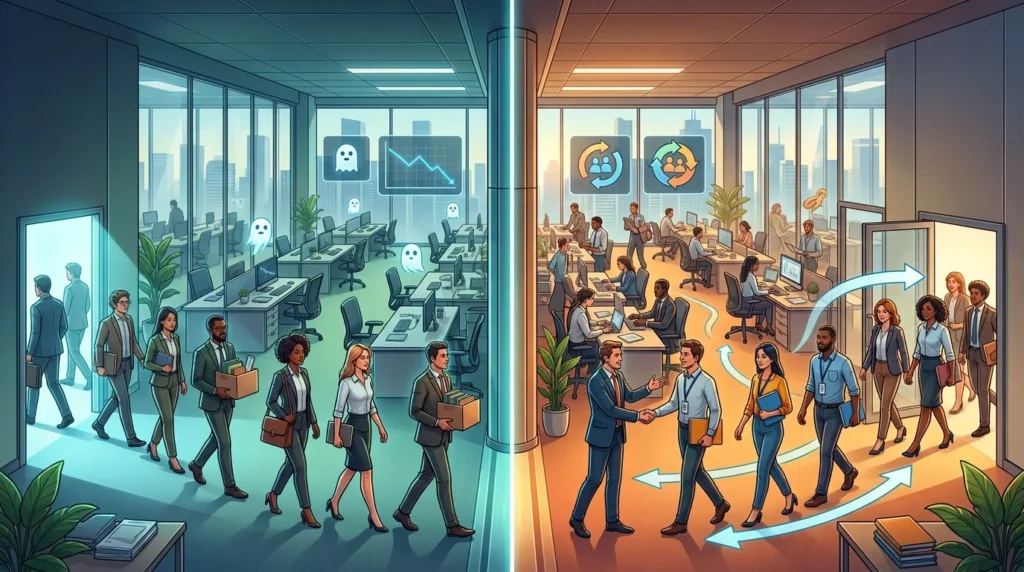
Many people confuse attrition with turnover, especially in the workplace. Although the terms are related, they are not identical.
See Also: Shalom Meaning: Definition, Origin & Spiritual Significance
Attrition
Attrition is the gradual reduction of employees or resources over time, often because people leave and are not immediately replaced.
Example:
- The company reduced costs through attrition by not filling vacant positions.
Turnover
Turnover refers to the rate at which employees leave an organization and are replaced by new hires.
Example:
- The company experienced high employee turnover during the past year.
In short, attrition focuses on gradual workforce reduction, while turnover focuses on employees leaving and being replaced.
Synonyms and Antonyms of Attrition
Synonyms
Words with similar meanings include:
- Reduction
- Decline
- Decrease
- Loss
- Erosion
- Shrinkage
- Wear
- Diminishment
- Depletion
- Drop
Antonyms
Words with opposite meanings include:
- Growth
- Increase
- Expansion
- Improvement
- Gain
- Addition
- Recruitment
- Development
- Growth rate
- Strengthening
Learning these related words helps you understand and use attrition more accurately.
How to Use Attrition in a Sentence
Here are a few simple examples:
- The company reduced its workforce through attrition rather than layoffs.
- High employee attrition affected productivity.
- The military suffered heavy attrition during the long conflict.
- The university addressed student attrition by improving support services.
- Natural attrition helped lower operating costs over several years.
These examples show how the word is used in business, education, healthcare, and military contexts.
Common Misunderstandings About Attrition
A common misunderstanding is that attrition always means layoffs. In reality, attrition often happens naturally when employees resign or retire and their positions are not filled.
Another misconception is that attrition is always negative. While high attrition can create staffing challenges, some organizations intentionally use natural attrition to reduce costs without dismissing employees.
Some people also believe attrition only applies to workplaces. In fact, the term is also used in education, healthcare, customer retention, the military, and even dentistry, where it describes the gradual wearing down of teeth.
See Also: Complacent Meaning: Definition, Examples & Usage
Why Read Meanings on Punz Trend?
Professional and academic vocabulary often has different meanings depending on the context. Punz Trend explains English words, business terms, HR concepts, legal expressions, medical terminology, and everyday language with simple definitions, origins, examples, comparisons, and practical usage to make learning easier.
Frequently Asked Questions
What does attrition mean?
Attrition means the gradual reduction of people, resources, or strength over time because of departures, losses, or natural decline.
What is employee attrition?
Employee attrition refers to workers leaving an organization through resignation, retirement, or other reasons, often without immediate replacement.
Is attrition the same as turnover?
No. Attrition refers to a gradual reduction in workforce size, while turnover measures how often employees leave and are replaced.
What causes attrition?
Common causes include retirement, resignation, career changes, relocation, job dissatisfaction, student withdrawals, customer loss, or natural wear over time.
Where is the word attrition commonly used?
The word is commonly used in business, human resources, education, healthcare, military strategy, customer retention, and dentistry.
Conclusion
The attrition meaning refers to the gradual reduction of people, resources, or strength over time. Whether discussing employee departures, student enrollment, military losses, or natural wear, attrition emphasizes slow and continuous decline rather than sudden change. Understanding this term helps you interpret workplace reports, business discussions, and everyday English more accurately.
See Also: Ironic Meaning: Definition, Examples & Types Explained