

Halal Meaning: Definition, Food Rules & Islamic Guide
The word halal is widely recognized around the world, especially in discussions about food, religion, and lifestyle. Many people search for halal meaning after seeing the label on food products, restaurant menus, cosmetics, or financial services. While halal is commonly associated with food, its meaning extends to many aspects of daily life in Islam.
In simple words, halal means “permissible” or “lawful” according to Islamic teachings. It refers to anything that is allowed under Islamic law, including food, drinks, business practices, clothing, and everyday actions.
For example:
- A restaurant may serve halal food that follows Islamic dietary guidelines.
- A product labeled halal indicates that it meets specific Islamic requirements.
The opposite of halal is haram, which means forbidden or prohibited.
In this guide, you’ll learn the halal meaning, its definition, origin, and how it is used in food, religion, business, and everyday life. Whether you’re curious about halal food or want to understand the broader concept, this article explains everything in simple and easy-to-understand English.
Meaning & Definition
The halal meaning is:
Permissible, lawful, or allowed according to Islamic teachings.
In simple words:
Halal means something that Muslims are permitted to do, eat, or use under Islamic law.
The word can apply to:
- Food and drinks.
- Business practices.
- Financial services.
- Cosmetics.
- Medicines.
- Everyday actions.
Its exact application depends on the context.
What Does Halal Mean in Simple Words?
In simple words, halal means “allowed” according to Islamic rules.
When something is described as halal, it means it complies with Islamic principles and is considered acceptable for Muslims.
For example:
- Halal chicken has been prepared according to Islamic dietary guidelines.
- Halal cosmetics are made using ingredients that comply with Islamic standards.
Although food is the most common example, halal is a much broader concept.
Background and Origin
The word halal comes from Arabic (حلال) and literally means “permissible” or “lawful.”
It appears in Islamic teachings and has been used for centuries to distinguish between what is permitted (halal) and what is prohibited (haram).
Over time, the concept of halal expanded beyond food to include areas such as finance, travel, healthcare, fashion, and personal care products.
Today, halal certification helps consumers identify products and services that meet recognized Islamic standards.
Halal Meaning in Islam
In Islam, halal refers to anything that is permitted under Islamic law (Sharia).
The concept encourages Muslims to choose lawful and ethical options in daily life.
Examples of halal include:
- Eating foods that meet Islamic dietary requirements.
- Conducting honest business transactions.
- Earning income through lawful means.
- Using products that comply with Islamic guidelines.
The opposite, haram, refers to actions or items that Islamic teachings prohibit.
Halal Meaning in Food
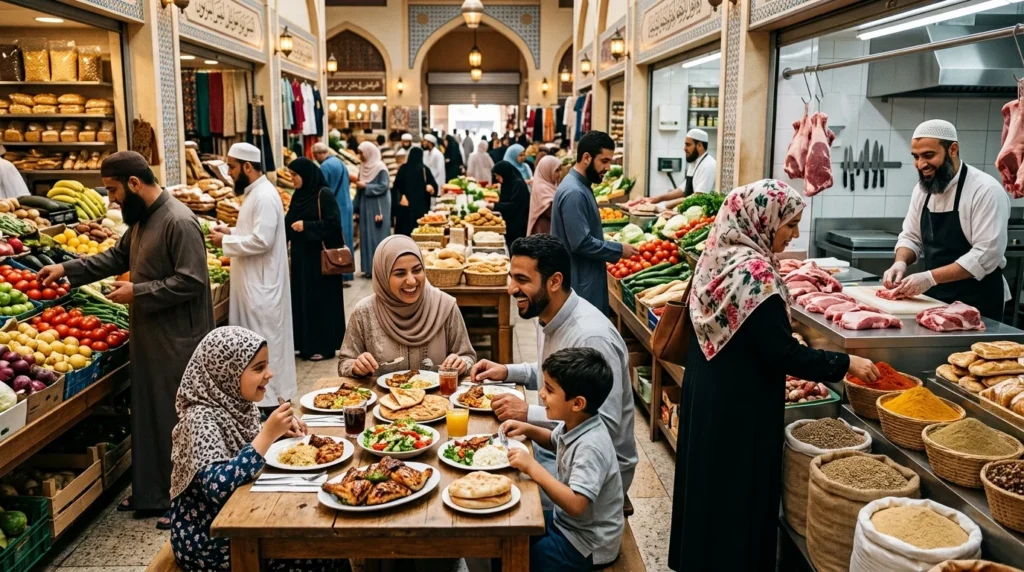
When people talk about halal food, they usually mean food that has been prepared according to Islamic dietary rules.
Generally, halal food includes:
- Foods made with permitted ingredients.
- Meat prepared according to Islamic requirements.
- Products that do not contain prohibited substances.
- Food prepared in ways that avoid contamination with non-halal ingredients.
Many restaurants and food manufacturers display halal certification to indicate that their products meet recognized halal standards.
See Also: Prosperity Meaning: Definition, Examples & Benefits
Halal Meaning Beyond Food
Although halal is most commonly associated with food, the concept applies to many other areas of life.
Examples include:
- Halal finance, which follows Islamic financial principles.
- Halal cosmetics, made with permissible ingredients.
- Halal medicines, produced according to recognized halal standards where applicable.
- Halal travel, offering services that accommodate Islamic practices.
In general, halal represents living in a way that aligns with Islamic teachings.
Halal vs Haram Difference Explained
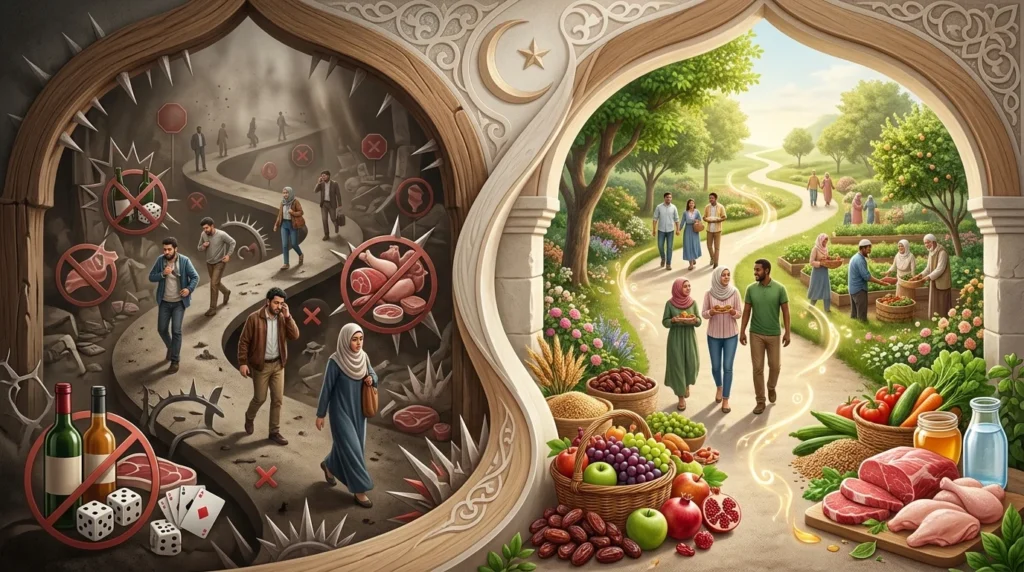
Many people hear the words halal and haram together, but they have opposite meanings.
Halal
Halal means permissible, lawful, or allowed according to Islamic teachings.
Examples include:
- Halal-certified food.
- Honest business practices.
- Products made with permissible ingredients.
Haram
Haram means forbidden or prohibited under Islamic teachings.
Examples may include foods, drinks, or activities that Islamic law does not permit.
Together, these terms help Muslims distinguish between what is allowed and what is prohibited.
How to Use Halal in a Sentence
Here are a few simple examples:
- We chose a restaurant that serves halal meals.
- The supermarket sells a variety of halal-certified products.
- She always checks whether cosmetics are halal before buying them.
- Many travelers look for halal dining options while abroad.
- The company offers halal food products in several countries.
These examples show how the word is commonly used in everyday English.
Common Misunderstandings About Halal
A common misunderstanding is that halal refers only to meat. In reality, halal is a broad Islamic concept that applies to many aspects of life, including finance, business, personal care products, and everyday behavior.
Another misconception is that all vegetarian or seafood dishes are automatically halal. Whether a product is considered halal can depend on its ingredients, preparation, and compliance with Islamic dietary guidelines.
Some people also believe halal is only relevant in Muslim-majority countries. However, halal-certified products and services are available in many countries around the world to meet the needs of Muslim consumers.
See Also: Nonce Meaning: Definition, Uses & Examples
Why Read Meanings on Punz Trend?
Religious and cultural terms often carry meanings that go beyond simple translations. Punz Trend explains English vocabulary, cultural expressions, religious terms, historical concepts, and everyday language with simple definitions, origins, examples, comparisons, and practical usage to help readers understand them clearly and respectfully.
Frequently Asked Questions
What does halal mean?
Halal means permissible or lawful according to Islamic teachings.
Is halal only about food?
No. Halal also applies to finance, business, cosmetics, medicine, travel, and many other aspects of daily life.
What is the opposite of halal?
The opposite of halal is haram, which means forbidden or prohibited under Islamic teachings.
Why is halal certification important?
Halal certification helps consumers identify products and services that comply with recognized Islamic standards.
Can non-Muslims eat halal food?
Yes. Halal food can be eaten by anyone. The term simply indicates that the food has been prepared according to Islamic dietary requirements.
Conclusion
The halal meaning is permissible or lawful according to Islamic teachings. While it is most commonly associated with food, halal also applies to finance, cosmetics, medicine, business, and many other aspects of daily life. Understanding the meaning of halal provides greater insight into Islamic practices, cultural traditions, and the products and services used by millions of people around the world.