
Nonchalant Meaning Explained | Definition & Examples
The keyword “nonchalant meaning” is widely searched because people often hear this word in conversations, movies, social media, and even relationship discussions but are not fully sure what it truly describes. It is one of those English words that sounds simple, but carries a deeper tone about personality, attitude, and behavior. Many users also see it in captions or TikTok-style content where someone is described as “nonchalant,” which increases curiosity around its real meaning.
In this complete guide, we will break down the nonchalant meaning in simple words, its definition, background, real-life usage, personality traits, and modern slang interpretation so you can fully understand how and when to use it correctly in English.
Meaning & Definition
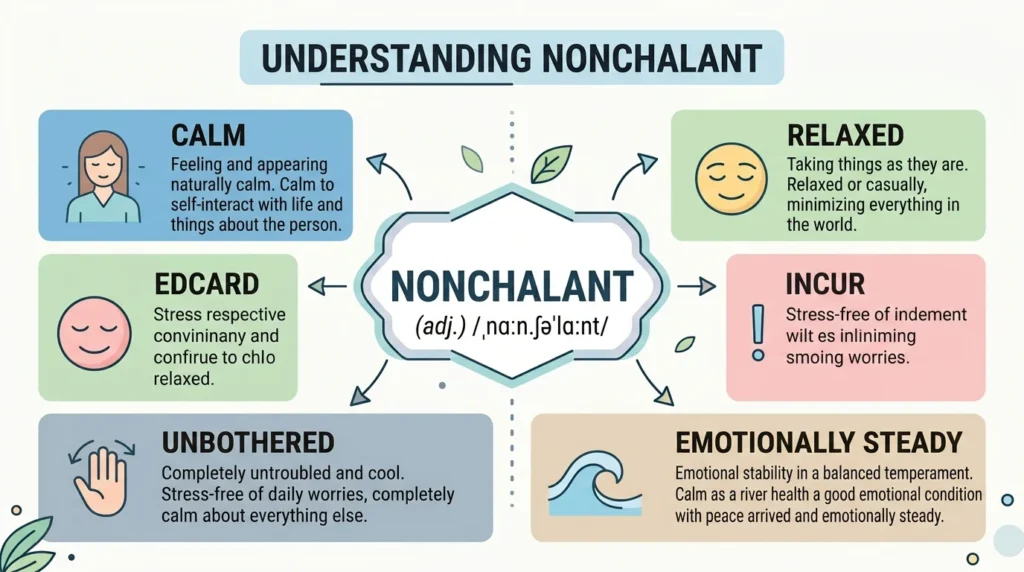
The nonchalant meaning in English refers to someone who appears calm, relaxed, and unconcerned, especially in situations where others might feel stressed or emotional. A nonchalant person usually behaves in a casual and effortless way, showing little visible worry or excitement.
In simple words, nonchalant means “calm and not showing much emotion or interest.” It is often used to describe a person’s attitude, behavior, or reaction in different situations. The word is commonly associated with emotional control, confidence, or sometimes even indifference depending on context.
Background
The background of nonchalant meaning comes from the French language, where “nonchaloir” means “to not care” or “to be indifferent.” Over time, the word entered the English vocabulary and became an adjective used to describe a relaxed or unconcerned attitude.
In modern usage, especially in social media culture, the word has gained popularity as a personality trait label. People often use it to describe someone who stays calm under pressure or acts effortlessly cool. However, depending on tone, it can also imply emotional distance or lack of interest, which makes context very important in understanding its true meaning.
Usage in Different Contexts
The nonchalant meaning in different contexts changes based on situation and tone. In formal English, it is used to describe calm behavior in serious or stressful situations. For example, a nonchalant response during an interview might mean the person remained composed and relaxed.
In informal or social media use, especially on TikTok or Instagram captions, “nonchalant” is often used to describe a stylish, calm, or effortlessly cool personality. In relationship contexts, however, it can sometimes be interpreted as emotional distance or lack of concern, which may not always be positive.
What does nonchalant mean in simple words
In simple words, the nonchalant meaning is someone who stays calm, relaxed, and does not show strong emotions. It describes a person who acts like they are not worried or stressed, even if the situation is important.
For example, if someone receives surprising news but reacts calmly without panic, they are being nonchalant. It can be seen as a sign of confidence, emotional control, or sometimes indifference depending on the situation.
Nonchalant meaning explained with examples
The nonchalant meaning with examples becomes clearer in real-life situations. If a student remains calm during an exam result announcement, they are showing a nonchalant attitude. Similarly, if someone walks away from a difficult situation without reacting emotionally, that behavior can also be described as nonchalant.
In another example, a person might casually ignore criticism and continue their work without stress, showing a nonchalant personality. These examples show that the word is closely linked to emotional balance and calm behavior.
How to use nonchalant in a sentence
The nonchalant meaning in sentences helps understand its practical use. For example: “She gave a nonchalant reply when asked about the situation.” This shows calm and unconcerned behavior.
Another example could be: “He walked into the room with a nonchalant attitude, as if nothing was wrong.” In this case, it describes confidence and emotional control. The word is usually used as an adjective to describe behavior or personality.
See Also: Tralalero Tralala Meaning Explained | TikTok Meme Guide
Is nonchalant a positive or negative word
The nonchalant meaning can be both positive and negative depending on context. On the positive side, it can describe someone who is calm, confident, and emotionally stable. This type of behavior is often seen as attractive or mature.
On the negative side, it can also suggest that someone is careless, uninterested, or emotionally distant. In relationships or emotional situations, being too nonchalant may be interpreted as lack of care or concern.
Nonchalant meaning in slang and social media
In modern slang and social media culture, the nonchalant meaning has evolved into a personality aesthetic. On platforms like TikTok and Instagram, people use it to describe someone who appears effortlessly cool, calm, and unbothered.
The term is often associated with “nonchalant energy” or “nonchalant vibe,” where individuals show confidence without trying too hard. However, it is also sometimes used humorously to describe people who seem too relaxed even in serious situations.
Nonchalant attitude meaning in relationships

The nonchalant meaning in relationships can be tricky. In some cases, it may describe a partner who stays calm and avoids unnecessary drama, which can be positive. However, it can also mean emotional distance or lack of interest in the relationship.
If someone behaves too nonchalantly in emotional situations, it might make their partner feel ignored or undervalued. Therefore, balance is important when interpreting nonchalant behavior in romantic contexts.
Nonchalant personality traits explained
A nonchalant personality usually includes traits such as emotional control, calmness, and relaxed behavior. These individuals do not easily get stressed or overly excited. They often appear confident and composed in different situations.
However, depending on perspective, they may also be seen as indifferent or detached. Understanding personality context is important because nonchalant behavior can be either a strength or a weakness depending on how it is expressed.
What is nonchalant behavior example
A nonchalant behavior example could be someone receiving criticism but responding with a calm smile instead of reacting emotionally. Another example is a person handling a stressful situation at work without showing panic or frustration.
Such behavior often reflects emotional stability and self-control. However, in some cases, it may also give the impression that the person is not fully engaged or concerned about the situation.
Nonchalant vs careless difference
The nonchalant meaning vs careless meaning is often confused, but they are not the same. Nonchalant means calm and unconcerned, often with control and awareness. Careless, on the other hand, means lacking attention, responsibility, or caution.
A nonchalant person may still understand the situation but chooses to stay calm, while a careless person may ignore important details or responsibilities. This difference is important for correct usage.
See Also: Diabolical Meaning Explained | Definition & Usage Guide
Nonchalant meaning Urban Dictionary explanation
On Urban Dictionary, the nonchalant meaning is often described informally as someone who is “too cool to care” or someone who remains relaxed in almost any situation. These definitions vary depending on user submissions and are not always consistent.
However, most entries align with the general idea of calm, relaxed, or emotionally unbothered behavior, often used in modern slang or meme culture.
Frequently Asked Questions
What does nonchalant mean in simple words?
It means calm, relaxed, and not showing strong emotions.
Is nonchalant a good word?
Yes, it can be positive or negative depending on context.
What is a nonchalant personality?
A calm and relaxed personality that does not show stress easily.
Is nonchalant the same as careless?
No, nonchalant means calm, while careless means irresponsible.
Can nonchalant be used in relationships?
Yes, but it can mean either calm behavior or emotional distance.
Conclusion
The nonchalant meaning is more than just a simple vocabulary word—it represents a complete attitude and personality style. Whether used in formal English, social media slang, or relationship discussions, it always refers to calmness, emotional control, or sometimes indifference depending on context.
Understanding this word helps you use it correctly in conversations and interpret it accurately when you see it online. If you want more clear explanations of trending words, slang, and internet meanings, you can visit Punz Trend, where complex terms are broken down into simple, SEO-friendly guides for better understanding.
See Also: Humility Meaning Explained: Definition, Traits & Examples