Dystopian Meaning: Definition, Examples & Origin
The word dystopian is commonly used to describe fictional worlds, societies, or situations that are unpleasant, oppressive, or deeply troubled. Many people search for dystopian meaning after hearing the term in movies, books, news articles, or online discussions. While it is often associated with science fiction, the word can also describe real-world situations that resemble dark fictional settings.
In simple words, dystopian means relating to an imagined society where people experience suffering, oppression, injustice, or extreme control.
For example:
- A novel may depict a dystopian future where citizens have no personal freedom.
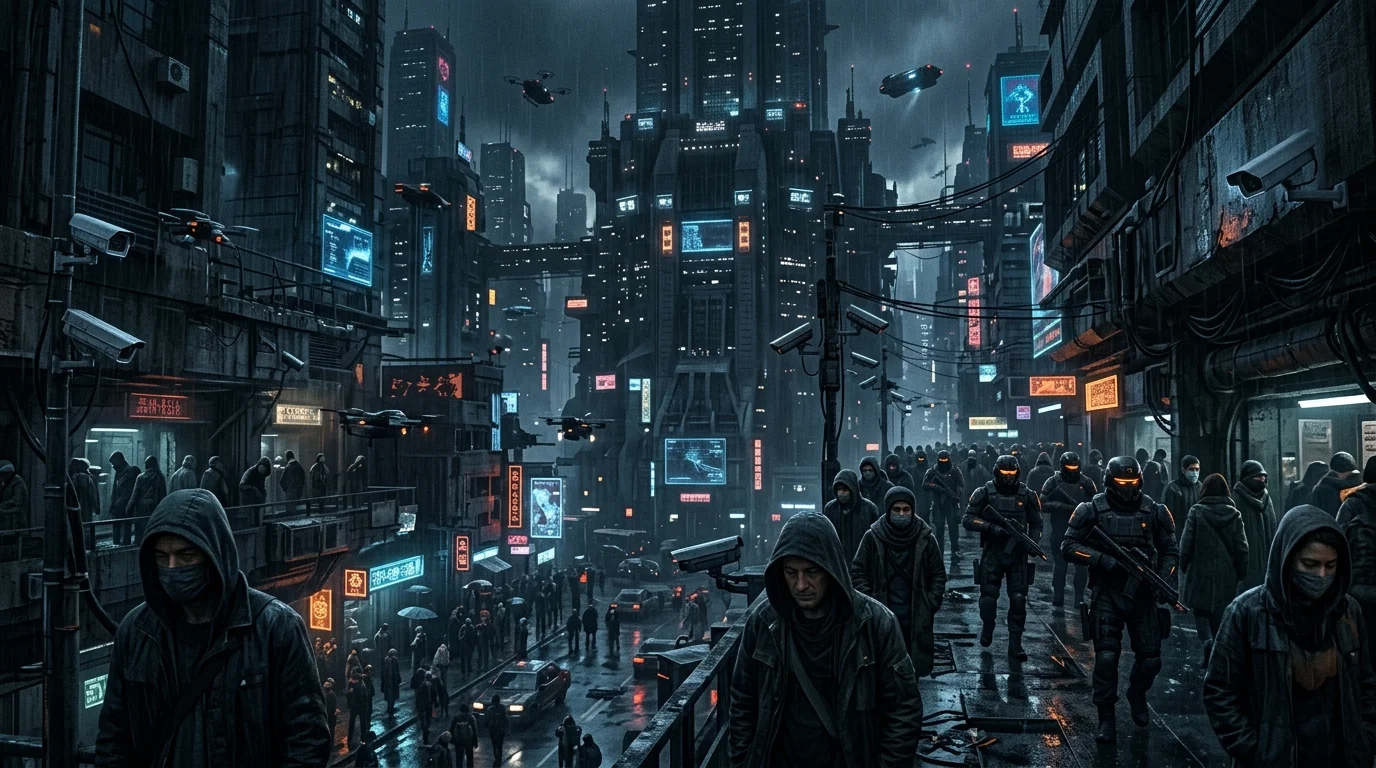
- People might describe a scene of constant surveillance as having a dystopian atmosphere.
The word is especially common in literature, films, television, politics, and discussions about technology and society.
In this guide, you’ll learn the dystopian meaning, its definition, origin, and how it is used in fiction, culture, and everyday English. Whether you’ve encountered the term in a bestselling novel or a news story, this article explains everything in simple and easy-to-understand English.
See Also: APY Meaning: Definition, Formula & How It Works
Meaning & Definition
The dystopian meaning is:
Relating to an imaginary society that is characterized by suffering, oppression, injustice, or extremely poor living conditions.
In simple words:
Dystopian means describing a dark or frightening society where life is difficult because of extreme control, conflict, or unfair conditions.
The word is commonly used to describe:
- Fictional societies.
- Books and movies.
- Government systems.
- Technology-related stories.
- Social and political commentary.
Its meaning often suggests a warning about what the future could become.
What Does Dystopian Mean in Simple Words?
In simple words, dystopian means a world or society where life is much worse than people would normally expect.
For example:
A city where everyone is constantly watched by cameras, individual freedoms are limited, and strict rules control daily life may be described as dystopian.
The word often emphasizes fear, lack of freedom, or difficult living conditions.
Background and Origin
The word dystopian comes from the term dystopia, which combines the Greek prefix “dys-“ meaning “bad” or “difficult” with “topos,” meaning “place.”
The opposite of dystopia is utopia, which refers to an ideal or perfect society.
Over time, dystopian became widely used to describe fictional worlds that warn readers about the possible consequences of political oppression, environmental disasters, technological misuse, or social inequality.
Today, the term appears frequently in literature, film, journalism, and discussions about future societies.
Dystopian Meaning in Literature
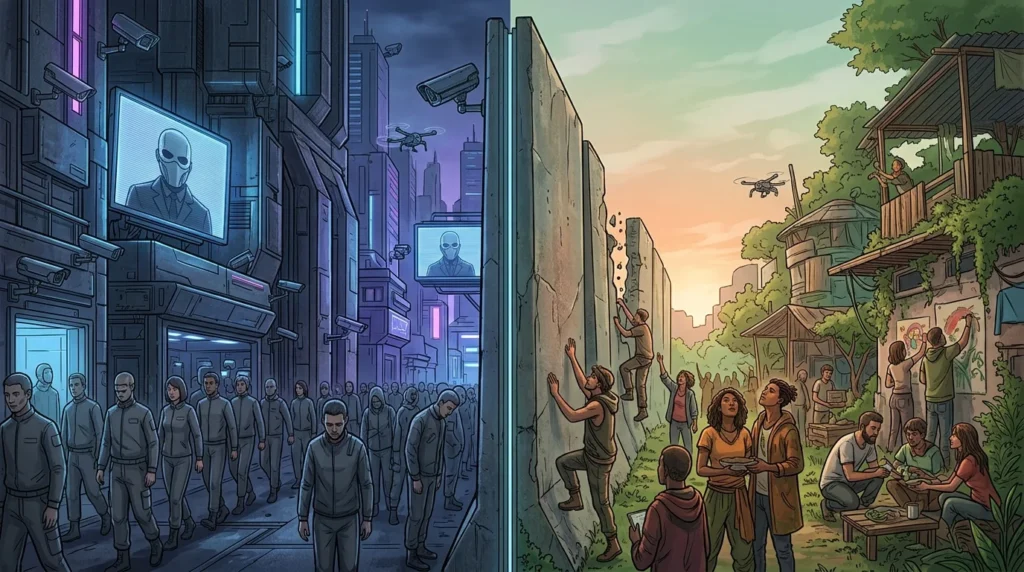
In literature, dystopian describes stories set in societies where people face severe restrictions, injustice, or difficult living conditions.
Common features of dystopian fiction include:
- Authoritarian governments.
- Constant surveillance.
- Limited personal freedom.
- Social inequality.
- Advanced technology used for control.
- Environmental or economic collapse.
These stories often encourage readers to think critically about current social and political issues.
Dystopian Meaning in Movies and TV
Many popular movies and television series use dystopian settings to explore themes of survival, freedom, technology, and human rights.
A dystopian story may include:
- A future ruled by powerful governments.
- Artificial intelligence controlling society.
- Communities struggling after global disasters.
- Strict laws that limit individual choices.
These fictional worlds are designed to show the possible consequences of extreme decisions or unchecked power.
Dystopian vs Utopian Difference Explained
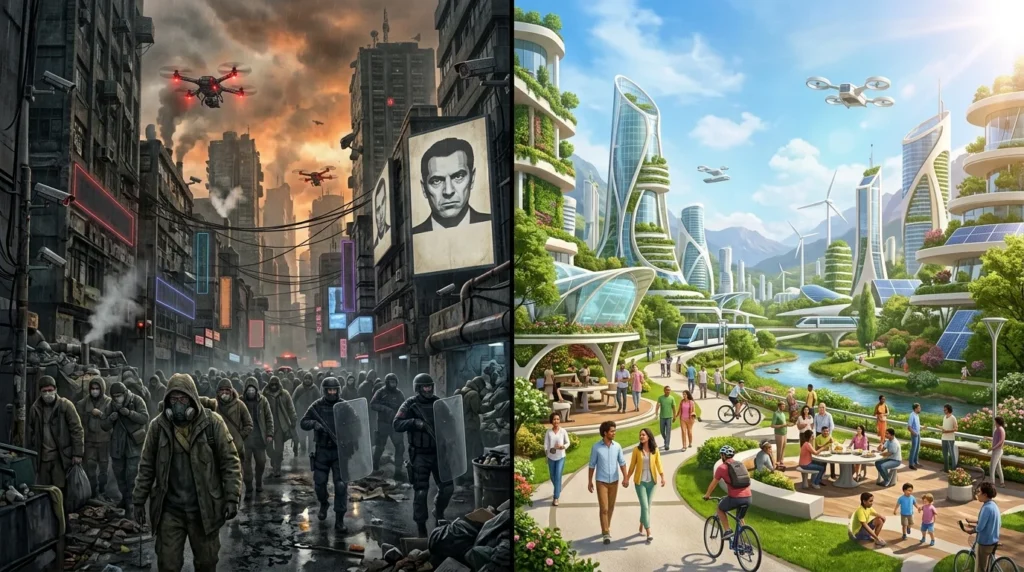
Many people confuse dystopian with utopian, but they describe opposite types of societies.
Dystopian
A dystopian society is one where people experience suffering, oppression, fear, or severe restrictions.
Example:
- A city where every citizen is constantly monitored by the government.
Utopian
A utopian society is an imagined perfect world where people live peacefully with equality, justice, and prosperity.
Example:
- A fictional community where everyone has equal opportunities and lives in harmony.
In short, dystopian represents a bad or oppressive society, while utopian represents an ideal or perfect one.
See Also: Nepo Baby Meaning: Definition, Origin & Examples
How to Use Dystopian in a Sentence
Here are a few simple examples:
- The novel takes place in a dystopian future.
- Critics described the film as a dystopian science fiction story.
- The city’s constant surveillance created a dystopian atmosphere.
- The author wrote about a dystopian society controlled by advanced technology.
- Many readers enjoy dystopian novels because they explore possible futures.
These examples show how the word is commonly used in literature, entertainment, and everyday conversations.
Common Misunderstandings About Dystopian
A common misunderstanding is that dystopian simply means sad or dark. While dystopian stories can be dark, the word specifically refers to societies marked by oppression, injustice, or extreme control.
Another misconception is that dystopian stories always happen in the future. Although many are set in future worlds, some take place in alternate realities or fictional versions of the present.
Some people also think dystopian fiction is only about science fiction. In reality, dystopian themes can appear in political dramas, fantasy, young adult novels, and other genres.
Why Read Meanings on Punz Trend?
Understanding modern vocabulary helps you better interpret books, movies, news, and online discussions. Punz Trend explains English words, literary terms, internet expressions, cultural concepts, and everyday vocabulary with simple definitions, origins, examples, comparisons, and practical usage to make learning easier.
Frequently Asked Questions
What does dystopian mean?
Dystopian means relating to an imagined society where people experience oppression, suffering, injustice, or extreme control.
What is the opposite of dystopian?
The opposite of dystopian is utopian, which describes an ideal or perfect society.
Is dystopian always about the future?
No. While many dystopian stories are set in the future, they can also take place in alternate versions of the present or in fictional worlds.
Why are dystopian stories popular?
Many readers enjoy dystopian stories because they explore important themes such as freedom, government power, technology, inequality, and human rights.
Can dystopian describe real life?
Yes. People sometimes use dystopian to describe real-life situations that resemble the oppressive or unsettling conditions often found in dystopian fiction, though this usage is usually figurative.
Conclusion
The dystopian meaning refers to an imagined society marked by oppression, injustice, suffering, or extreme control. Often used in books, movies, and discussions about society, the term highlights worlds where life is far from ideal. Understanding dystopian helps you better appreciate literature, popular culture, and conversations about possible futures and social change.
See Also: Shalom Meaning: Definition, Origin & Spiritual Significance