
Chayote Meaning: Definition, Origin & Uses Explained
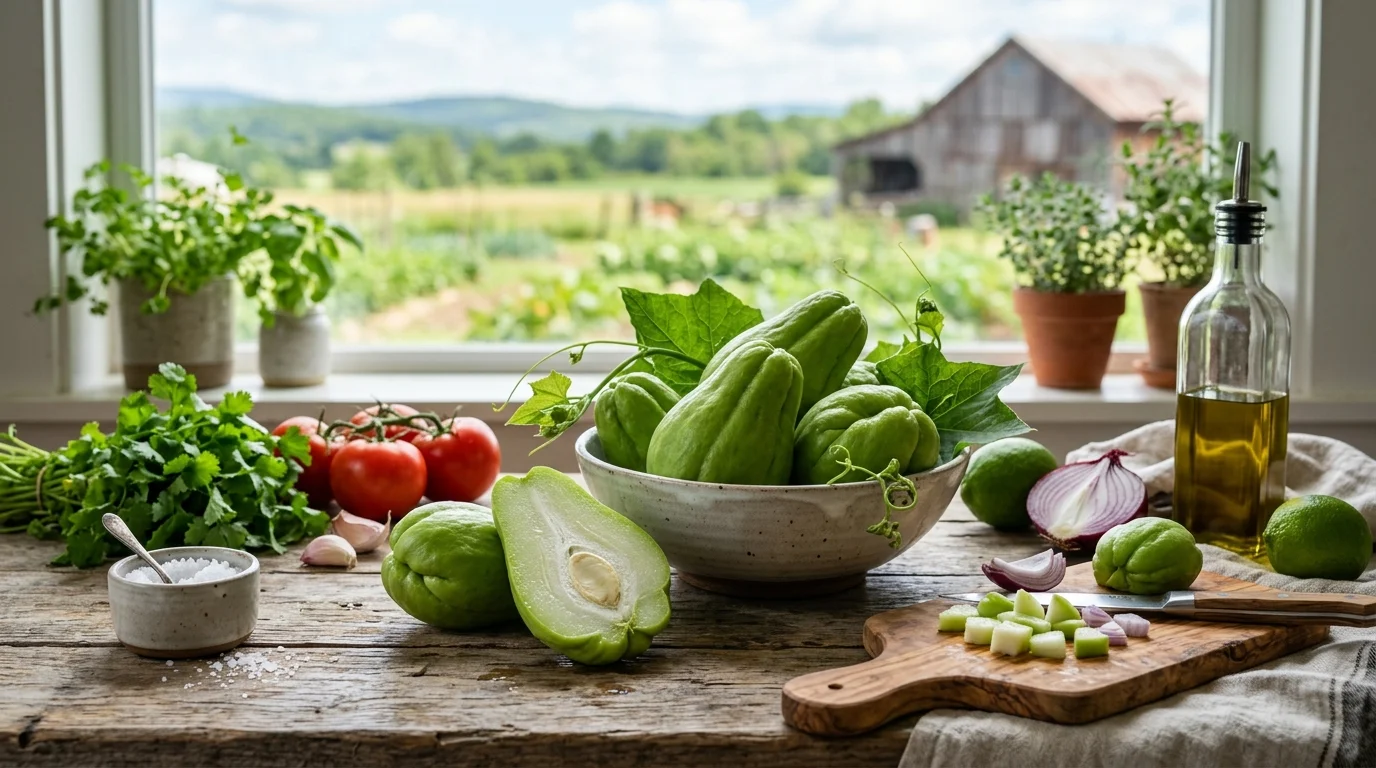
The word chayote refers to a green, pear-shaped vegetable that belongs to the gourd family. Many people search for chayote meaning after seeing it in grocery stores, recipes, or health articles. Although it looks similar to a squash or pear, chayote is actually a type of edible fruit that is commonly cooked and eaten as a vegetable.
In simple words, chayote is a mild-flavored green vegetable (technically a fruit) from the squash family.
See Also: JOI Meaning: Definition, Internet Use & Other Meanings
For example:
- “She added sliced chayote to the vegetable soup.”
- “Chayote is popular in many Latin American and Asian dishes.”
Because of its mild taste and versatility, chayote is used in salads, soups, stir-fries, curries, and many traditional recipes around the world.
In this guide, you’ll learn the chayote meaning, its definition, origin, nutritional value, and common culinary uses in simple and easy-to-understand English.
Meaning & Definition

The chayote meaning is:
Chayote is a green, edible fruit of the squash family that is commonly cooked and eaten as a vegetable.
In simple words:
Chayote is a nutritious green squash with a mild flavor and crisp texture.
It is commonly associated with:
- Healthy eating.
- Vegetables.
- Squash family.
- Home cooking.
- Latin American cuisine.
- Asian cuisine.
- Low-calorie foods.
- Fresh produce.
Although botanically a fruit, it is prepared like most vegetables.
What Does Chayote Mean in Simple Words?
In simple words, chayote is a green vegetable-like fruit that can be cooked in many different ways.
People often compare its flavor to a combination of:
- Cucumber.
- Zucchini.
- Mild squash.
- Green apple (slightly).
Its soft flavor allows it to absorb the seasonings used during cooking.
Background and Origin
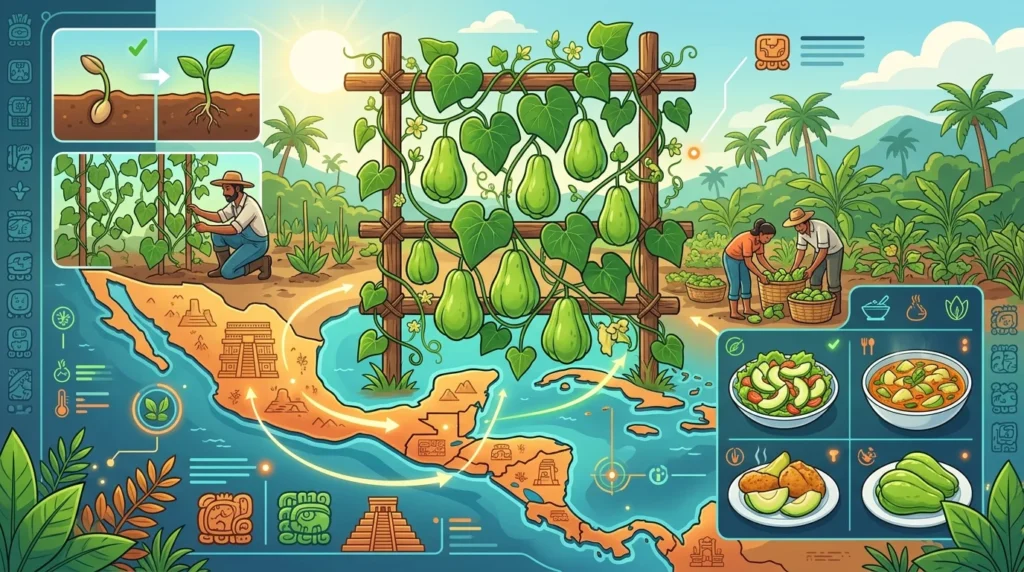
The word chayote comes from the Nahuatl language spoken by the Aztecs in present-day Mexico.
The plant is native to:
- Southern Mexico.
- Central America.
From there, it spread to many parts of the world through trade and agriculture.
Today, chayote is widely grown in:
- Mexico.
- Guatemala.
- Costa Rica.
- Brazil.
- India.
- Philippines.
- Indonesia.
- Caribbean countries.
- Southern United States.
Its adaptability has made it a popular vegetable in tropical and subtropical regions.
Chayote Plant and Appearance
The chayote plant is a climbing vine belonging to the Cucurbitaceae family, which also includes:
- Cucumbers.
- Pumpkins.
- Squash.
- Melons.
The fruit is usually:
- Light green.
- Pear-shaped.
- Wrinkled or smooth.
- Firm when fresh.
- Mild in flavor.
Unlike many fruits, the entire chayote—including its skin, seed, shoots, and leaves—is edible in many traditional cuisines.
Chayote in Cooking
Chayote is highly versatile and can be prepared in many different ways.
Common cooking methods include:
- Boiling.
- Steaming.
- Stir-frying.
- Roasting.
- Baking.
- Grilling.
- Adding to soups.
- Including in salads.
Because of its mild taste, it pairs well with garlic, onions, herbs, spices, cheese, and a variety of meats and vegetables.
See Also: DINK Meaning: Dual Income, No Kids Explained
Nutritional Benefits of Chayote
Chayote is valued as a healthy food because it is naturally low in calories while providing important nutrients.
It contains:
- Vitamin C.
- Folate.
- Potassium.
- Fiber.
- Antioxidants.
- Small amounts of vitamin K and B vitamins.
Because of its high water content and fiber, chayote is often included in balanced diets and healthy meal plans.
How to Use Chayote in a Sentence
Here are a few examples:
- She prepared a delicious chayote soup for dinner.
- Fresh chayote is available at the local market.
- Many traditional recipes include cooked chayote.
- The salad contains cucumber, tomatoes, and chayote.
- Chayote is a nutritious member of the squash family.
These examples show how the word is commonly used when discussing food and cooking.
Common Misunderstandings About Chayote
A common misunderstanding is that chayote is only a vegetable. Botanically, it is actually a fruit, although it is almost always cooked and served like a vegetable.
Another misconception is that only the fruit is edible. In many cultures, the leaves, young shoots, roots, skin, and seed are also eaten.
Some people also assume chayote has a strong flavor. In reality, its taste is very mild, making it easy to combine with many different ingredients.
Why Read Meanings on Punz Trend?
Many food names, plants, fruits, and vegetables have interesting histories and cultural backgrounds. Punz Trend explains food terms, internet slang, historical words, abbreviations, and everyday English with simple definitions, origins, examples, comparisons, and practical usage to make learning easier.
Frequently Asked Questions
What does chayote mean?
Chayote is a green edible fruit from the squash family that is commonly cooked and eaten as a vegetable.
Is chayote a fruit or a vegetable?
Botanically, chayote is a fruit, but it is usually prepared and served as a vegetable.
What does chayote taste like?
Chayote has a mild flavor often compared to cucumber, zucchini, or a light squash.
Is chayote healthy?
Yes. Chayote is low in calories and contains fiber, vitamin C, folate, potassium, and antioxidants.
Can you eat chayote raw?
Yes. Chayote can be eaten raw in salads or cooked in soups, stir-fries, curries, and many other dishes.
Conclusion
The chayote meaning refers to a green edible fruit from the squash family that is widely used as a vegetable in cooking. Native to Central America, chayote is valued for its mild flavor, versatility, and nutritional benefits, making it a popular ingredient in cuisines around the world.
See Also: TTYL Meaning: Texting, Slang & Social Media Explained