
Bugbear Meaning Explained | Definition & Examples Guide
The keyword “bugbear meaning” is commonly searched because the word appears in literature, English vocabulary tests, and sometimes in modern writing, but its meaning is not immediately clear to most readers. Some people think it refers only to a monster, while others see it used in a figurative way to describe problems or fears. This dual usage makes it an interesting and slightly confusing English word that often appears in both academic and casual contexts.
In this complete guide, we will explain the bugbear meaning in simple words, its historical background, mythological origin, modern usage, and how it is used in sentences so you can fully understand it from every angle.
Meaning & Definition
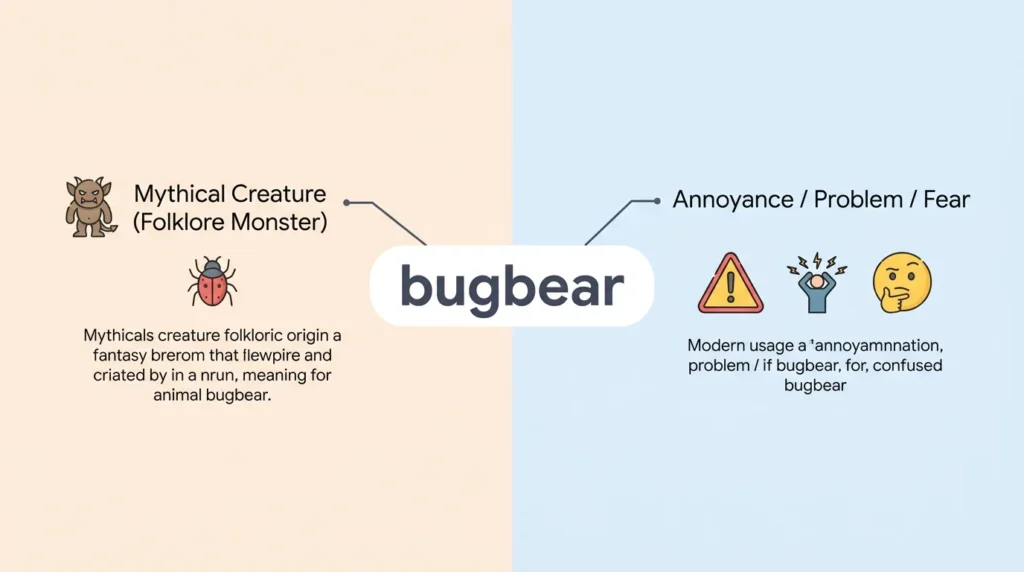
The bugbear meaning refers to something that causes fear, worry, or annoyance. In modern English, it is often used to describe a persistent problem or issue that bothers someone. For example, “time management is my bugbear” means time management is a constant difficulty or concern.
Originally, bugbear also referred to a mythological creature or imaginary monster used in old stories to scare children. Over time, the meaning evolved into a figurative expression representing anything that causes anxiety or irritation. So, today it has both a literal and metaphorical meaning depending on context.
Background
The background of bugbear meaning comes from Middle English, where “bugge” meant something frightening and “bear” referred to a mythical beast. In early folklore, a bugbear was imagined as a scary creature used in stories to frighten children into behaving properly.
As the English language evolved, the word lost its literal monster meaning in everyday conversation and became more symbolic. Writers began using it to describe fears, worries, or persistent problems rather than actual creatures. This shift shows how language evolves from mythology into metaphorical usage in modern communication.
Usage in Different Contexts
The bugbear meaning in different contexts varies depending on whether it is used literally or figuratively. In literature and mythology, it refers to a frightening imaginary creature. In modern English, it is more commonly used to describe something annoying or troublesome.
For example, in professional or academic writing, someone might say “bureaucracy is my bugbear,” meaning it is a frustrating issue. In storytelling or fantasy literature, it may still appear as a mythical monster. This flexibility makes the word useful in both creative and descriptive language.
What does bugbear mean in simple words
In simple words, the bugbear meaning is something that causes you worry, fear, or annoyance. It is often used to describe a problem that keeps bothering you repeatedly.
For example, if someone says “public speaking is my bugbear,” it means they find public speaking stressful or difficult. In everyday language, it is not used to describe an actual monster but rather a personal challenge or irritation.
Bugbear meaning explained with examples
The bugbear meaning with examples becomes easier to understand in real-life usage. For instance, “slow internet is a bugbear for remote workers” shows that slow internet is a common frustration.
Another example could be, “Exams are a bugbear for many students,” meaning exams cause stress or worry. These examples show how the word is used metaphorically in modern English to describe ongoing problems or difficulties.
Is bugbear a real monster or metaphor
The bugbear meaning can be both literal and metaphorical, but in modern usage, it is mostly a metaphor. Historically, it referred to a mythical monster used in folklore stories.
Today, however, it is rarely used to describe an actual creature. Instead, it is used symbolically to represent fears, problems, or annoyances in everyday language. This makes it more of a figurative expression than a literal term in modern English.
See Also: Celibate Meaning Explained | Definition & Lifestyle Guide
Bugbear meaning in English literature

In English literature, the bugbear meaning often appears as a metaphor for fear or imaginary threats. Classical writers sometimes used it to describe fears that exist in the mind rather than reality.
In older texts, it could still refer to mythical creatures, especially in fantasy or folklore-based stories. Modern literature, however, uses it mainly as a symbolic word for worries or obstacles faced by characters.
Bugbear meaning in modern usage explained
In modern usage, the bugbear meaning is mainly associated with irritation or persistent problems. It is often used in professional, academic, or casual conversation to describe something that consistently causes frustration.
For example, deadlines, traffic, or technical issues can all be described as bugbears in different contexts. This modern usage shows how the word has shifted from fantasy to everyday language.
What is a bugbear in mythology and folklore
In mythology, the bugbear meaning originally referred to a frightening creature used in old English folklore. It was often described as a monster-like figure used to scare children or explain unknown fears.
This mythical interpretation is no longer part of modern belief systems, but it remains important in understanding the historical evolution of the word. It connects language with storytelling traditions from earlier centuries.
How to use bugbear in a sentence
The bugbear meaning in sentences is easy to apply once you understand its figurative use. For example: “Lack of sleep is my biggest bugbear.” This shows that lack of sleep is a recurring problem.
Another example could be: “Paperwork is a bugbear for many office workers.” In both cases, the word is used to describe something annoying or troublesome rather than a physical object.
Bugbear meaning synonym and usage examples
The bugbear meaning synonyms include words like annoyance, irritation, problem, difficulty, or worry. These synonyms help express similar ideas depending on context.
For example, instead of saying “traffic is my bugbear,” you could say “traffic is my biggest frustration.” This shows how the word can be replaced with simpler expressions while keeping the same meaning.
Bugbear meaning Urban Dictionary explanation
On Urban Dictionary, the bugbear meaning is usually described informally as something that annoys or bothers someone. These definitions are user-generated and not always academically precise, but they reflect modern slang understanding.
Most entries still align with the idea of frustration or persistent annoyance, showing how the word is used in casual digital conversations today.
See Also: Nonchalant Meaning Explained | Definition & Examples
Why do people use the word bugbear
People use the bugbear meaning because it is a descriptive and expressive word for everyday problems or fears. It helps communicate frustration in a more formal or literary way compared to simple words like “problem” or “issue.”
Writers, students, and professionals often use it to add variety and depth to language, especially in essays or discussions where more expressive vocabulary is needed.
Frequently Asked Questions
What does bugbear mean in simple words?
It means something that causes worry, annoyance, or difficulty.
Is bugbear a real monster?
It was once a mythical creature but is now mostly used metaphorically.
How do you use bugbear in a sentence?
You use it to describe a recurring problem or annoyance.
Is bugbear a negative word?
Yes, it usually describes something unpleasant or frustrating.
What is bugbear in modern English?
It means a persistent issue or irritation in everyday life.
Conclusion
The bugbear meaning is a fascinating example of how English words evolve over time from mythology to modern metaphorical usage. While it once referred to a mythical creature used in folklore, today it is widely used to describe everyday problems, fears, or annoyances. Understanding both its historical and modern meanings helps you use it correctly in writing and conversation.
If you want to explore more word meanings, slang explanations, and SEO-friendly language guides, you can visit Punz Trend, where complex terms are broken down into simple, easy-to-understand articles designed for learners, writers, and content creators.
See Also: Platonic Meaning Explained: Simple Guide & Examples