
Pedantic Meaning Explained: Definition, Examples & Uses
Have you ever been in a conversation where someone keeps correcting tiny mistakes, focuses on minor details, or insists on being technically correct even when everyone already understands the main point? If so, you may have encountered behavior that many people describe as pedantic. The word is frequently used in schools, workplaces, online discussions, and everyday conversations, yet many people are unsure about its exact meaning. This is why searches for terms like pedantic meaning, what does pedantic mean in English, and what is a pedantic person continue to grow.
Understanding the meaning of pedantic is important because it helps explain a specific communication style and personality trait that appears in many social situations. Some people view pedantic behavior as a sign of intelligence and precision, while others see it as unnecessary attention to small details. The reality is more nuanced. In this guide, you will learn the complete meaning of pedantic, where the word comes from, how it is used, whether it is positive or negative, and how it applies to real-life situations. If you enjoy exploring the meanings of words and phrases, Punz Trend is a great place to discover detailed and easy-to-understand explanations.
Meaning & Definition
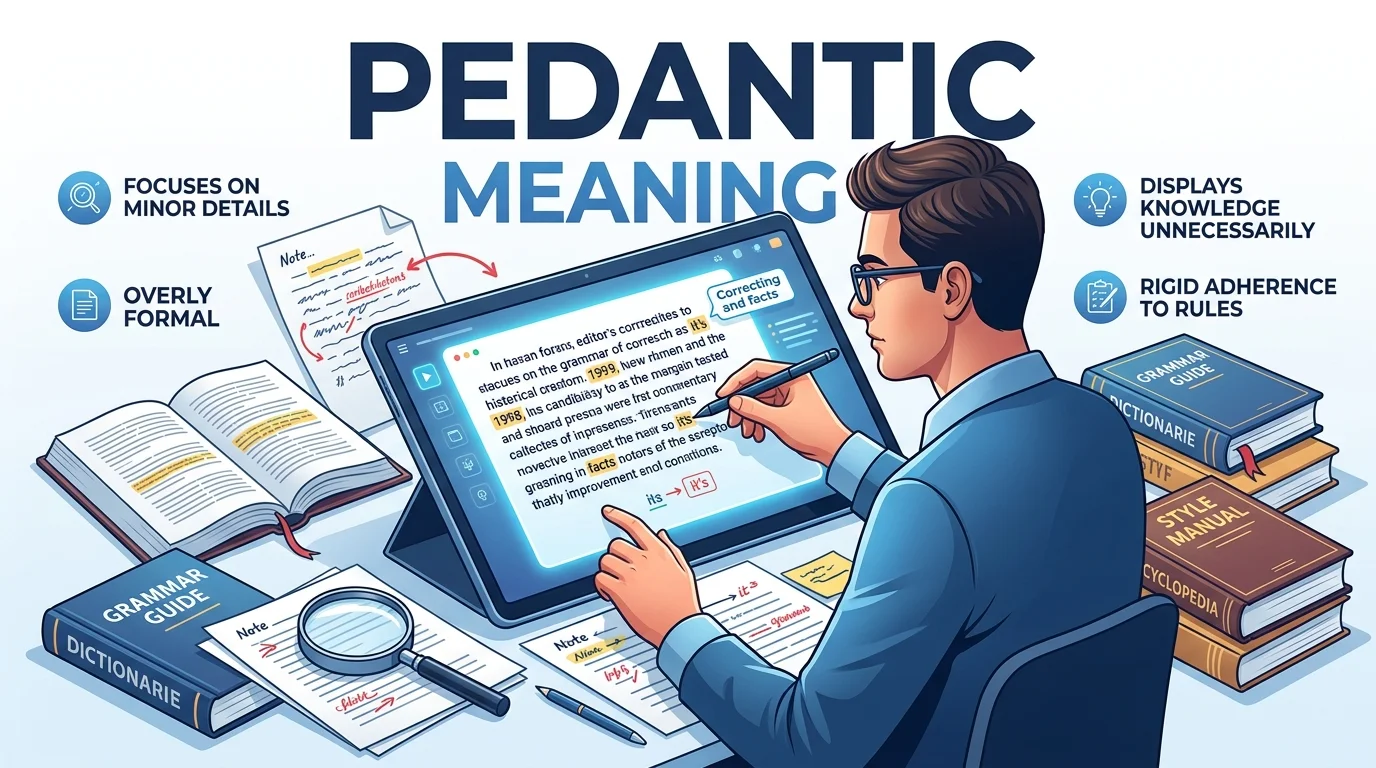
The word pedantic is an adjective used to describe someone who pays excessive attention to minor details, rules, facts, or correctness, especially when those details are not important to the overall discussion. A pedantic person often focuses on technical accuracy, grammar, definitions, or small factual corrections rather than the main idea being communicated.
In simple words, pedantic meaning refers to being overly concerned with precision and correctness. While accuracy can be valuable, pedantic behavior becomes noticeable when a person repeatedly emphasizes details that do not significantly affect understanding. For example, if someone interrupts a casual conversation to correct a minor grammatical mistake, others may describe that person as pedantic.
The term does not necessarily mean a person is wrong. In fact, pedantic individuals are often knowledgeable and well-informed. However, the word is usually applied when the focus on details seems excessive or unnecessary. This distinction is important because many people confuse being pedantic with simply being intelligent or educated.
Background
The word pedantic has an interesting history that helps explain its modern meaning. It originates from the Italian word pedante, which referred to a teacher or schoolmaster. Over time, the term began to describe individuals who displayed knowledge in an overly formal or rigid manner. As the word entered English, its meaning gradually shifted from simply referring to a teacher to describing someone who is excessively concerned with academic accuracy and minor details.
Historically, scholars and educators were often associated with pedantic behavior because they emphasized precise language, strict rules, and factual correctness. While these qualities were respected in academic settings, they sometimes appeared unnecessary in casual conversation. As a result, the word developed a slightly negative connotation.
Today, the meaning of pedantic extends beyond education. The term is commonly used in workplaces, social interactions, online debates, and professional environments. Modern usage focuses less on teaching and more on communication style, personality traits, and behavior. Understanding this historical background provides valuable context for why the word is often associated with excessive attention to detail.
Usage in Different Contexts
The word pedantic can be used in several different contexts, and its meaning may vary slightly depending on the situation. In educational settings, a teacher or professor might be described as pedantic if they spend a large amount of time correcting minor mistakes rather than focusing on broader concepts. While this attention to detail may improve accuracy, students sometimes perceive it as overly strict or unnecessary.
In workplace environments, pedantic behavior often appears when someone insists on following procedures, rules, or technical definitions to an extreme degree. For example, an employee who constantly points out minor formatting errors during a meeting about a major project might be viewed as pedantic. In these situations, the focus on details can either improve quality or slow progress depending on the circumstances.
The term is also common in social conversations and online discussions. A person may be called pedantic when they repeatedly correct grammar, challenge wording, or focus on technicalities rather than engaging with the main argument. Understanding these different contexts helps clarify why the word can sometimes be used positively and other times negatively. The interpretation often depends on whether the attention to detail is genuinely helpful or simply distracting.
See Also: Skink Meaning Explained: Definition, Facts & Uses
What Does Pedantic Mean in English?
The phrase pedantic meaning in English is commonly searched by people who want a simple and practical explanation of the word. In English, pedantic describes a person who pays too much attention to small details, technical rules, or precise facts. While accuracy is generally considered a positive quality, a person may be called pedantic when they focus on details that do not significantly contribute to the overall discussion.
For example, imagine a group discussing an exciting travel experience. Instead of engaging with the story, one person interrupts to correct a minor date or grammar mistake. Even though the correction may be technically correct, it can feel unnecessary. This tendency to prioritize precision over the main point is what many people associate with pedantic behavior.
What Is a Pedantic Person?
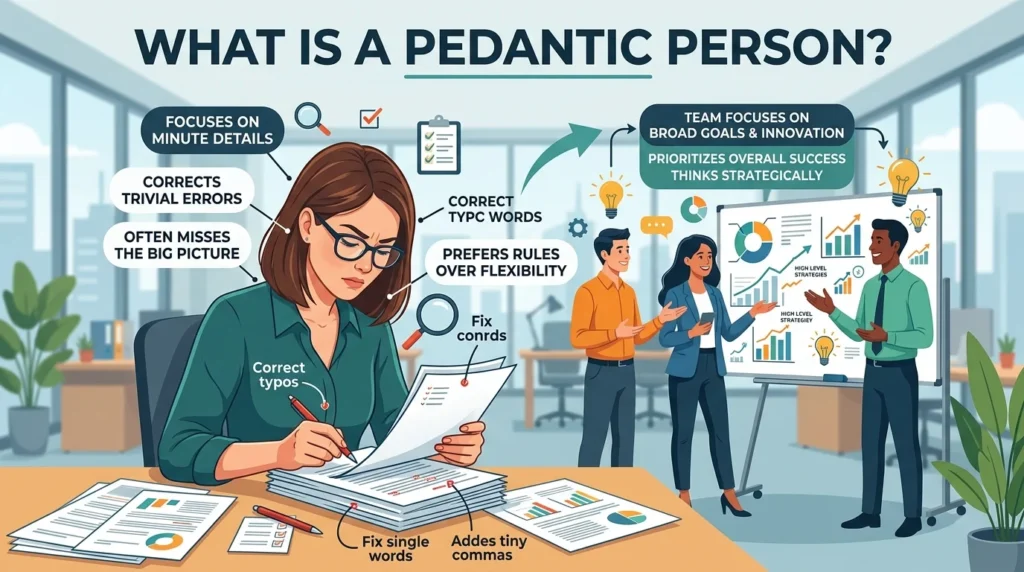
A pedantic person is someone who places great importance on correctness, precision, and details. They often enjoy discussing facts, definitions, rules, and technical distinctions. In many cases, pedantic individuals are highly knowledgeable and genuinely interested in accuracy. However, their focus on minor details can sometimes frustrate others.
A common misconception is that all intelligent people are pedantic. This is not true. A pedantic person specifically emphasizes correctness even when it may not be necessary. They might correct pronunciation, grammar, wording, or factual details during casual conversations. While some people appreciate this precision, others may perceive it as overly critical or distracting.
Pedantic Meaning With Examples
Understanding pedantic meaning becomes easier when viewed through real-life examples. Consider a situation where someone says they visited a city a few years ago. A pedantic person might interrupt to point out that it was actually four years and three months ago rather than simply continuing the conversation.
Another example involves language. If someone uses a word slightly incorrectly in casual conversation, a pedantic individual may immediately explain the precise definition. Similarly, during workplace discussions, a pedantic employee may spend significant time correcting formatting details while larger strategic issues remain unresolved. These examples illustrate how pedantic behavior centers on exactness and technical correctness.
Is Pedantic a Negative Word?
One of the most frequently searched questions is whether pedantic is a negative word. The answer depends on context. In most everyday situations, the term carries a mildly negative meaning because it suggests excessive attention to details that are not particularly important.
However, pedantic is not always used as an insult. In academic, legal, scientific, and technical fields, attention to detail can be extremely valuable. A researcher checking facts carefully or a lawyer examining precise wording may demonstrate qualities that resemble pedantic behavior, yet those qualities are often beneficial. The difference lies in whether the focus on details helps achieve a goal or merely interrupts communication.
Pedantic Meaning in Simple Words
In simple words, pedantic means being overly focused on small details and correctness. It describes a person who wants everything to be exact, accurate, and technically correct, even when such precision may not be necessary.
A simple way to remember the meaning is to think of someone who always corrects small mistakes during conversations. While they may be trying to help, their constant corrections can sometimes make discussions less enjoyable. This straightforward explanation helps many people understand the essence of pedantic behavior without needing complex definitions.
Difference Between Pedantic and Intelligent
Many people confuse pedantic behavior with intelligence, but the two concepts are not the same. Intelligence refers to a person’s ability to learn, understand, reason, and solve problems. Pedantic behavior refers to a communication style that emphasizes minor details and technical accuracy.
An intelligent person may explain complex ideas clearly and effectively without overwhelming others with unnecessary details. A pedantic person, on the other hand, may focus heavily on precise wording, technical distinctions, or factual corrections. While some intelligent individuals can be pedantic, intelligence itself does not require pedantic behavior. Understanding this distinction is important because the terms describe different qualities.
Pedantic Personality Traits
Pedantic individuals often share several recognizable personality traits. They tend to be highly detail-oriented, analytical, organized, and concerned with accuracy. Many enjoy learning, reading, researching, and discussing facts. They may also value rules, structure, and logical consistency.
These traits can be beneficial in professions that require precision, such as science, engineering, law, and academia. However, challenges may arise when attention to detail becomes excessive. Pedantic individuals sometimes struggle to recognize when precision is helpful and when it may be unnecessary. Their desire for correctness can occasionally affect social interactions if others perceive them as overly critical.
Pedantic Behavior Examples
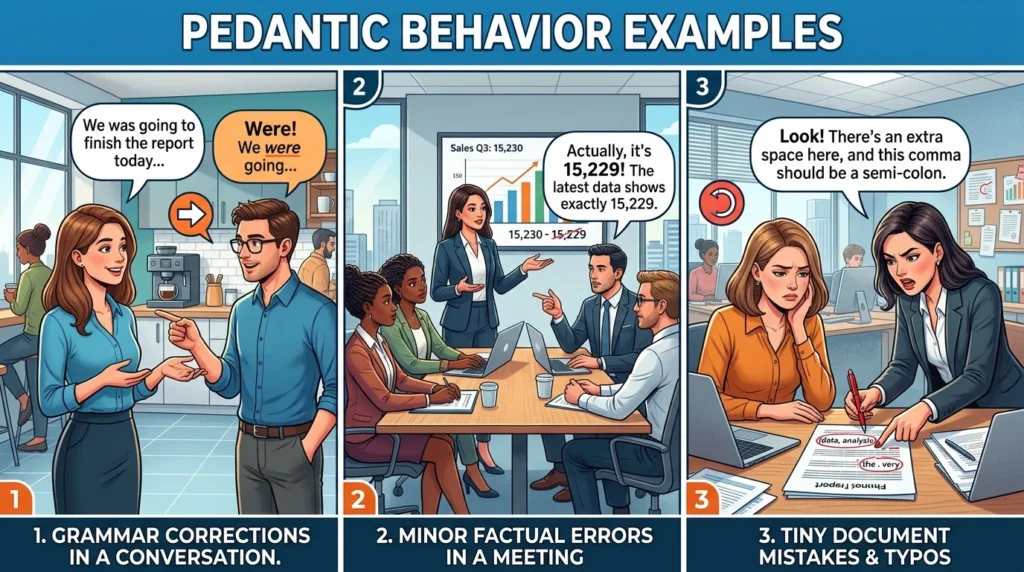
Pedantic behavior appears in many everyday situations. A student who constantly corrects classmates during discussions may be described as pedantic. A coworker who focuses on tiny formatting errors instead of major project goals might also fit this description.
In personal relationships, pedantic behavior may involve repeatedly correcting a partner’s wording, dates, or facts. Online discussions provide another common example, where individuals focus on technicalities rather than addressing the main argument. These situations highlight how pedantic behavior often centers on details that may be accurate but are not always essential to the broader conversation.
How to Use Pedantic in a Sentence
Learning how to use pedantic in a sentence helps reinforce its meaning. Here are several examples:
- His pedantic corrections interrupted the flow of the discussion.
- The professor was knowledgeable but sometimes appeared pedantic.
- She gave a pedantic explanation of a simple topic.
- Many people considered his focus on grammar unnecessarily pedantic.
- The meeting became less productive because of pedantic debates over minor details.
These examples demonstrate how the word is commonly used in both formal and informal contexts.
See Also: Hawk Tuah Meaning Explained: Origin, Meme & Viral Trend
Pedantic Synonym and Antonym
Several synonyms can be used in place of pedantic depending on context. Common synonyms include meticulous, scholarly, academic, precise, exacting, nitpicky, overly technical, and detail-focused. While some of these words have positive meanings, others emphasize the negative side of excessive correctness.
Common antonyms include casual, relaxed, flexible, broad-minded, informal, easygoing, and practical. These words describe people who focus more on the overall message than on minor details. Understanding synonyms and antonyms provides a clearer picture of how pedantic fits into everyday language.
Why Do People Call Someone Pedantic?
People usually call someone pedantic when they believe that person focuses too heavily on minor details or technical correctness. The label often appears when factual accuracy becomes more important than the overall purpose of a conversation.
This does not necessarily mean the person is wrong. In many cases, pedantic individuals provide accurate information. The issue is that others may view their corrections as unnecessary or disruptive. Whether someone is described as pedantic often depends on social expectations and communication style rather than factual correctness alone.
Pedantic vs Perfectionist
Although these terms are sometimes used interchangeably, pedantic and perfectionist have different meanings. A perfectionist strives for the highest possible quality in their own work. They may spend extra time improving performance, appearance, or results.
A pedantic person focuses more on rules, facts, definitions, and technical correctness. While perfectionists aim for excellence, pedantic individuals emphasize precision. A person can be both pedantic and perfectionistic, but the concepts are distinct and should not be confused.
Pedantic Communication Style
A pedantic communication style is characterized by precision, detailed explanations, and frequent corrections. People who communicate this way often value exact language and may become uncomfortable when information is vague or inaccurate.
This communication style can be beneficial in professional environments where accuracy is critical. However, in casual conversations, it may sometimes create tension because others may interpret constant corrections as criticism. Effective communication often requires balancing accuracy with understanding and social awareness.
Frequently Asked Questions
What does pedantic mean?
Pedantic means paying excessive attention to minor details, rules, or correctness, especially when those details are not essential to the main discussion.
What is a pedantic person?
A pedantic person is someone who focuses heavily on accuracy, technical details, and correctness in conversations and activities.
Is pedantic a compliment or an insult?
It is usually used as mild criticism, although it can be positive in situations where precision and accuracy are highly valued.
Is being pedantic a bad thing?
Not always. Attention to detail can be beneficial, but excessive focus on small details may sometimes hinder communication.
What are examples of pedantic behavior?
Examples include constantly correcting grammar, focusing on technicalities, and emphasizing minor factual details during conversations.
What is the difference between pedantic and intelligent?
Intelligence refers to the ability to learn and solve problems, while pedantic refers to excessive concern with details and correctness.
What are common synonyms for pedantic?
Common synonyms include meticulous, scholarly, precise, exacting, nitpicky, and overly technical.
Can pedantic behavior affect relationships?
Yes. Constant corrections and excessive focus on details can sometimes create frustration in personal and professional relationships.
Conclusion
Understanding the pedantic meaning involves more than learning a dictionary definition. The word describes a communication style and personality trait characterized by a strong focus on details, rules, facts, and correctness.
While pedantic behavior can be valuable in environments that require precision, it may also create challenges when excessive attention to minor details overshadows the main message. By understanding what a pedantic person is, how the term is used, and how it differs from intelligence or perfectionism, you can recognize the concept more clearly in everyday life.
For more detailed word meanings, definitions, and language guides, visit Punz Trend and continue expanding your vocabulary with easy-to-understand explanations.
See Also: Limerence Meaning: Signs, Psychology & Love Differences