
Introvert Meaning: Definition, Traits & Psychology Guide
Have you ever met someone who enjoys spending time alone, prefers meaningful conversations over small talk, and feels mentally refreshed after a quiet evening at home rather than a crowded social event? If so, you may have encountered an introvert. The term “introvert” is one of the most searched personality-related words online, yet many people still misunderstand its true meaning. Some assume introverts are shy, antisocial, or lack confidence, but the reality is far more interesting.
Understanding the introvert meaning can help you better understand yourself and the people around you. Whether you are researching personality types, trying to figure out your own behavior, or simply curious about human psychology, learning about introversion provides valuable insight into how different people think, communicate, and recharge their energy. In this comprehensive guide, you’ll discover the meaning of introvert personality, how psychologists define introversion, common traits of introverted people, and the difference between being introverted and being shy.
If you enjoy learning the meaning of words, personality terms, and everyday expressions, you can also explore more detailed guides on Punz Trend, where readers discover easy-to-understand explanations, meanings, and informative content on a wide range of topics.
Meaning & Definition
The introvert meaning refers to a person who tends to focus more on their inner thoughts, feelings, and experiences rather than seeking constant external stimulation. Introverts often feel energized by spending time alone or in small groups, while large social gatherings can sometimes leave them feeling mentally drained. This does not mean they dislike people; instead, they simply process social interactions differently from extroverts.
In simple words, an introvert is someone who gains energy from solitude and meaningful reflection. Introverted individuals usually enjoy deep conversations, thoughtful decision-making, and personal hobbies that allow them to concentrate without excessive distractions. They often prefer quality over quantity when it comes to friendships and social relationships.
According to psychology, introversion is a personality trait rather than a weakness or problem. It represents one end of a personality spectrum, with extroversion on the opposite side. Most people fall somewhere between these two extremes, which is why many individuals display both introverted and extroverted characteristics depending on the situation.
Background
The concept of introversion became widely recognized through the work of Swiss psychiatrist Carl Jung, who introduced the ideas of introversion and extroversion in the early twentieth century. Jung believed that people direct their mental energy in different ways. Introverts tend to focus inward on thoughts and reflection, while extroverts direct more attention outward toward people, activities, and social experiences.
Over time, psychologists expanded on Jung’s theories and incorporated introversion into modern personality frameworks. Today, introversion is considered one of the most important personality dimensions studied in psychology. Personality assessments such as the Myers-Briggs Type Indicator and the Big Five Personality Traits model frequently include introversion as a major characteristic.
Despite increased awareness, misconceptions still exist. Many people incorrectly believe that introverts are shy, socially awkward, or incapable of leadership. Research and real-world examples have repeatedly shown that introverts can be highly successful, confident, and influential. Many entrepreneurs, scientists, writers, and leaders possess introverted personality traits while excelling in their respective fields.
Usage in Different Contexts
The word introvert is commonly used in everyday conversations, educational discussions, psychology research, workplace environments, and relationship advice. In casual settings, people often describe themselves as introverts when they enjoy quiet activities, need personal space, or prefer smaller social circles. For example, someone might say, “I’m an introvert, so I prefer spending weekends reading or relaxing at home.”
In psychology, introversion is used to describe a personality orientation rather than a social limitation. Mental health professionals distinguish introversion from conditions such as social anxiety because introverts may enjoy socializing but simply require time alone afterward to recharge their energy.
The workplace is another area where the concept of introversion is frequently discussed. Introverted employees often excel in roles that require concentration, creativity, analytical thinking, and problem-solving. In relationships, introverts may value deeper emotional connections and meaningful communication over frequent social activity.
Understanding the usage of introvert in different contexts helps eliminate stereotypes and promotes a more accurate view of personality differences. Rather than viewing introversion as a disadvantage, modern psychology recognizes it as a natural and valuable personality trait with unique strengths and benefits.
What Is the Meaning of Introvert Personality?
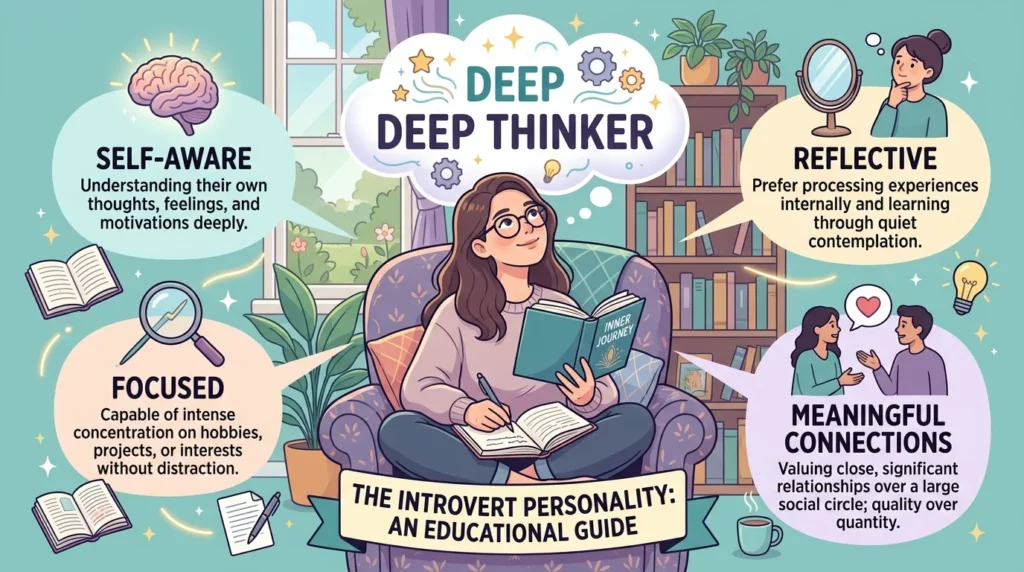
The introvert personality refers to a way of thinking, feeling, and interacting with the world where a person gains energy from internal reflection rather than constant external stimulation. Introverts are often thoughtful, observant, and self-aware individuals who enjoy spending time alone or with a small group of trusted friends. While extroverts typically feel energized by social activities, introverts often recharge through solitude, quiet environments, and personal interests.
An introvert personality should not be confused with being lonely or antisocial. Many introverts enjoy socializing and building meaningful relationships. The difference lies in how they manage their energy. After attending a busy event or spending long periods interacting with others, introverts may need time alone to recover and regain focus. This personality type is common and exists on a spectrum, meaning some people are strongly introverted while others display a mix of introverted and extroverted traits.
Understanding the meaning of introvert personality helps people recognize that there is no single “correct” way to interact with the world. Introverts contribute valuable qualities such as deep thinking, creativity, active listening, and careful decision-making, making them an important part of every community, workplace, and relationship.
Introvert Meaning in Simple Words
If you are looking for the introvert meaning in simple words, the easiest explanation is that an introvert is someone who feels more comfortable and energized when spending time alone or in calm environments. Introverts usually enjoy thinking deeply, reflecting on their experiences, and having meaningful conversations instead of constantly seeking excitement or large social gatherings.
Imagine a person who enjoys reading a book, working on a personal project, taking a peaceful walk, or spending time with a few close friends. That person may be an introvert. This does not mean they dislike people. Instead, they simply prefer lower levels of social stimulation and often value quality interactions over quantity.
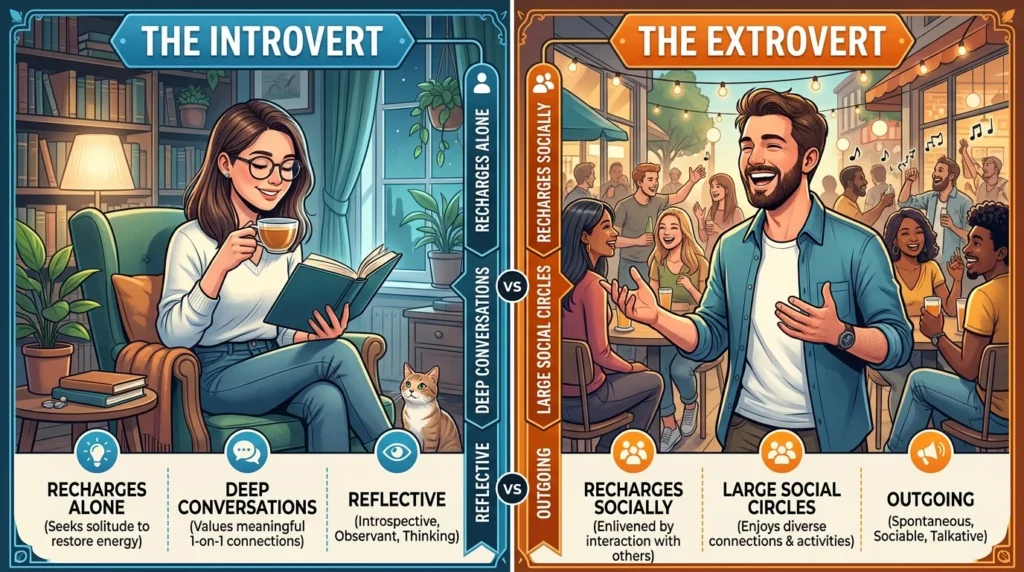
Many people mistakenly assume that introverts are shy. However, a person can be confident, outgoing, and successful while still being introverted. The key difference is where they get their energy. Introverts recharge through personal time, while extroverts often recharge through social interaction. Understanding this simple concept can make the term much easier to grasp.
See Also: Habibi Meaning: English, Arabic, Text & Relationship Use
What Does Introvert Mean in Psychology?
In psychology, introversion is considered a personality trait that describes how individuals respond to stimulation, process information, and direct their mental energy. Psychologists view introversion as a natural part of human personality rather than a disorder, weakness, or social problem.
According to personality theories, introverts tend to focus more on their internal world of thoughts, ideas, and emotions. They often enjoy reflection, self-analysis, and activities that allow them to think deeply. Because of this inward focus, introverts may prefer quieter environments where they can concentrate without excessive distractions.
Modern psychological research also suggests that introverts and extroverts may respond differently to stimulation. Introverts often feel comfortable with lower levels of excitement and may become overwhelmed by noisy or highly stimulating environments. This is one reason they may seek solitude after long periods of social interaction.
Psychologists emphasize that introversion exists on a spectrum. Most people are neither completely introverted nor completely extroverted. Instead, they display a combination of traits depending on their personality, experiences, and circumstances. Understanding introversion from a psychological perspective helps remove common myths and encourages greater acceptance of personality differences.
Signs of an Introvert Person
Recognizing the signs of an introvert person can help you better understand yourself or someone you know. While every individual is unique, certain characteristics are commonly associated with introverted personalities.
One of the most noticeable signs is a preference for solitude or small-group interactions. Introverts often enjoy spending time alone because it allows them to recharge mentally and emotionally. They may prefer a quiet evening at home over attending a large social gathering. This does not mean they dislike people; they simply find peace and energy in calmer settings.
Another common sign is deep thinking. Introverts often analyze situations carefully before speaking or making decisions. They tend to enjoy meaningful discussions rather than casual small talk. Many introverts are also excellent listeners because they focus closely on what others are saying rather than constantly seeking attention.
Introverts are often observant and reflective. They may notice details that others overlook and spend time considering different perspectives before expressing an opinion. In social situations, they usually prefer a few close friendships over a large network of acquaintances.
Additional signs of an introvert person may include enjoying independent activities, valuing privacy, needing personal space, and feeling mentally drained after prolonged social interaction. These traits are not flaws; they are natural aspects of a personality style that offers many strengths.
See Also: Demure Meaning: Definition, TikTok Trend & Examples
Introvert Personality Traits and Characteristics
The traits and characteristics of introverts make them unique in how they approach life, relationships, and personal growth. One of the most recognized traits is self-reflection. Introverts often spend time analyzing their thoughts, experiences, and emotions, which can lead to strong self-awareness and personal insight.
Another important characteristic is thoughtfulness. Introverts typically prefer to think before they speak, carefully considering their words and actions. This tendency can make them reliable decision-makers who avoid acting impulsively. Their ability to focus deeply also helps them perform well in tasks that require concentration, creativity, and attention to detail.
Many introverts are highly empathetic listeners. Rather than dominating conversations, they often focus on understanding others and building meaningful connections. This quality can strengthen relationships and make introverts valuable friends, colleagues, and leaders.
Introverted individuals are also known for their independence. They often feel comfortable pursuing goals, hobbies, and projects on their own. Because they are not heavily dependent on external validation, many introverts develop strong internal motivation and resilience.
Common introvert personality traits include deep thinking, active listening, creativity, emotional awareness, patience, observation, independence, focus, and a preference for meaningful relationships. These characteristics demonstrate that introversion is associated with many strengths that can contribute to success and fulfillment.
You’re right — a complete SEO article needs FAQs + Conclusion for AI Overview, Featured Snippets, and topical authority. Here they are written in a natural, non-robotic style and fully optimized.
Frequently Asked Questions
What is the meaning of introvert personality?
An introvert personality refers to a person who prefers calm environments, deep thinking, and alone time to recharge their energy instead of large social gatherings.
Is being an introvert a bad thing?
No, being an introvert is not a bad thing. It is a natural personality trait that includes strengths like focus, creativity, deep thinking, and strong self-awareness.
What is the difference between introvert and shy?
An introvert prefers solitude and low stimulation, while shyness is fear or anxiety in social situations. An introvert may be confident but still enjoy being alone.
Can introverts be successful in life?
Yes, many successful people are introverts. They often excel in careers that require focus, creativity, and independent thinking.
How do I know if I am an introvert?
If you feel drained after social events, enjoy spending time alone, and prefer deep conversations over small talk, you may be an introvert.
Can an introvert become extrovert?
Introversion is a personality trait, not something that completely changes. However, introverts can develop social skills and become more confident in social situations.
Are introverts intelligent?
Intelligence is not linked to personality type. However, introverts are often deep thinkers and analytical, which can make them very thoughtful problem-solvers.
Conclusion
Understanding the introvert meaning helps you realize that personality is not about being “better” or “worse,” but about differences in how people think, feel, and interact with the world. Introverts are often deep thinkers, good listeners, and highly reflective individuals who prefer meaningful connections over large social circles.
Instead of seeing introversion as a limitation, it should be viewed as a unique strength. Many introverts excel in creativity, leadership, problem-solving, and independent work because they focus deeply and think before acting. Whether in psychology, relationships, or daily life, introversion plays an important role in shaping human behavior.
If you enjoy learning simple and clear explanations of meanings, personality traits, and concepts like this, you can explore more easy-to-understand guides on Punz Trend, where complex topics are broken down into simple, engaging, and SEO-friendly content for readers worldwide.
See Also: Chud Meaning: Slang, TikTok, Reddit & Online Culture