Limerence Meaning: Signs, Psychology & Love Differences
Have you ever found yourself constantly thinking about someone, checking your phone repeatedly for their messages, imagining future scenarios together, and feeling emotionally dependent on their attention? If so, you may have experienced something known as limerence. Many people search for limerence meaning because they notice intense emotional feelings that seem stronger than a simple crush but different from genuine love. These emotions can be exciting, overwhelming, confusing, and sometimes even painful.
In today’s world of social media, instant communication, and online relationships, limerence has become increasingly common. Yet many people misunderstand it and mistake it for true love. Understanding limerence can help individuals recognize unhealthy emotional patterns, improve self-awareness, and build healthier relationships. This guide explores limerence from every angle, including its psychological meaning, causes, symptoms, relationship impact, and practical ways to overcome it. Whether you are curious about your own feelings or simply want to understand the concept better, this article will provide a complete explanation in simple language.
Meaning & Definition
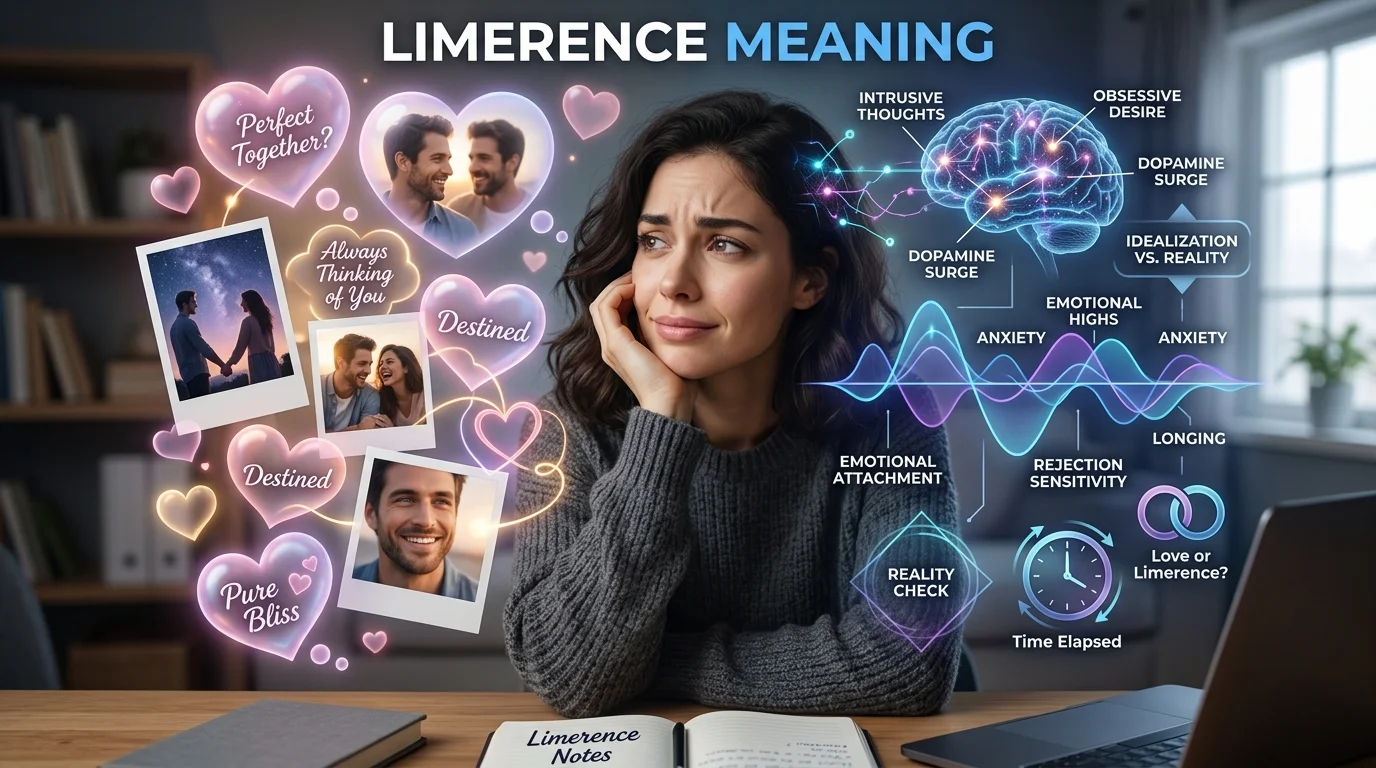
The limerence meaning refers to an intense emotional state characterized by obsessive thoughts, emotional dependency, and a strong desire for romantic reciprocation from another person. Unlike ordinary attraction, limerence involves persistent mental preoccupation with a specific individual, often called the “limerent object.” People experiencing limerence frequently think about the person throughout the day and may interpret even small interactions as highly significant.
Limerence is often accompanied by emotional highs and lows. Positive attention from the desired person can create feelings of excitement and happiness, while uncertainty or rejection may lead to anxiety and emotional distress. Because limerence is driven largely by fantasy, idealization, and emotional longing, it differs significantly from mature love, which is generally based on mutual understanding, trust, and long-term commitment.
Background
The concept of limerence was introduced by Dorothy Tennov, a psychologist who studied romantic attraction and emotional attachment. Through extensive research and interviews, she discovered that many people experience a unique form of romantic obsession that cannot be fully explained by traditional concepts such as love or attraction. To describe this experience, she coined the term limerence.
Her research was later published in the book Love and Limerence, which brought widespread attention to the concept. Since then, psychologists and relationship experts have continued exploring limerence as an important aspect of human behavior. Today, the term is frequently discussed in relationship psychology, mental health communities, and personal development content because of its impact on emotional well-being and romantic relationships.
Usage in Different Contexts
Limerence can appear in many different contexts and relationships. In romantic situations, it often develops when someone becomes intensely attracted to another person and begins imagining a future relationship despite limited interaction. This emotional fixation may continue for months or even years, particularly if the feelings are not clearly reciprocated.
Limerence can also occur in friendships, workplace environments, online relationships, and social media interactions. In some cases, individuals develop limerent feelings toward celebrities, influencers, or people they have never met in person. Because limerence is fueled by imagination and emotional desire, physical proximity is not always necessary. Modern technology has made it easier for limerence to develop because people can constantly view and engage with others online.
Limerence Meaning in Psychology
In the field of Psychology, limerence is viewed as a psychological state involving intense romantic attraction, obsessive thinking, and emotional dependency. It is often linked to reward systems in the brain that release dopamine and other chemicals associated with pleasure and anticipation. This neurological response can make interactions with the limerent object feel highly rewarding.
Psychologists often connect limerence to concepts such as Attachment Theory, emotional regulation, and interpersonal relationships. While limerence itself is not considered a mental disorder, its intensity can affect emotional well-being if left unchecked. Understanding its psychological foundations can help individuals recognize why they feel the way they do and how those feelings influence their behavior.
What Is Limerence in a Relationship?
Many people ask what is limerence in a relationship because it can feel remarkably similar to being in love. However, limerence and healthy relationships are not always the same. In a relationship context, limerence involves intense emotional focus on another person, often accompanied by idealization and a strong desire for validation from them.
A person experiencing limerence may prioritize the desired individual’s opinions, actions, and responses above everything else. Their mood may fluctuate depending on the level of attention they receive. While genuine relationships are built on mutual respect, communication, and trust, limerence often revolves around uncertainty, emotional dependency, and fantasy. Recognizing this difference is essential for developing healthy romantic connections.
Signs and Symptoms of Limerence
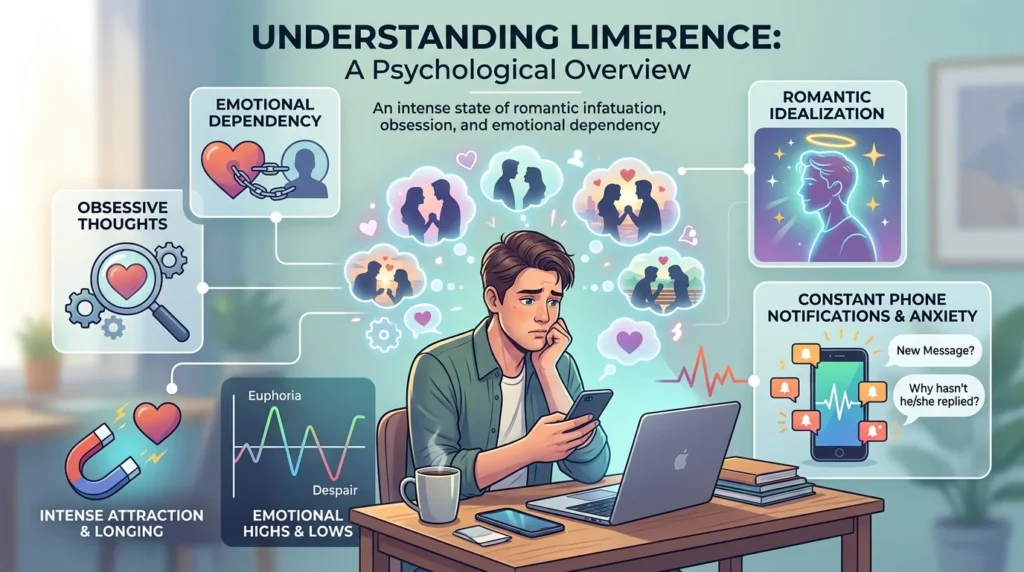
The signs and symptoms of limerence can vary from person to person, but several patterns commonly appear. One of the most noticeable signs is persistent intrusive thinking. Individuals experiencing limerence may spend hours thinking about the person they desire, replaying conversations, imagining future interactions, and analyzing small details.
Other common symptoms include emotional dependency, fear of rejection, idealization of the person, intense excitement after positive interactions, and significant anxiety during periods of uncertainty. Some people may also struggle to focus on work, studies, or personal responsibilities because their thoughts remain centered on the limerent object. These symptoms often distinguish limerence from ordinary attraction or a casual crush.
How to Know If You Are Experiencing Limerence
Many individuals wonder how to know if you are experiencing limerence rather than normal romantic interest. One indicator is the intensity of emotional preoccupation. If thoughts about someone dominate your day and significantly affect your mood, limerence may be involved. Another sign is idealization, where you focus heavily on the person’s positive qualities while overlooking flaws.
You may also notice strong emotional reactions to their attention or lack of attention. Receiving a message from them might create extreme happiness, while delayed responses may trigger anxiety or sadness. When emotional stability becomes dependent on another person’s behavior, it often suggests the presence of limerence rather than healthy attraction.
Limerence Meaning With Real-Life Examples
Understanding limerence becomes easier when viewed through real-life examples. Imagine a coworker who has only exchanged a few conversations with someone in the office but spends months fantasizing about a future relationship with them. They constantly analyze interactions, look for signs of mutual interest, and feel emotionally affected by every encounter.
Another example involves social media. Someone may become intensely attached to an influencer or online acquaintance, checking their profiles multiple times per day and imagining a deeper connection despite limited communication. These situations illustrate how limerence can develop through emotional investment, idealization, and hope rather than actual relationship experiences.
What Causes Limerence in Adults?
The causes of limerence are complex and often involve multiple psychological and emotional factors. One major factor is uncertainty. When a person is unsure whether their feelings are reciprocated, the uncertainty can increase emotional intensity and reinforce obsessive thinking. This explains why limerence often thrives in ambiguous situations.
Other contributing factors include loneliness, low self-esteem, unmet emotional needs, past relationship experiences, and attachment patterns. Some researchers also suggest that brain chemicals associated with reward and anticipation play a significant role. Together, these factors can create an environment where limerence develops and persists over time.
How Long Does Limerence Last?
One of the most common questions people ask is how long does limerence last. Unlike a brief crush that may disappear within days or weeks, limerence can continue for months or even several years. The duration depends on factors such as emotional investment, frequency of contact, uncertainty, and whether the feelings are reciprocated. In many cases, limerence remains strongest when there is ambiguity because the brain continues seeking answers and validation.
Research and personal experiences suggest that limerence often fades when reality replaces fantasy. This can happen when a relationship develops into a stable partnership, when rejection becomes clear, or when the individual gradually shifts their attention elsewhere. The length of limerence varies greatly from person to person, but it rarely remains at peak intensity forever. Over time, emotional awareness and personal growth usually reduce its influence.
See Also: SOS Meaning: Full Form, Texting, Emergency & Morse Code
Limerence vs Love Differences Explained
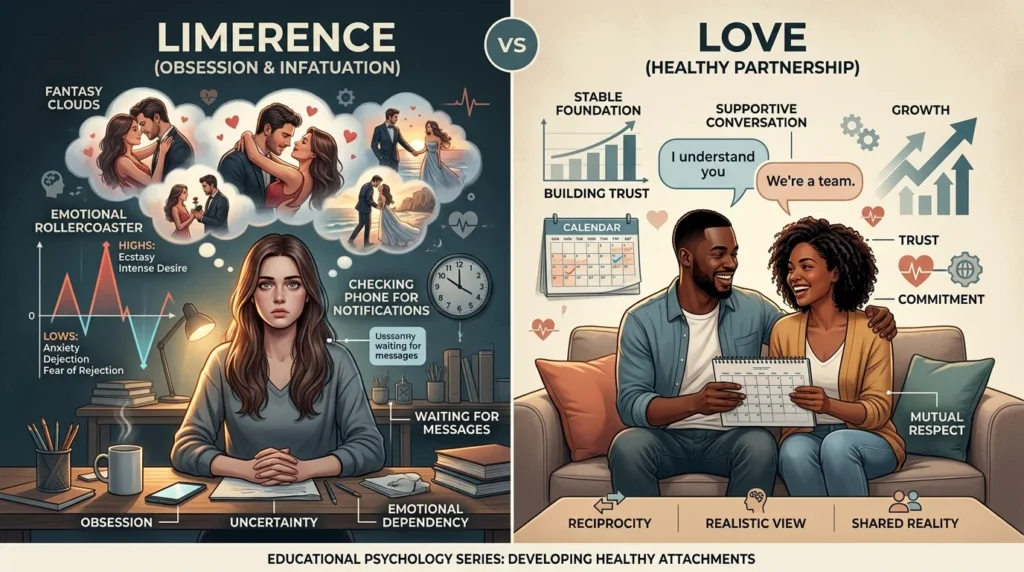
Understanding limerence vs love differences explained is essential because many people confuse the two experiences. At first glance, limerence may feel like love because both involve strong emotions, attraction, and a desire for connection. However, the underlying foundations are very different. Limerence is often driven by uncertainty, fantasy, emotional dependency, and idealization.
Love, on the other hand, is generally built on trust, mutual respect, communication, and acceptance of another person’s strengths and weaknesses. While limerence focuses heavily on receiving validation and attention, genuine love prioritizes care, understanding, and long-term compatibility. Love tends to create emotional stability, whereas limerence often creates emotional highs and lows based on the other person’s responses.
Limerence vs Crush: What Is the Difference?
Many people also wonder about limerence vs crush: what is the difference. A crush is usually a temporary attraction that may involve excitement and curiosity but does not necessarily dominate a person’s thoughts. Most crushes are relatively lighthearted and fade naturally over time without causing significant emotional disruption.
Limerence is much more intense. It involves obsessive thinking, emotional dependency, and a strong need for reciprocation. While someone with a crush may simply enjoy being around another person, someone experiencing limerence may constantly analyze interactions, imagine future scenarios, and feel emotionally affected by every response. This greater intensity is one of the key distinctions between a crush and limerence.
Limerence vs Obsession
Although limerence and obsession share certain similarities, they are not identical. Both can involve persistent thoughts and strong emotional focus, but limerence specifically centers around romantic attraction and the desire for emotional reciprocation. Obsession can occur in many areas of life, including work, hobbies, achievements, or personal goals.
Limerence often contains elements of idealization and hope. Individuals may believe that achieving a relationship with the limerent object will bring happiness or fulfillment. Obsession, by contrast, may not involve romantic feelings at all. Understanding this distinction helps people better identify what they are experiencing and choose appropriate strategies for managing it.
Limerence and Attachment Theory
Experts frequently connect limerence with Attachment Theory because attachment patterns can influence how individuals experience romantic attraction. People with secure attachment styles tend to form balanced relationships and manage uncertainty effectively. Those with anxious attachment patterns may be more vulnerable to limerence because they often seek reassurance and fear rejection.
For individuals with anxious attachment, uncertainty in relationships can intensify emotional focus and create a cycle of longing and validation-seeking. This does not mean everyone with anxious attachment experiences limerence, but attachment styles can contribute to its development. Understanding these patterns can help people build healthier emotional habits and improve relationship outcomes.
Limerence and Social Media
A topic many competitors overlook is the connection between limerence and social media. Modern technology has changed the way people form emotional attachments. Social media platforms allow constant access to another person’s photos, updates, stories, and online activities. This continuous exposure can strengthen emotional fixation and make it more difficult to move on.
People experiencing limerence may repeatedly check profiles, analyze posts, monitor online activity, or search for signs of mutual interest. Because social media provides limited information, individuals often fill gaps with imagination and fantasy. This can reinforce limerent feelings and prolong emotional attachment. Understanding the influence of digital platforms is increasingly important in today’s relationship landscape.
Can Limerence Turn Into Real Love?
One of the most frequently searched questions is can limerence turn into real love. The answer is yes, but it does not happen automatically. In some cases, limerence serves as the initial stage of attraction that eventually develops into a healthy relationship. As two people spend time together, learn about each other, and build trust, the fantasy-driven aspects of limerence may gradually be replaced by genuine connection.
However, not all limerence evolves into love. Sometimes the relationship never develops beyond fantasy, or the reality of the other person does not match the idealized image created in the mind. For love to emerge, both individuals must develop mutual understanding, communication, and emotional intimacy. Without those elements, limerence often remains a temporary emotional experience.
Is Limerence a Mental Health Condition?
Many people ask is limerence a mental health condition because its symptoms can feel overwhelming. While limerence may involve obsessive thinking and emotional dependency, it is not officially classified as a mental disorder. Most psychologists view it as a psychological state associated with romantic attraction and emotional attachment rather than a diagnosable condition.
That said, limerence can affect mental health if it becomes extreme or interferes with daily functioning. Individuals may experience anxiety, emotional distress, difficulty concentrating, or reduced self-esteem. When limerence significantly impacts well-being, speaking with a mental health professional can provide valuable support and guidance.
Signs That Limerence Is Fading
Another important topic often missing from competitor articles is recognizing when limerence begins to fade. One of the earliest signs is a reduction in obsessive thinking. The person no longer dominates every thought, and attention gradually shifts toward other aspects of life. Emotional reactions also become less intense, creating greater stability and balance.
Additional signs include increased awareness of the person’s flaws, reduced need for validation, and greater focus on personal goals and relationships. As fantasy loses its influence, reality becomes easier to accept. This transition can feel challenging at first, but it often marks the beginning of healthier emotional patterns and stronger self-awareness.
See Also: Discernment Meaning: Simple Definition and Uses
How to Overcome Limerence Naturally
People searching for how to overcome limerence naturally are often looking for practical ways to regain emotional balance. One of the most effective strategies is increasing self-awareness. Recognizing the difference between fantasy and reality helps reduce idealization and encourages a more balanced perspective.
Other helpful approaches include limiting exposure to triggers, reducing excessive social media monitoring, focusing on personal goals, building meaningful friendships, and practicing emotional regulation. Some individuals benefit from journaling, mindfulness, therapy, or self-reflection exercises. Overcoming limerence is not about suppressing emotions but understanding them and developing healthier ways to manage emotional needs.
Common Myths About Limerence
Several misconceptions surround limerence. One common myth is that limerence and love are exactly the same. While they can overlap, they involve different emotional processes and relationship dynamics. Another myth is that limerence only happens to young people. In reality, adults of all ages can experience limerence regardless of relationship status or life experience.
Some people also believe limerence is always unhealthy. Although it can create emotional challenges, it can also provide valuable insight into personal needs, attachment patterns, and relationship expectations. Understanding the reality behind these myths helps individuals approach the concept with greater clarity and self-awareness.
Frequently Asked Questions
What is the meaning of limerence?
Limerence is an intense emotional state involving obsessive thoughts, romantic attraction, and a strong desire for emotional reciprocation from another person.
What is limerence in a relationship?
Limerence in a relationship refers to intense emotional focus on another person, often accompanied by idealization, fantasy, and emotional dependency.
What are the signs of limerence?
Common signs include obsessive thinking, emotional highs and lows, fear of rejection, idealization, and a strong need for attention from the desired person.
How long does limerence last?
Limerence can last from several months to multiple years depending on circumstances, emotional investment, and relationship dynamics.
What causes limerence in adults?
Limerence may be caused by uncertainty, emotional needs, attachment patterns, loneliness, low self-esteem, and reward-related brain chemistry.
Is limerence the same as love?
No. Limerence is often driven by fantasy and uncertainty, while love is typically based on trust, understanding, commitment, and mutual respect.
Can limerence become love?
Yes. In some cases, limerence can develop into genuine love if two people build a healthy relationship based on mutual connection and understanding.
Is limerence a mental disorder?
No. Limerence is not classified as a mental disorder, although it can affect emotional well-being if it becomes overwhelming.
How do I know if I am experiencing limerence?
If you constantly think about someone, depend heavily on their attention for happiness, and idealize them despite limited interaction, you may be experiencing limerence.
How can I overcome limerence naturally?
Developing self-awareness, limiting emotional triggers, focusing on personal growth, and building healthy relationships can help reduce limerent feelings.
Conclusion
Understanding the limerence meaning can provide valuable insight into human emotions, attraction, and relationship behavior. While limerence may initially feel exciting and romantic, it is often driven by fantasy, uncertainty, and emotional dependency rather than genuine intimacy. Recognizing the signs of limerence allows individuals to better understand their emotional patterns and make healthier relationship choices.
Whether you are experiencing limerence yourself or simply exploring the psychology behind romantic attraction, knowledge is the first step toward emotional clarity. By understanding the differences between limerence, love, obsession, and attachment, you can develop stronger self-awareness and build more meaningful connections. If you enjoy learning detailed meanings, psychological concepts, and relationship-related terms explained in simple language, visit Punz Trend for more informative guides and easy-to-understand explanations.
See Also: 67 Meaning Explained: Spiritual Signs, Love & Numerology