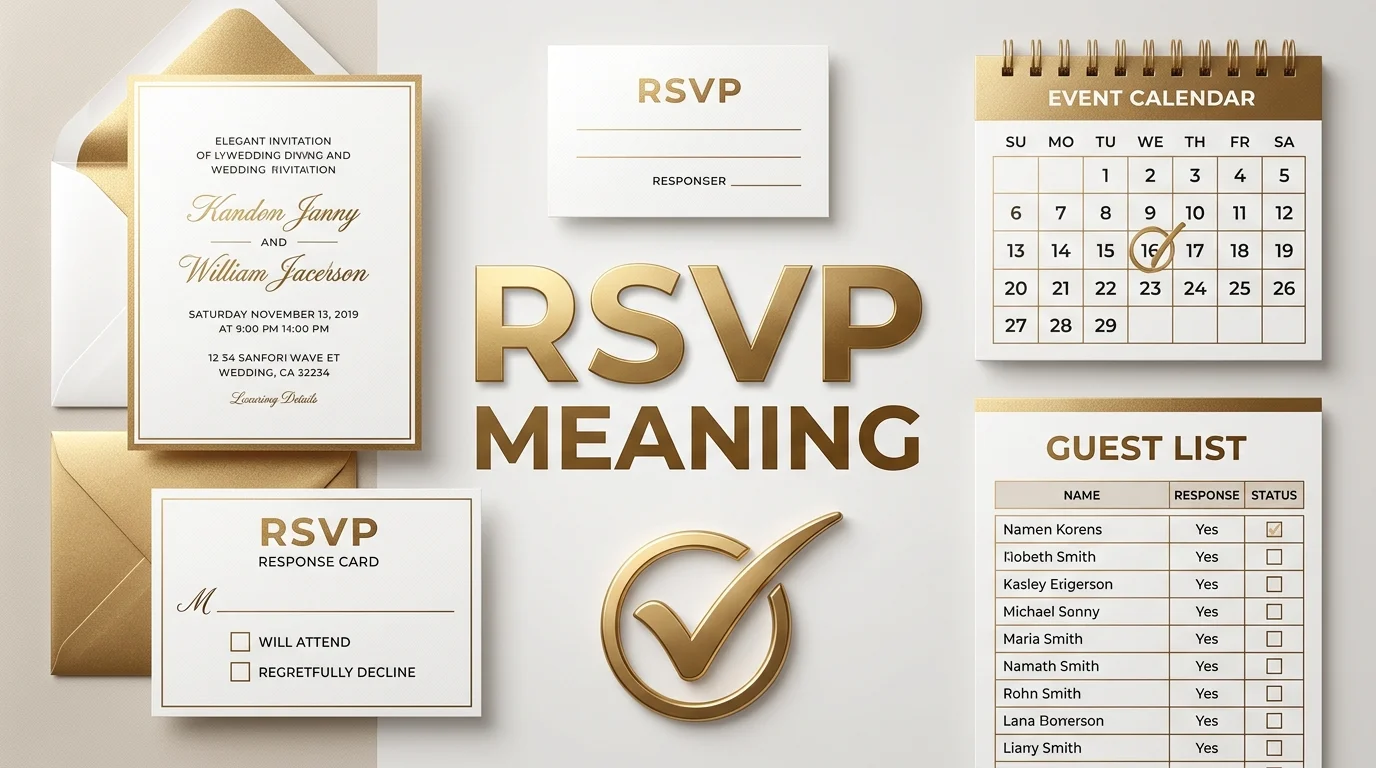
RSVP Meaning in Invitations: Complete Guide
Have you ever received a wedding card, birthday invitation, business event email, or party invite that included the letters RSVP and wondered what they actually mean? You are not alone. Thousands of people search for RSVP meaning every month because they want to understand what is expected of them when they receive an invitation. While RSVP may look like a simple abbreviation, it plays a major role in event planning, guest management, and social etiquette.
Understanding RSVP is important because responding correctly helps event organizers prepare for the right number of guests, manage seating arrangements, organize catering, and create a smooth experience for everyone involved. Whether you are attending a wedding, corporate event, graduation party, conference, or private gathering, knowing how RSVP works can help you avoid confusion and demonstrate good manners. In this comprehensive guide, you will learn the RSVP full form and meaning in English, how to RSVP to an event correctly, RSVP meaning in wedding invitations, RSVP etiquette, common mistakes, examples, and much more. If you enjoy learning about meanings, abbreviations, and language-related topics, Punz Trend is a great place to explore detailed and easy-to-understand guides.
Meaning & Definition
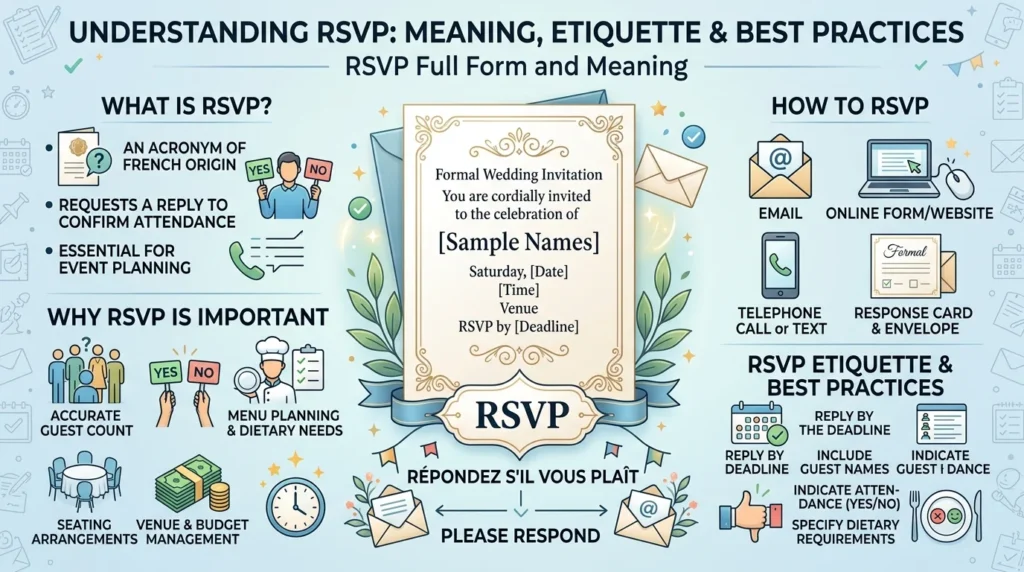
RSVP is a commonly used abbreviation that appears on invitations and event announcements. The term comes from the French phrase “Répondez s’il vous plaît,” which translates to “Please respond” in English. When an invitation includes RSVP, it means the host is requesting a response from the invited guest regarding whether they will attend the event.
In simple terms, RSVP is a request for attendance confirmation. It allows event organizers to know exactly how many people will be present. This information is essential for planning food, seating, venue arrangements, transportation, event materials, and other logistical details. The RSVP meaning is not limited to saying yes. Guests are expected to respond whether they plan to attend or decline the invitation. Many people mistakenly assume RSVP only applies when accepting an invitation, but proper RSVP etiquette involves responding either way. This is why RSVP remains one of the most important parts of invitation communication worldwide.
Background
The history of RSVP dates back centuries and originates from French social customs. During the eighteenth and nineteenth centuries, French culture had a strong influence on etiquette, formal communication, and event planning. As a result, many French expressions became widely used in English-speaking countries, particularly among the upper classes and formal social circles.
Over time, RSVP became a standard element on wedding invitations, formal dinners, charity events, and business gatherings. Even though many people no longer speak French, the abbreviation continues to be recognized internationally. Today, RSVP appears on both traditional printed invitations and modern digital invitations. Event organizers, wedding planners, businesses, schools, and social groups continue to rely on RSVP systems because they provide accurate attendance information. While the method of responding has evolved from mailed response cards to online forms and mobile apps, the purpose of RSVP remains exactly the same: helping hosts plan successful events.
Usage in Different Contexts
The meaning of RSVP remains consistent across different situations, but the way it is used can vary depending on the type of event. In wedding invitations, RSVP helps couples estimate the number of guests attending their special day. This allows them to plan meals, seating charts, venue layouts, and guest accommodations accurately.
In business and corporate settings, RSVP is used for conferences, seminars, networking events, workshops, and company meetings. Event organizers need attendance confirmations to prepare materials, reserve meeting spaces, and arrange refreshments. RSVP is also common for birthday parties, graduation celebrations, charity fundraisers, community gatherings, and virtual events. In digital communication, RSVP requests often appear in emails, social media event pages, and online registration systems. Regardless of the context, the goal remains the same: obtaining a clear response from invited guests so the event can be organized efficiently.
What Does RSVP Mean on an Invitation?
When RSVP appears on an invitation, it is a polite request asking the recipient to confirm whether they will attend the event. The host needs this information to make accurate plans and avoid uncertainty. If an invitation says RSVP by a specific date, the guest should respond before that deadline.
For example, if a wedding invitation states “RSVP by June 15,” guests should inform the couple of their attendance status before that date. Ignoring an RSVP request can create challenges for the host because they may not know how many guests to expect. Whether the invitation is formal or casual, RSVP serves as an important communication tool that helps hosts manage their event successfully.
RSVP Full Form and Meaning in English
One of the most searched questions online is RSVP full form and meaning in English. RSVP stands for the French phrase “Répondez s’il vous plaît.” The English translation is “Please respond.”
Although the phrase originates from French, RSVP has become a standard abbreviation in English-speaking countries. Most invitations use RSVP rather than writing out the full phrase because it is widely recognized and understood. The abbreviation is short, professional, and universally accepted in social and business communication. Understanding the full form helps people appreciate why RSVP is considered a request rather than a command. It politely asks guests to communicate their attendance plans to the host.
RSVP Meaning in Wedding Invitations
Wedding invitations are among the most common places where people encounter RSVP. In this context, RSVP is especially important because weddings involve extensive planning and budgeting. Couples must finalize catering orders, seating arrangements, venue capacity, guest favors, transportation, and accommodation details.
When guests fail to RSVP, it becomes difficult for the couple to make accurate decisions. This can lead to unnecessary expenses or insufficient arrangements. Wedding RSVP cards often include options such as “Accepts with pleasure” or “Declines with regret,” making it easy for guests to respond. Modern wedding invitations may also include QR codes, websites, or email addresses for RSVP responses. Regardless of the format, the purpose remains the same: helping couples create an organized and enjoyable wedding experience.
RSVP Meaning in Text Messages
In today’s digital world, RSVP frequently appears in text messages, emails, and online event invitations. The RSVP meaning in text messages remains identical to its traditional usage. It still means the sender wants confirmation regarding attendance.
For example, someone might send a message saying, “We’re having a birthday dinner on Saturday. Please RSVP by Thursday.” In this case, the sender is requesting a response indicating whether you will attend. Text message RSVPs have become increasingly popular because they are convenient, fast, and easy to manage. They also allow hosts to receive immediate responses and maintain accurate guest lists.
How to RSVP to an Event Correctly
Many people understand the RSVP meaning but are unsure how to RSVP to an event correctly. The first step is responding before the stated deadline. Delayed responses can make planning more difficult for the host.
A proper RSVP response should be clear, polite, and direct. If attending, you can simply say, “Thank you for the invitation. I am happy to attend.” If declining, you might respond, “Thank you for inviting me. Unfortunately, I will not be able to attend.” Avoid vague answers that leave the host uncertain. Providing a definite response demonstrates respect for the organizer’s planning efforts and helps ensure a smooth event experience.
What Happens If You Do Not RSVP?
Failing to RSVP may seem like a small issue, but it can create significant challenges for event organizers. Whether the invitation is for a wedding, birthday party, business conference, charity fundraiser, or corporate event, hosts depend on attendance confirmations to make accurate plans. When guests do not respond, organizers are left guessing how many people will attend, which can affect catering, seating arrangements, venue setup, transportation, and budgeting.
For weddings especially, not sending an RSVP can become costly. Couples often pay for meals, seating, decorations, and guest accommodations based on confirmed attendance numbers. If invited guests fail to respond and then unexpectedly attend or skip the event, it can disrupt carefully planned arrangements. In business settings, failing to RSVP may also be viewed as unprofessional because organizers need attendance estimates for presentations, materials, and networking activities. This is why RSVP etiquette encourages every guest to respond promptly, even if they cannot attend.
How to Respond to an RSVP Invitation
Understanding how to respond to an RSVP invitation is an important social skill. A proper response should be timely, respectful, and clear. If the invitation includes specific response instructions, always follow them carefully. Some invitations request responses by phone, email, website form, QR code, or RSVP card.
When accepting an invitation, keep your response concise and positive. For example:
Thank you for the invitation. I am pleased to attend and look forward to the event.
If you need to decline, respond politely and avoid unnecessary details. A suitable response could be:
Thank you for inviting me. Unfortunately, I am unable to attend, but I wish you a wonderful event.
The key is providing a definite answer. Avoid uncertain responses such as “maybe” unless the organizer specifically allows tentative attendance. Clear communication helps hosts finalize plans and avoid confusion.
RSVP Meaning With Examples
One of the easiest ways to understand RSVP meaning is through real-world examples. Seeing RSVP used in different situations helps clarify its purpose and proper usage.
Example 1:
You receive a wedding invitation that says:
Please RSVP by July 10.
This means the couple would like you to confirm whether you will attend before July 10.
Example 2:
A company sends an email stating:
Please RSVP for our annual networking event by Friday.
The organizer is requesting confirmation of attendance to prepare event resources and seating.
Example 3:
A friend texts:
We’re having a birthday dinner next Saturday. Please RSVP by Wednesday.
Your friend wants to know who will attend so they can make reservations.
Example 4:
An online event page says:
RSVP now to reserve your spot.
This means attendees should confirm participation through the registration system.
These examples demonstrate that RSVP is always connected to attendance confirmation and event planning.
When Should You RSVP for an Event?
A common question people ask is when should you RSVP for an event. The answer is simple: respond as soon as you know whether you can attend. Waiting until the last minute often creates difficulties for event organizers and may prevent them from making final arrangements.
Most invitations include a specific RSVP deadline. This date is chosen to give hosts enough time to organize seating, catering, materials, and logistics. If you know your plans early, there is no reason to wait until the deadline. Prompt responses are considered courteous and helpful.
If your circumstances change after sending an RSVP, notify the organizer immediately. While unexpected situations can occur, updating the host as soon as possible shows respect for their planning efforts and allows them to adjust arrangements if necessary.
See Also: Parens Meaning: What It Means and How to Use It
RSVP vs Regret Only Meaning
Many people confuse RSVP with another common invitation phrase: Regrets Only. Although they appear similar, they have different meanings.
RSVP requires every guest to respond regardless of whether they plan to attend or decline. The host expects confirmation from everyone who receives the invitation.
Regrets Only works differently. Guests only need to contact the host if they cannot attend. If no response is received, the host assumes the guest will be present.
For example:
RSVP by August 1 means every guest should reply.
Regrets Only by August 1 means guests only need to respond if they are unable to attend.
Understanding this distinction helps avoid misunderstandings and ensures proper event communication.
Why Is RSVP Important for Event Planning?
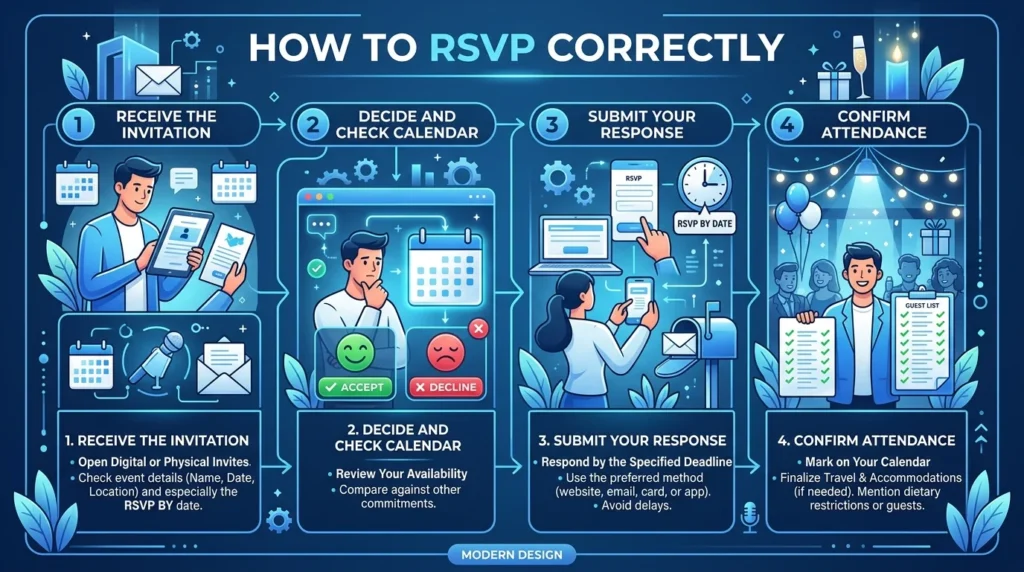
RSVP plays a critical role in successful event planning. Without attendance confirmations, organizers must rely on estimates, which can lead to poor planning decisions. Accurate RSVP responses help determine guest counts, food requirements, seating arrangements, staffing needs, venue capacity, transportation logistics, and event budgets.
For weddings, RSVP responses influence catering orders, reception seating charts, table arrangements, and guest favors. In corporate settings, RSVP information helps organizers prepare conference materials, schedule sessions, and manage networking activities. For private parties, knowing attendance numbers ensures enough food, drinks, and seating are available.
The RSVP system benefits both hosts and guests. Hosts can organize events more efficiently, while guests enjoy a better experience because arrangements are based on accurate attendance information.
RSVP Etiquette Everyone Should Know
Good RSVP etiquette involves more than simply responding. It also includes responding honestly, respecting deadlines, and communicating changes promptly.
One important rule is never assuming attendance without confirming. If an invitation requests an RSVP, always provide a response even if you believe the host already expects you to attend. Another important guideline is avoiding last-minute cancellations unless absolutely necessary. Sudden changes can create difficulties for organizers who have already finalized plans.
Guests should also avoid bringing uninvited individuals unless the invitation explicitly permits additional attendees. Following RSVP etiquette demonstrates respect for the host’s efforts and contributes to a more successful event.
Common RSVP Mistakes to Avoid
Many people unintentionally make RSVP mistakes that complicate event planning. One common error is ignoring the RSVP request entirely. Hosts often spend valuable time following up with guests who fail to respond.
Another mistake is responding after the deadline. Late responses can affect catering orders, seating assignments, and venue planning. Some guests also change their attendance status repeatedly, creating unnecessary complications for organizers.
A frequent problem with digital invitations is assuming that clicking “Interested” on a social media event counts as an RSVP. In most cases, hosts still require an official confirmation. Avoiding these mistakes helps ensure smoother communication and better event experiences.
RSVP in Modern Digital Invitations
Technology has transformed the way RSVP systems operate. While traditional invitations often included mailed response cards, modern invitations frequently use websites, email links, mobile apps, QR codes, and online forms.
Digital RSVP systems offer several advantages. Guests can respond instantly, organizers can track attendance automatically, and updates can be communicated quickly. These systems reduce paperwork, improve accuracy, and simplify event management.
Virtual events have also expanded the role of RSVP. Online conferences, webinars, workshops, and livestreamed events often require RSVP registration to manage participant access and distribute event materials. Despite technological changes, the fundamental purpose of RSVP remains the same: obtaining attendance confirmation.
RSVP Meaning for Beginners
For beginners, RSVP simply means “Please tell the host whether you will attend an event.” The abbreviation comes from French, but its purpose is universal. It helps organizers know how many guests to expect and allows them to plan effectively.
Whenever you see RSVP on an invitation, remember that the host is requesting a response. Whether your answer is yes or no, providing a clear and timely reply is considered polite and helpful. Understanding this basic principle eliminates much of the confusion surrounding RSVP and ensures proper event etiquette.
Why Competitors Often Miss These RSVP Topics
Many RSVP articles focus only on the abbreviation’s definition and full form. However, they frequently overlook important topics such as RSVP meaning in text messages, digital RSVP systems, RSVP vs regrets only, RSVP etiquette mistakes, business-event RSVP practices, online event registration, and the impact of RSVP on event budgeting.
By understanding these additional areas, readers gain a more complete understanding of RSVP and its role in modern communication. Covering these topics creates a stronger resource that answers real user questions while providing practical value beyond simple definitions.
RSVP for Weddings, Business Events, Parties, and Virtual Events
Although the meaning of RSVP remains the same across all events, the importance of responding can vary depending on the occasion. Weddings typically require the most accurate RSVP responses because couples must finalize catering numbers, seating charts, venue layouts, and guest accommodations. Even one unexpected guest can affect carefully planned arrangements.
In business events, RSVP responses help organizers prepare meeting spaces, presentation materials, networking sessions, and refreshments. Birthday parties, family gatherings, graduation celebrations, and community events also depend on attendance confirmations to ensure proper planning. Virtual events use RSVP systems to distribute registration links, access codes, digital resources, and reminders. Regardless of the event type, RSVP serves as the foundation of effective guest management and event organization.
RSVP Response Examples
Many people understand RSVP meaning but struggle with writing an appropriate response. Fortunately, RSVP replies do not need to be complicated. The most effective responses are simple, polite, and direct.
Accepting an Invitation
Thank you for the invitation. I am delighted to attend and look forward to the event.
Thank you for inviting me. I am pleased to confirm my attendance.
I appreciate the invitation and will be happy to join you.
Declining an Invitation
Thank you for thinking of me. Unfortunately, I will not be able to attend.
I appreciate the invitation, but I have a prior commitment and must decline.
Thank you for inviting me. I regret that I cannot attend, but I wish you a wonderful event.
Providing a clear answer helps hosts finalize plans without uncertainty.
RSVP Meaning in Business and Professional Settings
Many people associate RSVP only with weddings and social gatherings, but it is equally important in professional environments. Businesses frequently use RSVP requests for conferences, seminars, networking events, workshops, product launches, training sessions, and company meetings.
In these situations, RSVP responses allow organizers to estimate attendance, prepare event materials, allocate seating, and manage resources effectively. Professional RSVP etiquette requires timely responses because event budgets and logistics often depend on accurate participant numbers. Responding promptly also reflects professionalism and respect for the organizer’s efforts.
Business invitations may include RSVP requests through email, event registration platforms, calendar invitations, or online forms. Regardless of the format, the expectation remains the same: provide a clear attendance confirmation.
RSVP Meaning in Online and Digital Invitations
Digital communication has transformed how RSVP systems operate. Modern invitations often arrive through email, social media platforms, event management websites, mobile applications, and QR code registration systems.
Digital RSVP tools offer convenience for both guests and organizers. Guests can confirm attendance instantly, while hosts receive real-time updates regarding participation numbers. Many digital systems also send automatic reminders, helping reduce forgotten responses.
The RSVP meaning in online invitations remains identical to traditional printed invitations. The only difference is the method of communication. Whether responding through a website, email, mobile app, or event platform, guests are still being asked to confirm attendance.
See Also: BBL Meaning: Slang, TikTok & Surgery Explained
Cultural Differences in RSVP Etiquette
Although RSVP is widely recognized around the world, cultural expectations regarding invitation responses can differ. In some countries, responding promptly is considered a strict social obligation. In others, guests may be more flexible about response deadlines.
Western countries generally place strong emphasis on RSVP etiquette, particularly for weddings and formal events. Hosts often expect every guest to respond by the specified date. In many professional environments, failure to RSVP may even be viewed as discourteous or unprofessional.
Understanding cultural expectations becomes especially important when attending international events or communicating with people from different backgrounds. Regardless of cultural differences, responding respectfully and promptly is always appreciated.
Common RSVP Myths and Misconceptions
Several misconceptions continue to cause confusion about RSVP. One common myth is that guests only need to respond if they plan to attend. In reality, RSVP requests require responses from both attendees and non-attendees.
Another misconception is that RSVP deadlines are optional. Some people assume they can respond whenever convenient, but organizers establish deadlines for practical planning purposes. Ignoring these deadlines can create logistical challenges.
Many guests also believe that verbally mentioning attendance to a friend or family member counts as an RSVP. Unless the organizer specifically confirms your response, it is best to follow the official RSVP instructions provided in the invitation.
Why RSVP Matters More Than Ever Today
In modern event planning, accurate attendance data has become increasingly important. Rising venue costs, catering expenses, security requirements, and logistical considerations mean organizers need reliable guest information.
RSVP systems help reduce waste, control budgets, improve guest experiences, and streamline event management. Whether organizing a wedding with hundreds of guests or a small virtual meeting, knowing attendance numbers allows hosts to allocate resources efficiently.
Technology has made responding easier than ever before. Since guests can now RSVP through email, mobile devices, websites, and event apps, there are very few barriers to providing timely attendance confirmations.
Expert Tips for Responding to RSVP Requests
Respond as soon as possible after receiving an invitation. Early responses help organizers make informed decisions and reduce uncertainty.
Always provide a clear answer. If you are attending, say so directly. If you cannot attend, politely decline. Avoid vague responses that leave the host guessing.
Respect RSVP deadlines. Organizers select these dates for important planning reasons. Missing deadlines can complicate event preparation and increase stress for hosts.
If your plans change after responding, notify the organizer immediately. Most hosts understand that unexpected situations arise, but timely communication is essential.
Finally, follow any specific RSVP instructions included with the invitation. Whether responding online, by phone, email, or mail, using the requested method ensures your response is properly recorded.
Frequently Asked Questions
What does RSVP stand for?
RSVP stands for the French phrase “Répondez s’il vous plaît,” which translates to “Please respond” in English.
What does RSVP mean on an invitation?
It means the host is requesting confirmation about whether you will attend the event.
How do I RSVP to an invitation?
You can RSVP by following the instructions provided on the invitation, such as replying by email, phone, website, QR code, or response card.
Is RSVP required?
Yes. If an invitation requests an RSVP, proper etiquette suggests responding whether you plan to attend or decline.
What happens if you do not RSVP?
Failing to RSVP can make event planning difficult and may affect catering, seating, budgeting, and guest arrangements.
When should you RSVP for an event?
You should respond as soon as you know your attendance plans and always before the stated RSVP deadline.
What is RSVP meaning in wedding invitations?
In wedding invitations, RSVP helps couples determine guest counts for catering, seating, accommodations, and event planning.
What is RSVP meaning in text messages?
It means the sender wants confirmation regarding whether you will attend an event or gathering.
What is the difference between RSVP and regrets only?
RSVP requires every guest to respond, while regrets only means guests should respond only if they cannot attend.
Why is RSVP important for event planning?
RSVP provides accurate attendance information, helping organizers manage budgets, seating, food, materials, and overall event logistics effectively.
Conclusion
Understanding RSVP meaning is essential for anyone who attends social, professional, or virtual events. RSVP stands for the French phrase “Répondez s’il vous plaît,” meaning “Please respond.” Its purpose is simple but important: helping hosts know who will attend an event. From wedding invitations and birthday parties to corporate conferences and online gatherings, RSVP plays a critical role in successful event planning.
Knowing how to RSVP to an event correctly, understanding RSVP etiquette, responding before deadlines, and recognizing the difference between RSVP and regrets only can help you avoid common mistakes and demonstrate courtesy. As digital invitations continue to grow in popularity, RSVP remains one of the most valuable tools for effective communication and event organization. If you’re looking for more meanings, definitions, abbreviations, and language guides, Punz Trend is an excellent resource for exploring detailed and easy-to-understand explanations.
See Also: 210+ Name Puns: Funny Wordplay Ideas & One-Liner Jokes