
Tonearm Meaning: Definition, Types & How It Works
The word tonearm is commonly used in the world of vinyl records, turntables, and audio equipment. Many people search for tonearm meaning after seeing it listed in record player specifications or hearing it discussed by music enthusiasts. Although it may look like a simple part of a turntable, the tonearm plays a crucial role in producing high-quality sound from vinyl records.
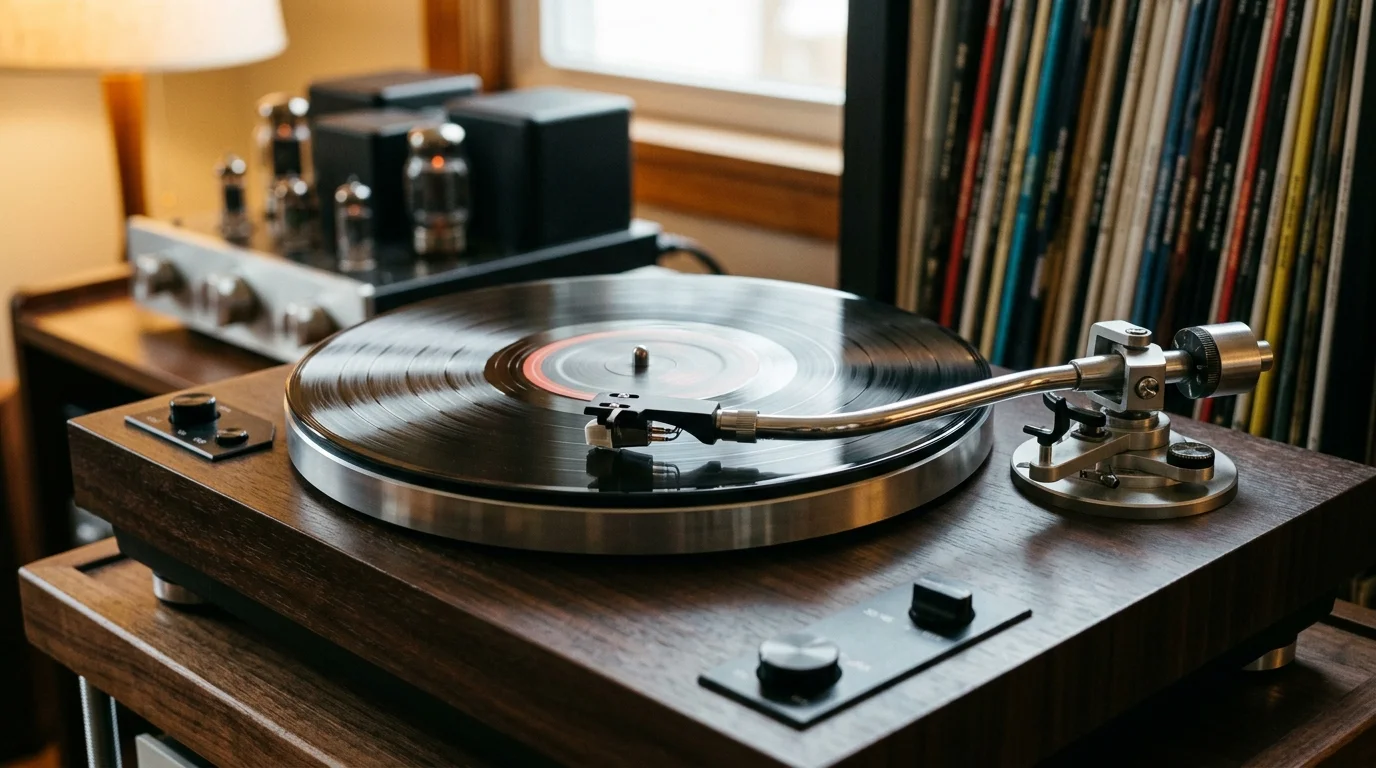
In simple words, a tonearm is the movable arm on a turntable that holds the cartridge and stylus, allowing them to read the grooves of a vinyl record.
For example:
- A record player uses a tonearm to guide the needle across the record surface.
- A high-quality tonearm can improve tracking accuracy and sound performance.
The tonearm is one of the most important components of a turntable because it connects the physical movement of the record grooves with the electrical signals that create music.
In this guide, you’ll learn the tonearm meaning, its definition, function, types, and how it works in a record player. Whether you’re a vinyl beginner or an audio enthusiast, this article explains everything in simple and easy-to-understand English.
See Also: Selah Meaning: Biblical Definition, Origin & Symbolism
Meaning & Definition
The tonearm meaning is:
A mechanical arm on a turntable that holds the cartridge and stylus, allowing the needle to follow the grooves of a vinyl record.
In simple words:
A tonearm is the part of a record player that moves the needle across a record to capture sound.
A tonearm usually includes:
- Arm tube.
- Cartridge holder.
- Counterweight.
- Tracking adjustment controls.
- Pivot mechanism.
- Stylus or needle assembly.
What Does Tonearm Mean in Simple Words?
In simple words, a tonearm is the movable arm that carries the record player’s needle.
When a vinyl record spins, tiny grooves contain the recorded music information. The tonearm places the stylus inside these grooves, allowing it to pick up vibrations and convert them into an audio signal.
Without a properly designed tonearm, a turntable would not be able to accurately reproduce the music stored on a vinyl record.
Background and Origin
The concept of the tonearm developed as record-playing technology evolved throughout the 20th century.
Early phonographs used simpler mechanisms to move the playback needle across records. As audio technology improved, engineers created more precise tonearms that could reduce tracking errors and improve sound quality.
Modern tonearms are designed with careful attention to:
- Weight balance.
- Movement accuracy.
- Vibration control.
- Stylus tracking ability.
Today, tonearms are found in both beginner and professional turntables.
Tonearm Meaning in Turntable
In a turntable, the tonearm is responsible for positioning the cartridge and stylus correctly on the vinyl record.
Its main job is to:
- Hold the cartridge securely.
- Maintain proper contact between the stylus and record grooves.
- Move smoothly across the record.
- Transfer vibrations into electrical signals.
The quality and design of a tonearm can influence sound clarity, detail, and overall listening experience.
How Does a Tonearm Work?
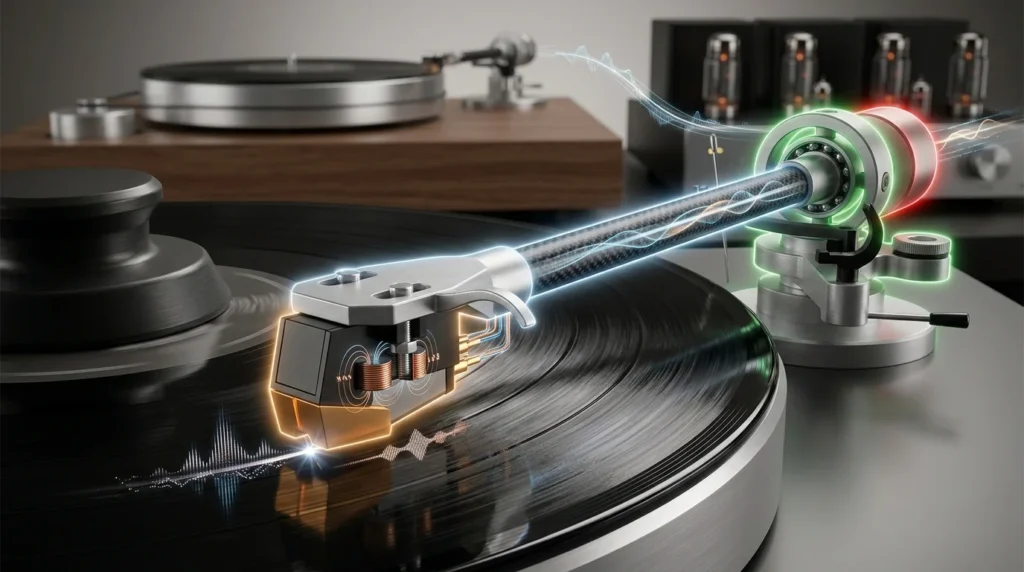
A tonearm works by allowing the stylus to follow the spiral grooves of a spinning vinyl record.
The process works like this:
- The record rotates on the turntable platter.
- The stylus sits inside the record grooves.
- The grooves create tiny movements in the stylus.
- The cartridge converts these movements into electrical signals.
- The audio system amplifies the signal and produces music.
The tonearm must maintain the correct pressure and alignment to accurately track the record without damaging it.
See Also: Rapport Meaning: Definition, Examples & How to Build It
Types of Tonearms Explained
There are different types of tonearms used in turntables, each designed for specific performance needs.
Straight Tonearm
A straight tonearm has a simple, direct design with a straight arm tube.
Advantages:
- Easy to manufacture.
- Common in many modern turntables.
- Provides reliable tracking.
It is often found in entry-level and some professional audio systems.
S-Shaped Tonearm
An S-shaped tonearm has a curved design that helps improve tracking alignment.
Advantages:
- Reduces tracking errors.
- Helps balance the cartridge position.
- Common in DJ and traditional turntables.
Many classic turntables use S-shaped tonearms because of their stability and durability.
J-Shaped Tonearm
A J-shaped tonearm combines features of straight and curved designs. It is designed to improve tracking while maintaining good balance and control.
This type is less common but is preferred by some audio enthusiasts.
Tonearm Components Explained
A tonearm consists of several important parts that work together to produce accurate sound.
Arm Tube
The arm tube is the main structure of the tonearm. It holds the cartridge and allows movement across the record surface.
Cartridge
The cartridge is attached to the end of the tonearm and contains the mechanism that converts stylus vibrations into electrical signals.
Stylus (Needle)
The stylus is the small tip that touches the vinyl record grooves. It reads the information stored in the grooves.
Counterweight
The counterweight balances the tonearm and allows users to adjust tracking force. Proper balance helps protect both the record and stylus.
Pivot Point
The pivot allows the tonearm to move smoothly across the record while maintaining accurate tracking.
Tonearm Meaning in Audio Quality
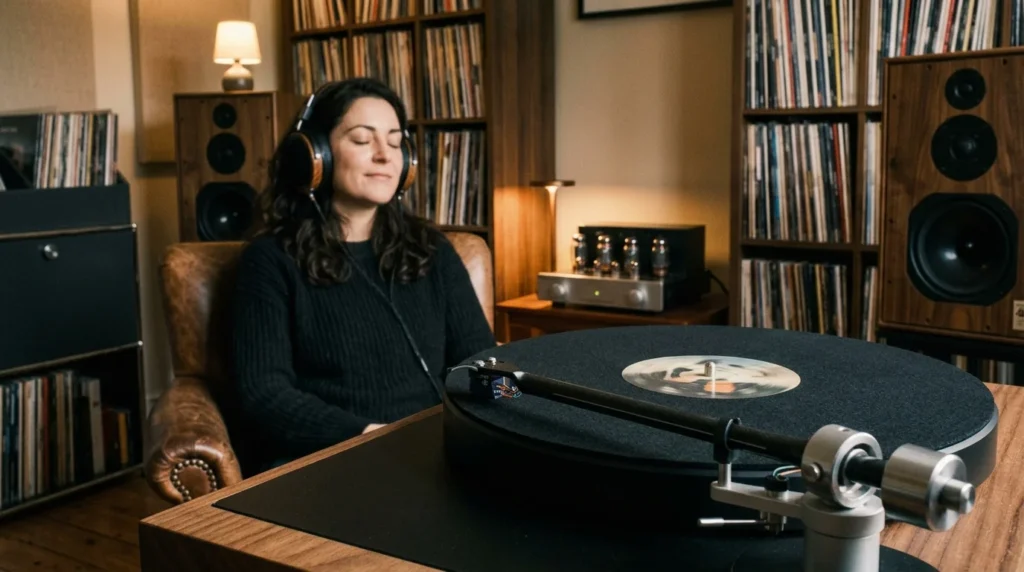
The tonearm has a major impact on the overall performance of a turntable.
A well-designed tonearm helps provide:
- Better sound accuracy.
- Reduced distortion.
- Improved tracking.
- Longer record and stylus life.
Poor alignment or incorrect adjustment can cause problems such as skipping, uneven sound, or excessive record wear.
Tonearm vs Stylus Difference Explained
Many people confuse the tonearm with the stylus, but they are different parts.
Tonearm
The tonearm is the movable arm that holds and positions the cartridge and stylus over the record.
Stylus
The stylus is the tiny needle that physically touches the record grooves and reads the music information.
In simple words:
The tonearm carries the stylus, and the stylus reads the record.
How to Use Tonearm Correctly
Proper tonearm setup is important for getting the best sound from a turntable.
Basic steps include:
- Balance the tonearm correctly.
- Set the recommended tracking force.
- Adjust anti-skate settings if available.
- Ensure proper cartridge alignment.
- Handle the stylus carefully.
A correctly adjusted tonearm improves sound quality and helps prevent damage to vinyl records.
Common Problems With Tonearms
Some common tonearm issues include:
- Incorrect tracking force.
- Poor cartridge alignment.
- Uneven movement.
- Loose components.
- Damaged stylus.
Regular maintenance and proper setup can help keep a turntable working efficiently.
Why Read Meanings on Punz Trend?
Technical words related to music and technology can be confusing without clear explanations. Punz Trend explains audio terms, technology vocabulary, internet expressions, and everyday words with simple definitions, origins, examples, comparisons, and practical usage to make learning easier.
Frequently Asked Questions
What does tonearm mean?
A tonearm is the movable part of a turntable that holds the cartridge and stylus and allows the needle to follow vinyl record grooves.
What does a tonearm do?
A tonearm positions the stylus on the record and helps convert groove vibrations into audio signals.
Is a tonearm the same as a needle?
No. The tonearm holds the needle, while the needle (stylus) is the part that touches the record grooves.
Why is tonearm quality important?
A high-quality tonearm improves tracking accuracy, reduces distortion, and helps produce clearer sound.
Can a tonearm damage records?
Yes. Incorrect setup, excessive tracking force, or poor alignment can cause unnecessary wear on vinyl records.
Conclusion
The tonearm meaning refers to the movable arm on a turntable that holds the cartridge and stylus to read vinyl record grooves. It plays an essential role in sound quality by maintaining accurate tracking and transferring vibrations into audio signals. Understanding how a tonearm works helps music lovers choose, maintain, and enjoy better-performing record players.