
Ironic Meaning: Definition, Examples & Types Explained
The word ironic is one of the most commonly misunderstood words in English. Many people search for ironic meaning after hearing it in conversations, songs, movies, social media posts, or everyday situations. While people often use “ironic” to describe something that is simply funny or unexpected, the actual meaning is more specific.
In simple words, ironic means a situation where the result is different from what was expected, often in a surprising or opposite way.
For example:
- A fire station burning down is considered ironic because a place designed to prevent fires experiences one itself.
- A person who posts about avoiding distractions but spends hours scrolling online may be described as ironic.
The word is commonly used in literature, comedy, conversations, and social media to highlight unexpected contrasts between expectations and reality.
In this guide, you’ll learn the ironic meaning, its definition, origin, types of irony, examples, and how to use it correctly in everyday English.
Meaning & Definition
The ironic meaning is:
Showing or describing a situation where the outcome is different from what was expected, often creating humor, surprise, or contrast.
In simple words:
Ironic means something happens that is the opposite of what people would normally expect.
The word is often used to describe:
- Unexpected situations.
- Contradictions.
- Humorous outcomes.
- Opposite results.
- Hidden meanings in communication.
What Does Ironic Mean in Simple Words?
In simple words, ironic means when reality turns out differently from what you expected, especially in an unusual or opposite way.
For example:
A person who teaches others about saving money but goes bankrupt because of poor financial choices creates an ironic situation.
The key idea behind irony is the contrast between:
- What people expect to happen.
- What actually happens.
Background and Origin
The word ironic comes from the Greek word “eirōneia,” which means “pretended ignorance” or “feigned ignorance.”
The concept became famous through ancient Greek drama, where a character called the “eiron” would pretend to know less than they actually did, often creating a contrast between appearance and reality.
Over time, the meaning of irony expanded and began describing situations, statements, and events where there is a difference between expectation and reality.
Today, ironic is widely used in literature, entertainment, humor, and everyday conversations.
Ironic Meaning in Everyday Life
In daily conversations, ironic usually describes situations that are surprisingly opposite or contradictory.
Examples:
- A professional cleaner having a very messy home.
- A technology expert losing access to their own devices.
- A traffic officer getting a speeding ticket.
These situations feel ironic because they conflict with what people would normally expect.
Ironic Meaning in Language and Communication
In communication, irony can happen when someone says something but means the opposite.
Example:
A person walks outside during a storm and says:
“What beautiful weather!”
They are not actually praising the weather. They are using irony to express that the weather is unpleasant.
This type of irony is often used in:
- Jokes.
- Movies.
- Social media.
- Conversations.
- Writing.
Types of Irony Explained
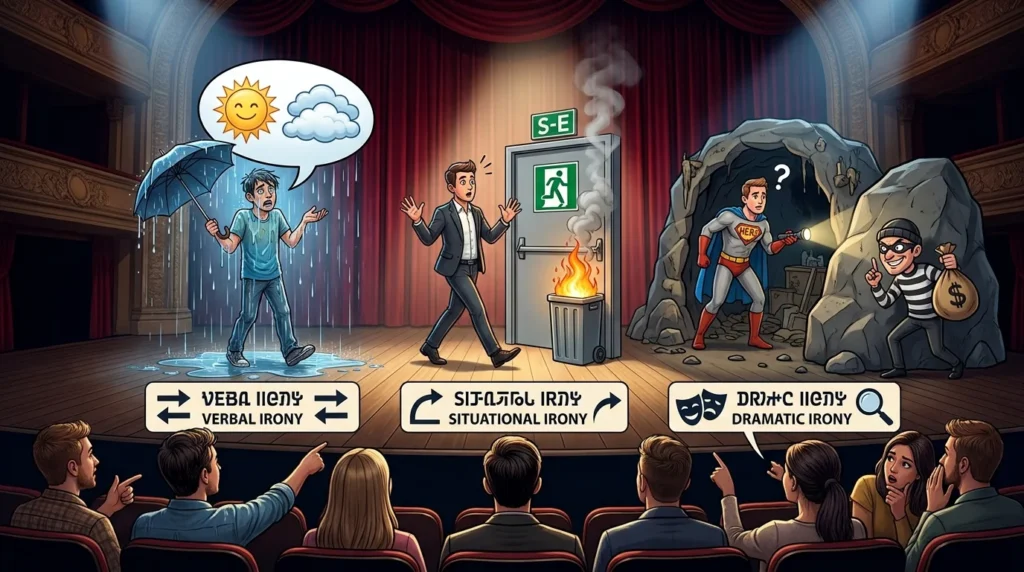
There are several types of irony used in English, literature, and everyday communication.
Verbal Irony
Verbal irony happens when someone says something but means the opposite.
Example:
- Saying “Great job!” after someone makes a mistake.
The speaker does not actually mean the words literally. Instead, they are expressing the opposite idea.
Situational Irony
Situational irony occurs when the outcome of a situation is very different from what people expected.
Example:
- A fitness trainer becoming unhealthy because they never exercise.
The surprise comes from the contrast between expectations and reality.
Dramatic Irony
Dramatic irony happens when the audience knows something that the characters in a story do not know.
Example:
- In a movie, viewers know a character is walking into danger, but the character does not realize it.
This creates suspense or emotional impact.
See Also: Rapport Meaning: Definition, Examples & How to Build It
Ironic vs Coincidental Difference Explained

Many people confuse ironic with coincidental, but they have different meanings.
Ironic
An ironic situation involves a meaningful contrast between what is expected and what actually happens.
Example:
- A company that makes security software gets hacked.
Coincidental
A coincidence is simply when two unexpected events happen at the same time without a meaningful connection.
Example:
- Meeting an old friend while traveling in another country.
In short, irony involves contrast or contradiction, while coincidence is just an unusual occurrence.
How to Use Ironic in a Sentence
Here are a few simple examples:
- It was ironic that the teacher forgot the lesson about organization.
- The situation was completely ironic.
- It is ironic that the company promoting privacy had a data leak.
- She found it ironic that her biggest mistake came from trying to avoid mistakes.
- The ending of the story was surprisingly ironic.
These examples show how the word is used to describe unexpected contrasts.
Common Misunderstandings About Ironic
A common misunderstanding is that ironic simply means funny. While irony can be humorous, something does not have to be funny to be ironic.
Another misconception is that every unexpected event is ironic. A situation must involve a clear contrast between expectation and reality to truly be considered ironic.
Some people also confuse irony with sarcasm. Sarcasm is usually a type of mocking statement, while irony is a broader concept involving contrast and unexpected outcomes.
See Also: Selah Meaning: Biblical Definition, Origin & Symbolism
Why Read Meanings on Punz Trend?
Understanding modern vocabulary and commonly confused words helps improve communication skills. Punz Trend explains English words, expressions, internet terms, cultural phrases, and everyday vocabulary with simple definitions, origins, examples, comparisons, and practical usage.
Frequently Asked Questions
What does ironic mean?
Ironic means something that happens differently from what was expected, often creating a surprising contrast between expectation and reality.
Is ironic the same as funny?
No. Irony can be funny, but its main meaning is about contrast or contradiction, not just humor.
What is an example of irony?
A fire station catching fire is an example of irony because a place designed to prevent fires experiences one itself.
What is the difference between irony and sarcasm?
Irony involves a contrast between expectations and reality, while sarcasm is a mocking or often critical way of speaking.
Why do people misunderstand the word ironic?
Many people use “ironic” to mean strange, funny, or coincidental, but the actual meaning involves an unexpected contrast.
Conclusion
The ironic meaning refers to a situation, statement, or event where the outcome is different from what people expect. Irony can appear in conversations, literature, movies, and everyday life through verbal, situational, and dramatic forms. Understanding the true meaning of ironic helps you recognize the difference between simple surprises, coincidences, sarcasm, and genuine irony.